Meet a new colleague – an agricultural drone
In fantasy films, robots free people from routine work, penetrate into all spheres of life and fundamentally change society, freeing up human resources. Even now, robots dance, play musical instruments, take care of the sick, etc. But when there was an accident at the Japanese nuclear power plant "Fukushima", the leading country in the field of robotics was forced to send ... a person to the "hot" zone. Problems also arise with the economy, since the maintenance of robots requires much more qualified and, accordingly, more highly paid specialists. Therefore, even in technically developed countries, people still work on conveyor lines, in greenhouse complexes, and other areas with monotonous and physically difficult work.
Let's consider where robotics has found its niche in agriculture and is being actively implemented.
Drones in agribusiness
Recently, manufacturers have been trying to enter the agricultural market, for example, creating weeding devices based on home robots.
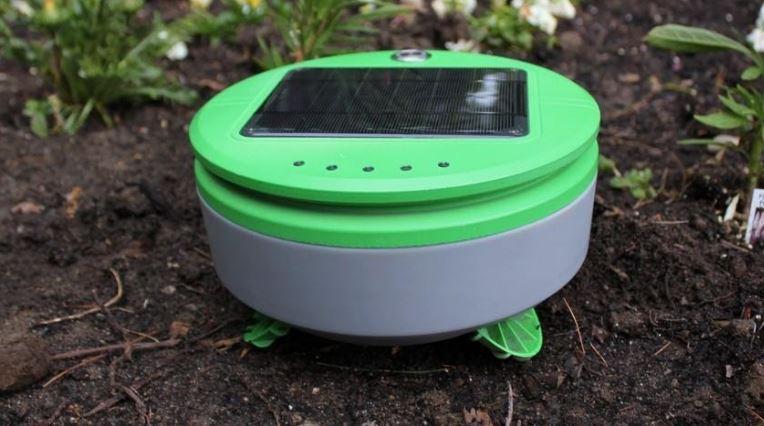
Tertill weeding robot from Franklin Robotics
Big plus. - ground robots are not particularly sensitive to the mass and dimensions of batteries.
The appearance of cast polymer batteries in 2008 opened the way to the sky for light civilian drones, which began to actively master the celestial elements.
At the same time, the agricultural sector is considered as a priority, because in European countries there is a shortage of personnel in crop production. Despite the high profitability of agriculture and, accordingly, the level of income, the population and especially young people tend to live in cities. In order to minimize the number of personnel, including in Ukraine, systems of parallel driving of field equipment, the involvement of third-party organizations for the cultivation of crops, etc., began to be used. There were ideas with work by the shift method, when the land is cultivated by workers invited from other regions. Short-term, with intensive use ofchemical means of protection, it is possible, but the consequences can be extremely deplorable. And the following can also be listed as arguments:
- It is impossible to develop animal husbandry by the shift method, and without cattle waste it is impossible to preserve soil fertility.
- Chemical weeding with the help ofherbicides is particularly effective on genetically modified hybrids. The problem is that herbicide residues in the soil can have a toxic effect on the following crops. Accordingly, the agriculturist becomes dependent on a specific seed producer.
- The cost of firm high-tech equipmentоборудования is high and, as a rule, there are strict requirements for not cheap maintenance.
Sustainable development of the village and ensuring food security for the population can be achieved with the introduction of precision agriculture technologies. Qualified specialists in agrochemistry and plant protection are massively needed to make decisions in field conditions, of which there are already not enough. In the previous decade, agronomic specialties were not considered prestigious, and farms did not receive enough personnel. It will not be possible to quickly fill the shortage of specialists due to the limited educational base, which requires laboratories, experimental fields and hospitals, which have been created for decades.
If it is not possible to increase the number of specialists, it is possible to increase their efficiency, and the potential of agricultural drones is difficult to overestimate here.
A drone is an agronomist's assistant
Technologies of leaf diagnostics make it possible to determine the condition of plants by their appearance.
A smalldrone, which does not require airfields, is quite suitable for surveying crops on an industrial scale.
The received digital information can be easily transmitted over great distances and, accordingly, it is possible to engage specialists remotely. These technologies are already a given and can be effectively implemented by households. It is also worth paying attention todrones for applying liquid mixtures. They allow, when disease centers or clusters of pests are detected, to apply protective measures at a point, which is critically important from a biological, financial, and ecological point of view.Drones for applying liquid mixtures allow, when disease centers or clusters of pests are detected, to apply protective measures at a point.
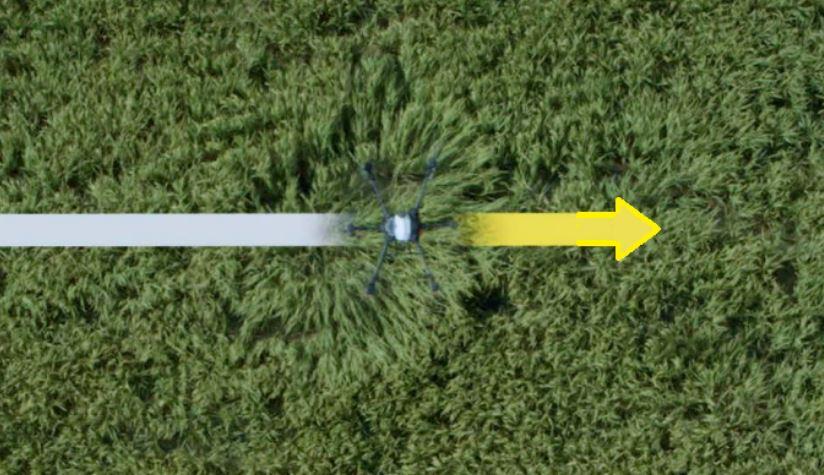
Drone for applying protective agents AGRAS T16 from the DJI company. The minimization of the NW consumption is achieved due to the downward flow from the screws.
And finally...
In fact, agricultural drones are only mastering our skies, and it is difficult to overestimate their demand. It is not difficult to get data from a drone, it is important to interpret and use them correctly. Therefore, it is the agrarians, based on scientific research and experience, who should help these "man-made birds" become "on the wing". We are confident - agrodrones will not remain in debt.
Pasichnyk Natalya Anatolievna ([email protected])