/ Fertilizers and plant protection products / Fungicides / Carbenazol - fungicide for protection of grain crops...
For sale / buy
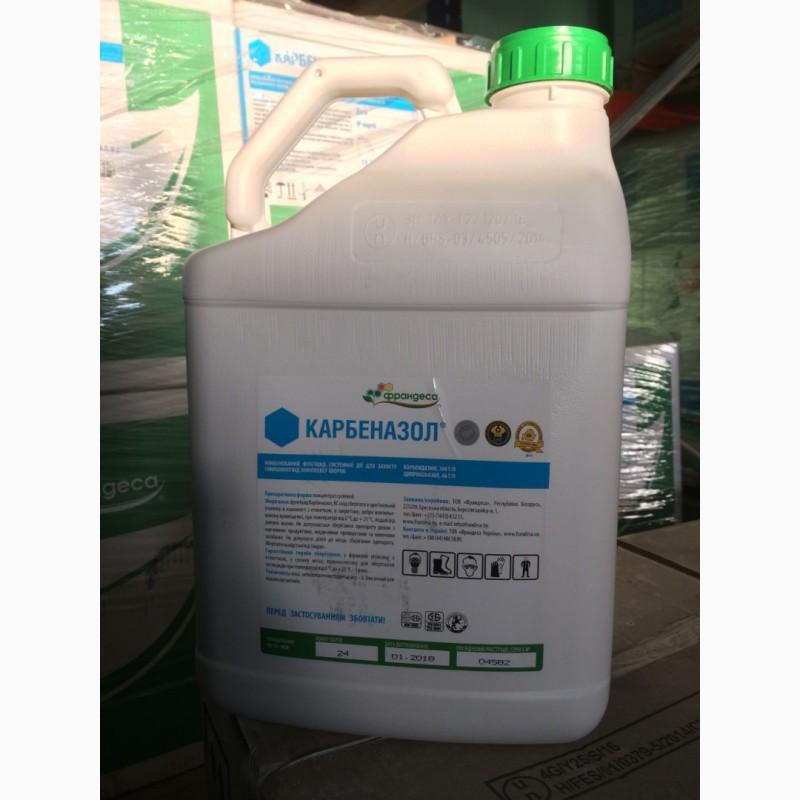
Carbenazol - a fungicide for protecting grain crops and beets from a complex of diseases, Kyiv region.
Price15$
Region:all of Ukraine,
Kyiv region.
(Vyshhorodok)
Updated:
Carbenazol - Systemic two-component fungicide designed to protect grain ear crops and beets from a complex of diseases.
Active ingredient: Carbendazim (300 g/l) + cyproconazole (66 g/l)
Type: System.
The form of the drug: CS (suspension concentrate),
Chemical group: Triazoles + benzimidazoles benzamizidoles Toxicity class: WHO classification: 3
Culture: Rye, wheat, triticale, oats, sugar beets
Diseases: A complex of diseases
Manufacturer: Frandesa
Container: 10 l canister, the price is for 1 l.
Advantages of using the fungicide Carbenazol:
A specialized fungicide for protection against cercosporella root rot, which causes lodging of cereals.
High biological activity against a wide range of pathogens, including powdery mildew.
A good partner in integrated protection systems.
Means for the prevention of resistance in spraying programs.
High rain resistance due to rapid penetration into plants.
It has a preventive and curative effect.
The mechanism of action of the fungicide Carbenazol:
Carbendazim – absorbed through stems, leaves and roots and moved acropetally by transpiration flow in the xylem; inhibits the processes of cell division by inhibiting the development of growth tubes, the formation of appressorium and the growth of mycelium. It has the protective and systemic properties of cyproconazole — it is quickly absorbed by the vegetative parts of plants and moves acropetal, basipetal and translaminar. Inhibits biosynthesis of sterols, including ergosterol in mushroom cells.
Most of the active substances are absorbed by the assimilating parts of the plant within 1-2 hours. Maintains its effectiveness for 4-6 weeks.
Method of application and rates of consumption of the fungicide Carbenazol:
Culture - Spectrum of action - Consumption rate, l/ha Treatment method - Multiplicity of treatments/waiting periods
* Winter rye
-powdery mildew, rhynchosporiosis
-0.6-0.8
-spraying during the growing season
-1/30
*Winter triticale
- powdery mildew, septoriosis of leaves, root rots
-0.8-1(//tractor-service.com)
-spraying during the growing season
-1/30
* Winter wheat
- powdery mildew, septoriosis of leaves
-0.8-1
-spraying during the growing season
-1/30
* Wheat and barley spring
- powdery mildew
-0.8-1
-spraying during the growing season
-1/30
* Triticale ravine
powdery mildew, leaf septoria, brown rust
-0.6-0.8
-spraying during the growing season
-1/30
* Oats
- septoriosis, red-brown spotting, crown rust
-0.6-0.8
-spraying during the growing season
-1/30
* Sugar beets
-cercosporosis, powdery mildew, fomosis
-0.6-0.8
-spraying during the growing season
-1/30.
General recommendations for the use of the fungicide Carbenazol:
It is recommended to use the drug on grain ears, starting from the "trubbing" phase and before the onset of the "earing" phase (VVSN 21 - 51), depending on the appearance of diseases and their EPS. Against root and basal rots, early manifestation of powdery mildew, prevention of septoriosis and other diseases, treatment should be carried out at the beginning of the emergence of the crop into the tube (VVSN 30-31). Conditions under which it is not recommended to use the drug: If the temperature is below 10 oС
Carbenazol fungicide is compatible with mostinsecticides, growth regulators and fungicides. However, in each specific case, a preliminary check on the chemical compatibility of the mixed components is necessary.
Active ingredient: Carbendazim (300 g/l) + cyproconazole (66 g/l)
Type: System.
The form of the drug: CS (suspension concentrate),
Chemical group: Triazoles + benzimidazoles benzamizidoles Toxicity class: WHO classification: 3
Culture: Rye, wheat, triticale, oats, sugar beets
Diseases: A complex of diseases
Manufacturer: Frandesa
Container: 10 l canister, the price is for 1 l.
Advantages of using the fungicide Carbenazol:
A specialized fungicide for protection against cercosporella root rot, which causes lodging of cereals.
High biological activity against a wide range of pathogens, including powdery mildew.
A good partner in integrated protection systems.
Means for the prevention of resistance in spraying programs.
High rain resistance due to rapid penetration into plants.
It has a preventive and curative effect.
The mechanism of action of the fungicide Carbenazol:
Carbendazim – absorbed through stems, leaves and roots and moved acropetally by transpiration flow in the xylem; inhibits the processes of cell division by inhibiting the development of growth tubes, the formation of appressorium and the growth of mycelium. It has the protective and systemic properties of cyproconazole — it is quickly absorbed by the vegetative parts of plants and moves acropetal, basipetal and translaminar. Inhibits biosynthesis of sterols, including ergosterol in mushroom cells.
Most of the active substances are absorbed by the assimilating parts of the plant within 1-2 hours. Maintains its effectiveness for 4-6 weeks.
Method of application and rates of consumption of the fungicide Carbenazol:
Culture - Spectrum of action - Consumption rate, l/ha Treatment method - Multiplicity of treatments/waiting periods
* Winter rye
-powdery mildew, rhynchosporiosis
-0.6-0.8
-spraying during the growing season
-1/30
*Winter triticale
- powdery mildew, septoriosis of leaves, root rots
-0.8-1(//tractor-service.com)
-spraying during the growing season
-1/30
* Winter wheat
- powdery mildew, septoriosis of leaves
-0.8-1
-spraying during the growing season
-1/30
* Wheat and barley spring
- powdery mildew
-0.8-1
-spraying during the growing season
-1/30
* Triticale ravine
powdery mildew, leaf septoria, brown rust
-0.6-0.8
-spraying during the growing season
-1/30
* Oats
- septoriosis, red-brown spotting, crown rust
-0.6-0.8
-spraying during the growing season
-1/30
* Sugar beets
-cercosporosis, powdery mildew, fomosis
-0.6-0.8
-spraying during the growing season
-1/30.
General recommendations for the use of the fungicide Carbenazol:
It is recommended to use the drug on grain ears, starting from the "trubbing" phase and before the onset of the "earing" phase (VVSN 21 - 51), depending on the appearance of diseases and their EPS. Against root and basal rots, early manifestation of powdery mildew, prevention of septoriosis and other diseases, treatment should be carried out at the beginning of the emergence of the crop into the tube (VVSN 30-31). Conditions under which it is not recommended to use the drug: If the temperature is below 10 oС
Carbenazol fungicide is compatible with mostinsecticides, growth regulators and fungicides. However, in each specific case, a preliminary check on the chemical compatibility of the mixed components is necessary.
|
Shop, contacts | |
Yuriy / feedback, info. | |
|
Phone:
+38(xxxxxx
show
| |
All ads user ~1000 | |
Ad ID: #985200
(added by registered user)
Added / Updated: 09-21-2026 09:22 (current, until: 09-21-2027)
Permanent Ad Address:
Impressions / views for today: ?, total: ?