For sale / buy
Laboratory pants from aluminum, Zaporizhia region.
Region:All Ukraine,
Zaporizhia region.
Updated:
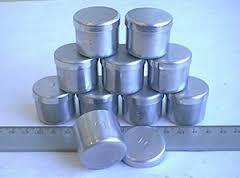
For laboratory research, aluminum boxes in various sizes are widely used. In particular, the bagsserve as a container for trial sampling and storage of soil samples, sand mixtures, and cores. Also, aluminum containers are used as penetration cups to determine the penetration of road bitumen from oil. In addition to oil, other petroleum products can also be stored in the tank. Aluminum pants serve as reservoirs for determining the humidity of soil materials, grains.
Aluminum containers are widely used in the following industries:
geological exploration and geological exploration studies;
grain processing industry;
chemical, petrochemical, paint and varnish industries.
In road and construction activities, aluminum biks are used - which are produced according to certain standards. Products according to GOST 5180-84 are required to specify the density of soil layers using the cutting ring method.(//tractor-service.com)
According to the state standard 1440-78, boxes are produced for the penetration of petroleum products. GOST 310.4-81 boxes are required to determine the quality and chemical parameters of cement. Vasiliev's equipment includes containers for laboratory studies of the physical composition of the soil.
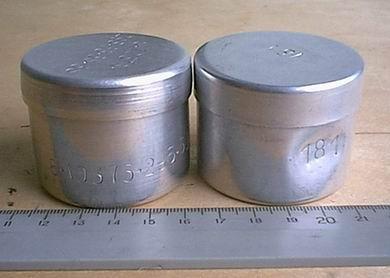
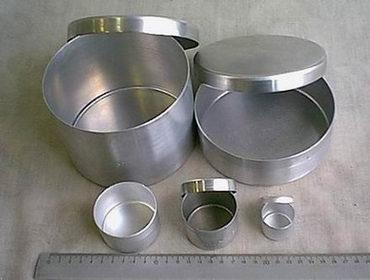
Laboratory bags are a simple design that consists of a main container and a lid. The container has a cylindrical shape, similar to a glass. The lid closes tightly and covers the edges of the upper part of the jar by several centimeters.
The quality of the box can be determined by the appearance of the metal and fast closing without interference and long-term selection of the place of optimal formation of the lid. In order to ensure the exact coupling of the lid and the cup, the boxes are additionally calibrated during the manufacturing process.
Aluminum boxes are capable of:
subjected to repeated heating to a temperature of 100 to 250 degrees;
to be used for evaporation and drying of test materials in water baths, in drying boxes and thermostatic devices;
subjected to short-term heating of the box up to 300-400 degrees.
Boxes are made of aluminum, which can provide light weight and a long service life without the formation of plaque. The construction of the box is made of stamped cast aluminum. The bottom of the container should not be soldered, so that later there are no difficulties with lowering the lower part. The rounded bottom of the box avoids chafing of the edges and reduces injury rates during work. An important advantage of the box design is the numbering of the boxes so that there is no confusion with samples when storing samples.
Aluminum containers are widely used in the following industries:
geological exploration and geological exploration studies;
grain processing industry;
chemical, petrochemical, paint and varnish industries.
In road and construction activities, aluminum biks are used - which are produced according to certain standards. Products according to GOST 5180-84 are required to specify the density of soil layers using the cutting ring method.(//tractor-service.com)
According to the state standard 1440-78, boxes are produced for the penetration of petroleum products. GOST 310.4-81 boxes are required to determine the quality and chemical parameters of cement. Vasiliev's equipment includes containers for laboratory studies of the physical composition of the soil.
Laboratory bags are a simple design that consists of a main container and a lid. The container has a cylindrical shape, similar to a glass. The lid closes tightly and covers the edges of the upper part of the jar by several centimeters.
The quality of the box can be determined by the appearance of the metal and fast closing without interference and long-term selection of the place of optimal formation of the lid. In order to ensure the exact coupling of the lid and the cup, the boxes are additionally calibrated during the manufacturing process.
Aluminum boxes are capable of:
subjected to repeated heating to a temperature of 100 to 250 degrees;
to be used for evaporation and drying of test materials in water baths, in drying boxes and thermostatic devices;
subjected to short-term heating of the box up to 300-400 degrees.
Boxes are made of aluminum, which can provide light weight and a long service life without the formation of plaque. The construction of the box is made of stamped cast aluminum. The bottom of the container should not be soldered, so that later there are no difficulties with lowering the lower part. The rounded bottom of the box avoids chafing of the edges and reduces injury rates during work. An important advantage of the box design is the numbering of the boxes so that there is no confusion with samples when storing samples.
|
Author, contacts | |
Aleksandr/ feedback, info./ evaluation of activity | |
|
Phone:
+380xxxxxx
show
| |
All user ads ~68 | |
Ad ID: #1059431
(added by a registered user, registration date: 14-08-2019)
Added/Updated: 09-12-2026 15:30 (current, until: 12-09-2027)
Permanent Ad Address:
Impressions / views for today: ?, total: ?
Similar ads
Among them there are many interesting ones...