Sell / buy
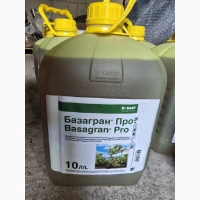
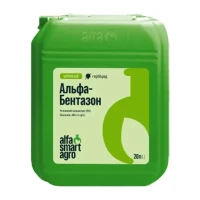
Bazagran (480 g/l Bentazon), Khmelnytskyi region.
Region:
Khmelnytska region.
Description
Advantages:
• it is not phytotoxic for crops under various weather conditions.
• works against a large number of weeds
• has registration for grain crops with clover and alfalfa seeding.
• wide range of application
Active substance:
bentazone (480 g/l)
Preparative form
water solution (BP)
Basic unit: 20 l
Mechanism of action:
Bentazon has a pronounced contact effect and is absorbed mainly by the green parts of plants. The active substance disrupts the process of photosynthesis. Weed dying occurs after 3-5 days.
BAZAgran® is the only herbicide that completely destroys annual dicots, including those resistant to 2,4-d and 2M-4X.
Advantages of BAZAGRAN® herbicide:
· works well against dicotyledonous weeds in the following crops:cereals (barley,wheat, rye, oats), cereals with seeding (clover, alfalfa), legumes (clover, alfalfa),legumes (soy, peas, beans)
· has excellent tolerance to all the above-mentioned cultures
· has a long period of time.
· easy to use(//tractor-service.com)
· allows you to obtain clean clover seeds, the problem of cleaning clover seeds from hard-to-separate weed seeds (the tenacious nightshade, chamomile species, plantain, gorse, bindweed, etc.) is completely eliminated.
· provides a significant reduction in pre-harvest losses and losses during harvesting.
Action of the herbicide BAZAGRAN®.
BAZAGRAN® is a contact herbicide and is mainly absorbed by the green parts of plants. To achieve good results, the leaves and stems of the weeds must be sufficiently moistened with the herbicide. The death of weeds occurs somewhat more slowly than when using herbicides from other groups. Cold weather slows down the onset of action of this herbicide. BAZAGRAN® can be used only after crop germination. Weeds should rise by the time of processing.
Thanks to excellent selectivity, the term of application of the herbicide is determined not by the stage of development of crops, but by the stage of development of weeds, which should not be at the stage of more than 2-4 leaves. Processing should be carried out no later than the period when the growing crop will cover the weeds from the herbicide solution.
Cereals with seeding
Sowing of a cover crop. Alfalfa, clover and cereals can be sown in cereals a few days after treatment with BAZAGRAN® herbicide.
Cereal crops with sprouts of alfalfa, red and white clover, as well as legume-cereal mixtures can be processed after the formation of the 3rd pinnate leaf in legumes. Cereals should reach the stage of 3 leaves.
Alfalfa
The main area of application of BAZAGRAN® herbicide in alfalfa is new crops and seed crops. Thanks to its selectivity, it is possible to apply the herbicide already in the hour of sowing alfalfa. On seed crops, it is especially important that the culture grows without weeds and that the alfalfa crop is free of weed seeds.
Red and white clover
On old crops of these crops, BAZAGRAN® should be used at a plant height of 10-15 cm. In new crops, from the 3rd pinnate leaf. Avoid spraying at temperatures above 20 °C. Tests of the drug on crops of red clover of the first and second year of vegetation, including seed crops, showed that the herbicide is effective during the period of spring regrowth and before the beginning of crop stemming (at a plant height of 10-15 cm).
Soya
BAZAGRAN® destroys the majority of available broad-leaved weeds, including such hard-to-eradicate weeds as black solanum, white nightshade, species of sedum, and species of gorse. Against cereal weeds, ARAMO® 45 should be used in a dose of 2.0 l/ha in the phase of 2-4 leaves in annual weeds, when the height of creeping wheatgrass is 10-15 cm.
Terms of use. On the basis of the good selectivity of the herbicide BAZAGRAN® in soybeans, spraying of crops is carried out in the phase of 1-3 true leaves of the culture. The sensitivity of weeds and at the same time the success of the fight against them is greater, the smaller the number of weeds at the time of processing, i.e. The herbicide should be applied mainly when the weeds are still small and
are actively growing. At this stage (2 leaves), they are eradicated more easily and with smaller recommended doses. As a rule, this period occurs between 14 and 21 days after sowing soybeans. Some weeds, for example, species of daisies, sedge, field mustard, and sedge are still in an active stage of development and are well suppressed by the drug.
Peas
BAZAGRAN® should be used on peas in the phase of 5-6 leaves of the culture. If possible, spraying should be carried out at a temperature of no higher than 20 °C. Processing should not be carried out before night frosts.
http://www.agro.basf.ua/agroportal/ua/ru/m_products/m_productsm_product_catalogue/product_details_1499.html. ads
Advantages:
• it is not phytotoxic for crops under various weather conditions.
• works against a large number of weeds
• has registration for grain crops with clover and alfalfa seeding.
• wide range of application
Active substance:
bentazone (480 g/l)
Preparative form
water solution (BP)
Basic unit: 20 l
Mechanism of action:
Bentazon has a pronounced contact effect and is absorbed mainly by the green parts of plants. The active substance disrupts the process of photosynthesis. Weed dying occurs after 3-5 days.
BAZAgran® is the only herbicide that completely destroys annual dicots, including those resistant to 2,4-d and 2M-4X.
Advantages of BAZAGRAN® herbicide:
· works well against dicotyledonous weeds in the following crops:cereals (barley,wheat, rye, oats), cereals with seeding (clover, alfalfa), legumes (clover, alfalfa),legumes (soy, peas, beans)
· has excellent tolerance to all the above-mentioned cultures
· has a long period of time.
· easy to use(//tractor-service.com)
· allows you to obtain clean clover seeds, the problem of cleaning clover seeds from hard-to-separate weed seeds (the tenacious nightshade, chamomile species, plantain, gorse, bindweed, etc.) is completely eliminated.
· provides a significant reduction in pre-harvest losses and losses during harvesting.
Action of the herbicide BAZAGRAN®.
BAZAGRAN® is a contact herbicide and is mainly absorbed by the green parts of plants. To achieve good results, the leaves and stems of the weeds must be sufficiently moistened with the herbicide. The death of weeds occurs somewhat more slowly than when using herbicides from other groups. Cold weather slows down the onset of action of this herbicide. BAZAGRAN® can be used only after crop germination. Weeds should rise by the time of processing.
Thanks to excellent selectivity, the term of application of the herbicide is determined not by the stage of development of crops, but by the stage of development of weeds, which should not be at the stage of more than 2-4 leaves. Processing should be carried out no later than the period when the growing crop will cover the weeds from the herbicide solution.
Cereals with seeding
Sowing of a cover crop. Alfalfa, clover and cereals can be sown in cereals a few days after treatment with BAZAGRAN® herbicide.
Cereal crops with sprouts of alfalfa, red and white clover, as well as legume-cereal mixtures can be processed after the formation of the 3rd pinnate leaf in legumes. Cereals should reach the stage of 3 leaves.
Alfalfa
The main area of application of BAZAGRAN® herbicide in alfalfa is new crops and seed crops. Thanks to its selectivity, it is possible to apply the herbicide already in the hour of sowing alfalfa. On seed crops, it is especially important that the culture grows without weeds and that the alfalfa crop is free of weed seeds.
Red and white clover
On old crops of these crops, BAZAGRAN® should be used at a plant height of 10-15 cm. In new crops, from the 3rd pinnate leaf. Avoid spraying at temperatures above 20 °C. Tests of the drug on crops of red clover of the first and second year of vegetation, including seed crops, showed that the herbicide is effective during the period of spring regrowth and before the beginning of crop stemming (at a plant height of 10-15 cm).
Soya
BAZAGRAN® destroys the majority of available broad-leaved weeds, including such hard-to-eradicate weeds as black solanum, white nightshade, species of sedum, and species of gorse. Against cereal weeds, ARAMO® 45 should be used in a dose of 2.0 l/ha in the phase of 2-4 leaves in annual weeds, when the height of creeping wheatgrass is 10-15 cm.
Terms of use. On the basis of the good selectivity of the herbicide BAZAGRAN® in soybeans, spraying of crops is carried out in the phase of 1-3 true leaves of the culture. The sensitivity of weeds and at the same time the success of the fight against them is greater, the smaller the number of weeds at the time of processing, i.e. The herbicide should be applied mainly when the weeds are still small and
are actively growing. At this stage (2 leaves), they are eradicated more easily and with smaller recommended doses. As a rule, this period occurs between 14 and 21 days after sowing soybeans. Some weeds, for example, species of daisies, sedge, field mustard, and sedge are still in an active stage of development and are well suppressed by the drug.
Peas
BAZAGRAN® should be used on peas in the phase of 5-6 leaves of the culture. If possible, spraying should be carried out at a temperature of no higher than 20 °C. Processing should not be carried out before night frosts.
http://www.agro.basf.ua/agroportal/ua/ru/m_products/m_productsm_product_catalogue/product_details_1499.html. ads
Ad ID: #574105
(added by a registered user)
Permanent ad address:
Showed / watched for today: ?, total: ?
Similar fresh ads
Among them there are many interesting ones...