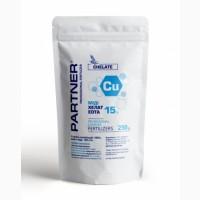
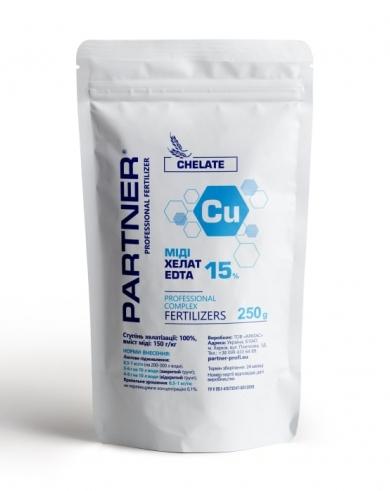
/ Fertilizers and plant protection products / Regulators of plant growth / Manganese Chelate Mn EDTA 13% Fertilizer PARTNER



Sell / buy
Manganese Chelate Mn EDTA 13% Fertilizer PARTNER, Chernivtsi region.
Region:all of Ukraine,
Chernovit region.
(Ukraine)
Updated:
Degree of chelation 100%, manganese content - Mn 130 g/kg
Manganese is necessary for the normal course of photosynthesis, contributing to an increase in the amount of chlorophyll in the leaf, the synthesis of sugars and ascorbic acid (vitamin C). It takes part in redox reactions, activating more than 35 enzymes, regulates the water regime, increases resistance to adverse factors, and also affects plant fruiting and promotes their active development. It is able to be quickly absorbed and move in plants. In addition, manganese regulates the supply of other microelements, affects the movement of phosphorus from older parts of the plant to young ones.
Manganese deficiency is aggravated at low temperatures and high humidity. In this regard, in early spring, winter crops suffer the most from the deficiency of this element.
With a lack of manganese, the synthesis of organic substances decreases, the content of chlorophyll in plants decreases, which leads to chlorosis.
The most sensitive crops: winter crops, soybeans, sugar beets,potatoes, as well as oats, apple trees, cherries andraspberries.
Properties of manganese chelate Mn EDTA 13%:
non-toxic;
does not contain chlorine;
stable in a wide range of pH of the working solution;(//tractor-service.com)
compatible with mineral fertilizers and pesticides;
completely soluble in water and easily absorbed by plants;
resistant to the influence of microorganisms;
is characterized by high transport activity and permeability through plant leaves.
Deposit rates: 156
Позакореневе живлення - 0,3-1 кг/га.
Drip irrigation - 0.5-1 kg/ha.
It is recommended to perform repeated treatments with an interval of 7-10 days.
Line of trace elements "Chelate"
Trace elements Fe, Cu, Mn, Zn are in chelated form (EDTA) and are absorbed by the plant by 90-95%. Microfertilizers improve the protective properties of crops, their resistance to climatic features and disease.
Manganese is necessary for the normal course of photosynthesis, contributing to an increase in the amount of chlorophyll in the leaf, the synthesis of sugars and ascorbic acid (vitamin C). It takes part in redox reactions, activating more than 35 enzymes, regulates the water regime, increases resistance to adverse factors, and also affects plant fruiting and promotes their active development. It is able to be quickly absorbed and move in plants. In addition, manganese regulates the supply of other microelements, affects the movement of phosphorus from older parts of the plant to young ones.
Manganese deficiency is aggravated at low temperatures and high humidity. In this regard, in early spring, winter crops suffer the most from the deficiency of this element.
With a lack of manganese, the synthesis of organic substances decreases, the content of chlorophyll in plants decreases, which leads to chlorosis.
The most sensitive crops: winter crops, soybeans, sugar beets,potatoes, as well as oats, apple trees, cherries andraspberries.
Properties of manganese chelate Mn EDTA 13%:
non-toxic;
does not contain chlorine;
stable in a wide range of pH of the working solution;(//tractor-service.com)
compatible with mineral fertilizers and pesticides;
completely soluble in water and easily absorbed by plants;
resistant to the influence of microorganisms;
is characterized by high transport activity and permeability through plant leaves.
Deposit rates: 156
Позакореневе живлення - 0,3-1 кг/га.
Drip irrigation - 0.5-1 kg/ha.
It is recommended to perform repeated treatments with an interval of 7-10 days.
Line of trace elements "Chelate"
Trace elements Fe, Cu, Mn, Zn are in chelated form (EDTA) and are absorbed by the plant by 90-95%. Microfertilizers improve the protective properties of crops, their resistance to climatic features and disease.
PRICE PARTNER™
Fertilizer PARTNER™ Presentation- Download
Fertilizer PARTNER™ Presentation- Download
|
Store, contacts | |
Partner PF / отзывы, инфо./ evaluation activities | |
|
Telephone:
(050xxxxxx
show
| |
| https://partner-pf.ua.market/ | |
| youtube.com/playlist?list=PLoIxIksuvXxD20CGpDJMmBc5O-m_ArShW | |
All user ads ~22 | |

Ad ID: #1108322
(added by a registered user, registration date: 03-13-2021)
Added / Updated: 09-30-2026 08:19 (current, until: 30-09-2027)
Permanent ad address:
Showed / watched for today: ?, total: ?
Similar ads
Among them there are many interesting ones...