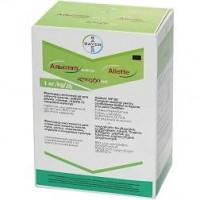
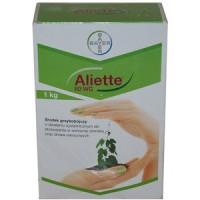
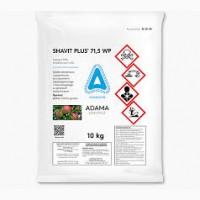
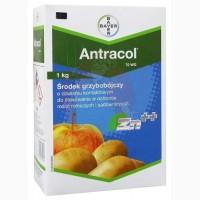
/ Fertilizers and plant protection products / Fungicides / Fungicide Alette 1kg, Bayer (Bayer), Germany---for...

For sale / buy
Fungicide Allette 1kg, Bayer, Germany---for cucumbers, strawberries, onions, Dnipropetrovsk region.
Region:everywhere Ukraine,
Dnipropetrovsk region.
(Dnipropetrovsk region. city of Dnipro railway station Topolya-2)
Product description
Payment and delivery
Description
ALYETT is a systemic fungicide with protective action. It quickly penetrates deep into the plant and moves in a downward and upward motion. It affects the germination of fungal spores and blocks the further spread of the disease. The drug also strengthens the protective properties of plants against the penetration of infection into the depths of the plant.
Advantages:
full ascending and descending action against fungi of the oomycete class, which provides better protection of crops compared to fungicides of contact action;
quickly penetrates the plant, which gives the opportunity to prevent the drug from being washed away by rain or icing;
fungicide with long-lasting action, which gives the opportunity to reduce the number of sprayings. At the same time, even new shoots are protected;
does not cause resistance to fungicides in culture.
The composition of the drug: Fosetil aluminum, 800 g/kg.
Preparative form: wettable powder.
Method of application and consumption rates:
Culture
Diseases
Drug consumption rate l/ha (kg/ha)
Time from the last processing toharvest, days
The maximum number of processings
Winter and spring rapeseed
peronosporosis
1.2-1.8 kg/ha, processing (0.3% aqueous suspension)
30
on winter rapeseed - 2,
on spring rape - 1.
Hops
peronosporosis
3.0-5.0 kg/ha
(0.17-0.3% aqueous suspension)
20
2
Onion (testicles)
peronosporosis
1.2-2.0 kg/ha (0.4% aqueous suspension).
20
5
Open ground cucumbers
peronosporosis
2.0 kg/ha
(0.3% aqueous suspension)
7
3
Zemlyanika (nursery)
Phytophthora rot of fruits
4.0 kg/ha
For young people, it is planted a month after planting and again in the spring of the following year. For established plantations - the first time after harvesting, the second time - after a month, the third time - in the spring of the following year.
2
Apple tree including nurseries
(registration is expected)
Bacterial burn, late blight of the root and trunk (prophylactically)
1.5-3.0 kg/ha(//tractor-service.com)
600-1100 l/ha.
The 1st treatment is during the full bloom of the first leaves.
2nd treatment - 4-5 weeks after the first one.
Phytophthora root and trunk rot (if there is a disease focus)
treatment of the soil and doubling over it with a 0.5% solution of the drug at the rate of 0.5-1.0 l of solution per tree
1st processing – after flowering.
2nd processing - after 4-5 weeks after the first one.
Description and instruction
Cucumbers often experience an unexpected attack of such a disease as powdery mildew, or downy mildew, the causative agent of which is the fungus Peronospora cubensis. This disease develops in very warm weather and high humidity. Peronosporosis manifests itself in the form of rounded and rectangular yellow-brown spots, which are covered with a gray-violet coating on the underside. In the case of severe damage, the leaves become brittle, the affected tissue falls off, and the leaf becomes perforated or only a stalk remains.
Hops are very sensitive to such a disease as powdery mildew, which is caused by Pseudoperonosporahumili. This most harmful disease of hops is, after all, the most dangerous for the leaf surface. Therefore, every year hop growers need a significant amount of processing. To ensure reliable protection of the most disease-sensitive hop varieties, it is necessary to treat them more than 15 times during the season with the use of traditional contact fungicides. Onions are also affected by powdery mildew (Peronosporadestructor) and require multiple treatments with traditional fungicides.
Compatibility:
Do not mix Alette with preparations based on copper, as well as with nitrogenfertilizers for foliar fertilizing. All other mixtures need to be tested for compatibility.
Preparation of working solution:
Pour the necessary amount of the drug into the tank with water. Before mixing the solution, leave it for some time so that the drug is saturated with water, and then mix thoroughly to obtain a homogeneous working solution.
Features of use:
It should be remembered that Alette is a prophylactic drug that strengthens the functions of protecting plants from pathogens. Therefore, the first treatment should be carried out ahead of time. As a last resort, treatment with Aletto should be carried out before the first signs of plant disease appear.
Peronosporosis (also known as powdery mildew) is considered the most common diseases in cucumbers and onions, and late blight in strawberries. To protect plants from these diseases, SBM Life Sciences offers the highly effective fungicide Alette, which can also be used on seed and stone fruit crops.
Alett fungicide produced by Bayer AG will reliably protect apple, pear, peach, and cherry from late blight "root neck" rot. In addition, it is effective against bacterial burn on apple trees.
The active substance of the Alette drug - fosetyl aluminum - is unique both in the way it moves through the plant and in its mechanism of action.
This is one of the few preparations that is able to move along the plant in two directions - acropetally and basipetalally, from bottom to top and from top to bottom, to young sprouts and young roots. Moreover, penetration occurs almost instantaneously, and complete saturation of the plant with the active substance occurs within one hour!
How does Alette work
Regarding the effect on pathogens, there is a difference between the immediate fungicidal effect and the effect of stimulating plant resistance.
The fungicidal effect is best manifested in the conditions of prophylactic treatment and looks like inhibition of the germination of zoospores or conidia and inhibition of the development of the mycelium of the fungus.
Fosetil aluminum also has a unique immunostimulant effect.
The presence of this substance in plant cells provokes increased synthesis of some proteins and phytoalexins, which prevent the penetration of pathogens into cells.
A plant untreated with Alet fungicide is also able to produce them, but in a much smaller volume and much slower.
To date, not a single pathogen is known that would have signs of resistance to fosetil, so the presence of the Alette drug in plant protection systems is the key to success.
Appointment and recommendations for the use of Alette fungicide
It should be remembered that Alette fungicide is a prophylactic drug that strengthens the functions of protecting plants from pathogens. Therefore, the first processing of crops should be carried out in advance, according to the signal of the forecasting service. As a last resort, treatment with the drug Alette is carried out as soon as the first signs of the disease appear.
Spraying is carried out with a freshly prepared solution in dry, windless weather early in the morning or in the evening, evenly wetting the leaves of plants with the solution. Do not allow the solution to run off the leaves. The rate of consumption of working fluid is 1 liter per 10 m2.
During the vegetation period, cucumbers and apple trees are sprayed with a 0.3% aqueous suspension of the drug, onions - 0.4%, strawberries - 0.2%.
Against phytophthora rot of the root neck of apple, pear, peach, cherry trees - watering is carried out with a 0.5% solution at the rate of 0.5-1.0 liters per tree (the first treatment after flowering, the second - 4-5 weeks after the first).
Culture
Diseases
Rate of consumption, g/hectare
The term of the last treatment in days before harvest The maximum number of treatments
Cucumbers in open ground
False powdery mildew
12-20
7
3
Onion
False powdery mildew
12-20 20 5
Strawberry (nursery)
Phytophthora rot of fruits 40 - 2
Apple tree
Bacterial burn 30 30 3
Apple, pear, peach, cherry Phytophthora root neck rot
0.5% solution, 0.5-1.0 l/tree.
30 2
Alette is registered for retail sale to the public for outdoor cucumbers and is supplied in boxes of 1 kg.
Payment and delivery
Description
ALYETT is a systemic fungicide with protective action. It quickly penetrates deep into the plant and moves in a downward and upward motion. It affects the germination of fungal spores and blocks the further spread of the disease. The drug also strengthens the protective properties of plants against the penetration of infection into the depths of the plant.
Advantages:
full ascending and descending action against fungi of the oomycete class, which provides better protection of crops compared to fungicides of contact action;
quickly penetrates the plant, which gives the opportunity to prevent the drug from being washed away by rain or icing;
fungicide with long-lasting action, which gives the opportunity to reduce the number of sprayings. At the same time, even new shoots are protected;
does not cause resistance to fungicides in culture.
The composition of the drug: Fosetil aluminum, 800 g/kg.
Preparative form: wettable powder.
Method of application and consumption rates:
Culture
Diseases
Drug consumption rate l/ha (kg/ha)
Time from the last processing toharvest, days
The maximum number of processings
Winter and spring rapeseed
peronosporosis
1.2-1.8 kg/ha, processing (0.3% aqueous suspension)
30
on winter rapeseed - 2,
on spring rape - 1.
Hops
peronosporosis
3.0-5.0 kg/ha
(0.17-0.3% aqueous suspension)
20
2
Onion (testicles)
peronosporosis
1.2-2.0 kg/ha (0.4% aqueous suspension).
20
5
Open ground cucumbers
peronosporosis
2.0 kg/ha
(0.3% aqueous suspension)
7
3
Zemlyanika (nursery)
Phytophthora rot of fruits
4.0 kg/ha
For young people, it is planted a month after planting and again in the spring of the following year. For established plantations - the first time after harvesting, the second time - after a month, the third time - in the spring of the following year.
2
Apple tree including nurseries
(registration is expected)
Bacterial burn, late blight of the root and trunk (prophylactically)
1.5-3.0 kg/ha(//tractor-service.com)
600-1100 l/ha.
The 1st treatment is during the full bloom of the first leaves.
2nd treatment - 4-5 weeks after the first one.
Phytophthora root and trunk rot (if there is a disease focus)
treatment of the soil and doubling over it with a 0.5% solution of the drug at the rate of 0.5-1.0 l of solution per tree
1st processing – after flowering.
2nd processing - after 4-5 weeks after the first one.
Description and instruction
Cucumbers often experience an unexpected attack of such a disease as powdery mildew, or downy mildew, the causative agent of which is the fungus Peronospora cubensis. This disease develops in very warm weather and high humidity. Peronosporosis manifests itself in the form of rounded and rectangular yellow-brown spots, which are covered with a gray-violet coating on the underside. In the case of severe damage, the leaves become brittle, the affected tissue falls off, and the leaf becomes perforated or only a stalk remains.
Hops are very sensitive to such a disease as powdery mildew, which is caused by Pseudoperonosporahumili. This most harmful disease of hops is, after all, the most dangerous for the leaf surface. Therefore, every year hop growers need a significant amount of processing. To ensure reliable protection of the most disease-sensitive hop varieties, it is necessary to treat them more than 15 times during the season with the use of traditional contact fungicides. Onions are also affected by powdery mildew (Peronosporadestructor) and require multiple treatments with traditional fungicides.
Compatibility:
Do not mix Alette with preparations based on copper, as well as with nitrogenfertilizers for foliar fertilizing. All other mixtures need to be tested for compatibility.
Preparation of working solution:
Pour the necessary amount of the drug into the tank with water. Before mixing the solution, leave it for some time so that the drug is saturated with water, and then mix thoroughly to obtain a homogeneous working solution.
Features of use:
It should be remembered that Alette is a prophylactic drug that strengthens the functions of protecting plants from pathogens. Therefore, the first treatment should be carried out ahead of time. As a last resort, treatment with Aletto should be carried out before the first signs of plant disease appear.
Peronosporosis (also known as powdery mildew) is considered the most common diseases in cucumbers and onions, and late blight in strawberries. To protect plants from these diseases, SBM Life Sciences offers the highly effective fungicide Alette, which can also be used on seed and stone fruit crops.
Alett fungicide produced by Bayer AG will reliably protect apple, pear, peach, and cherry from late blight "root neck" rot. In addition, it is effective against bacterial burn on apple trees.
The active substance of the Alette drug - fosetyl aluminum - is unique both in the way it moves through the plant and in its mechanism of action.
This is one of the few preparations that is able to move along the plant in two directions - acropetally and basipetalally, from bottom to top and from top to bottom, to young sprouts and young roots. Moreover, penetration occurs almost instantaneously, and complete saturation of the plant with the active substance occurs within one hour!
How does Alette work
Regarding the effect on pathogens, there is a difference between the immediate fungicidal effect and the effect of stimulating plant resistance.
The fungicidal effect is best manifested in the conditions of prophylactic treatment and looks like inhibition of the germination of zoospores or conidia and inhibition of the development of the mycelium of the fungus.
Fosetil aluminum also has a unique immunostimulant effect.
The presence of this substance in plant cells provokes increased synthesis of some proteins and phytoalexins, which prevent the penetration of pathogens into cells.
A plant untreated with Alet fungicide is also able to produce them, but in a much smaller volume and much slower.
To date, not a single pathogen is known that would have signs of resistance to fosetil, so the presence of the Alette drug in plant protection systems is the key to success.
Appointment and recommendations for the use of Alette fungicide
It should be remembered that Alette fungicide is a prophylactic drug that strengthens the functions of protecting plants from pathogens. Therefore, the first processing of crops should be carried out in advance, according to the signal of the forecasting service. As a last resort, treatment with the drug Alette is carried out as soon as the first signs of the disease appear.
Spraying is carried out with a freshly prepared solution in dry, windless weather early in the morning or in the evening, evenly wetting the leaves of plants with the solution. Do not allow the solution to run off the leaves. The rate of consumption of working fluid is 1 liter per 10 m2.
During the vegetation period, cucumbers and apple trees are sprayed with a 0.3% aqueous suspension of the drug, onions - 0.4%, strawberries - 0.2%.
Against phytophthora rot of the root neck of apple, pear, peach, cherry trees - watering is carried out with a 0.5% solution at the rate of 0.5-1.0 liters per tree (the first treatment after flowering, the second - 4-5 weeks after the first).
Culture
Diseases
Rate of consumption, g/hectare
The term of the last treatment in days before harvest The maximum number of treatments
Cucumbers in open ground
False powdery mildew
12-20
7
3
Onion
False powdery mildew
12-20 20 5
Strawberry (nursery)
Phytophthora rot of fruits 40 - 2
Apple tree
Bacterial burn 30 30 3
Apple, pear, peach, cherry Phytophthora root neck rot
0.5% solution, 0.5-1.0 l/tree.
30 2
Alette is registered for retail sale to the public for outdoor cucumbers and is supplied in boxes of 1 kg.
Ad ID: #993610
(added by a registered user)
Permanent Ad Address:
Impressions / views for today: ?, total: ?
Similar recent ads
There are many interesting ones among them...