Sell / buy
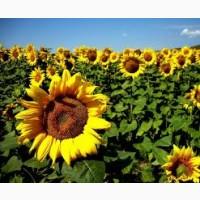
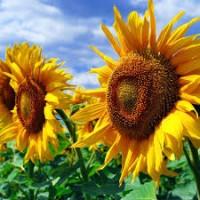
NS ZLATYBOR sunflower hybrid, Kharkiv region.
Price62$ / package
Region:all Ukraine,
Kharkiv region.
Updated:
Purpose of grain: Seed material
Quantity: 100 tons
Selection
Serbian
Tare unit
sowing unit / 150,000 seeds
Faction
Standard, Extra
Seed processing
Fungicidal protoxin
Vegetation period
106-115 days
Drought resistance
high (9-10 points)
Lupus resistance
7 races +
Sowing density
Zone of sufficient moisture 55-60 thousand/ha, Zone of insufficient moisture 45-50 thousand/ha
(//tractor-service.com)
The best growing areas
Dnipropetrovsk, Donetsk, Zaporizhzhya, Kirovohrad, Luhansk, Mykolaiv, Odesa, Kharkiv
The novelty of the market of Serbian sunflower hybrids is the Zlatibor sunflower. This hybrid has the most relevant feature today - resistance to lupus. Many farmers determine the tolerance of sunflowers to lupus as the main selection criteria when buying hybrids. Demand for resistant hybrids can be explained by several factors:
- the accumulation of residues ofimidazoline herbicides group in the soil became a big problem in connection with the annual decrease in precipitation;
– herbicides accumulated in the soil make it impossible to obtain a cropcereals above 2.5-3 t / ha;
- the rapid mutation of the wolf races makes the resistance of hybrids to 4 or 5 races ineffective;
- in recent years, the wolf has been rapidly moving to the north of the country. Infected fields were found even in the Sumy and Chernihiv regions.
The Zlatibor sunflower hybrid was developed specifically for the Ukrainian market. The advantage of this hybrid is its tolerance to Ukrainian wolf breeds. In addition to the A-G classification, there are also regional differences in lupus races. The sunflower, which is tolerant to the Spanish race, will not always prevent the germination of the wolfberry in the Ukrainian field. Parental lines of the Zlatibor sunflower were selected precisely taking into account resistance to races that are parasites in the South-East of Ukraine.
Zlatibor has a vegetation period of 109-112 days, which allows harvesting up to 48 t/ha with optimal nutrition and favorable weather factors. Under experimental conditions, the yield of Serbian Zlatibor sunflower in 2015-2017 was:
Luhansk region - 24 t/ha;
Donetsk region - 22 t/ha;
Zaporizhzhia region – 23 t/ha;
Mykolayiv region - 22.5 t/ha.
Serbian
Tare unit
sowing unit / 150,000 seeds
Faction
Standard, Extra
Seed processing
Fungicidal protoxin
Vegetation period
106-115 days
Drought resistance
high (9-10 points)
Lupus resistance
7 races +
Sowing density
Zone of sufficient moisture 55-60 thousand/ha, Zone of insufficient moisture 45-50 thousand/ha
(//tractor-service.com)
The best growing areas
Dnipropetrovsk, Donetsk, Zaporizhzhya, Kirovohrad, Luhansk, Mykolaiv, Odesa, Kharkiv
The novelty of the market of Serbian sunflower hybrids is the Zlatibor sunflower. This hybrid has the most relevant feature today - resistance to lupus. Many farmers determine the tolerance of sunflowers to lupus as the main selection criteria when buying hybrids. Demand for resistant hybrids can be explained by several factors:
- the accumulation of residues ofimidazoline herbicides group in the soil became a big problem in connection with the annual decrease in precipitation;
– herbicides accumulated in the soil make it impossible to obtain a cropcereals above 2.5-3 t / ha;
- the rapid mutation of the wolf races makes the resistance of hybrids to 4 or 5 races ineffective;
- in recent years, the wolf has been rapidly moving to the north of the country. Infected fields were found even in the Sumy and Chernihiv regions.
The Zlatibor sunflower hybrid was developed specifically for the Ukrainian market. The advantage of this hybrid is its tolerance to Ukrainian wolf breeds. In addition to the A-G classification, there are also regional differences in lupus races. The sunflower, which is tolerant to the Spanish race, will not always prevent the germination of the wolfberry in the Ukrainian field. Parental lines of the Zlatibor sunflower were selected precisely taking into account resistance to races that are parasites in the South-East of Ukraine.
Zlatibor has a vegetation period of 109-112 days, which allows harvesting up to 48 t/ha with optimal nutrition and favorable weather factors. Under experimental conditions, the yield of Serbian Zlatibor sunflower in 2015-2017 was:
Luhansk region - 24 t/ha;
Donetsk region - 22 t/ha;
Zaporizhzhia region – 23 t/ha;
Mykolayiv region - 22.5 t/ha.
|
Author, contacts | |
Haskom Trade LLC/ feedback, info./ evaluation of activity | |
|
Phone:
+38(xxxxxx
show
| |
| http://www.khaskom.com.ua | |
All ads user ~599 | |
Ad ID: #976995
(added by registered user, registration date: 12-28-2016)
Added / Updated: 07-16-2026 11:41 (current, until: 16-07-2027)
Permanent Ad Address:
Impressions / views for today: ?, total: ?
Similar ads
Among them there are many interesting ones...