Sell / buy
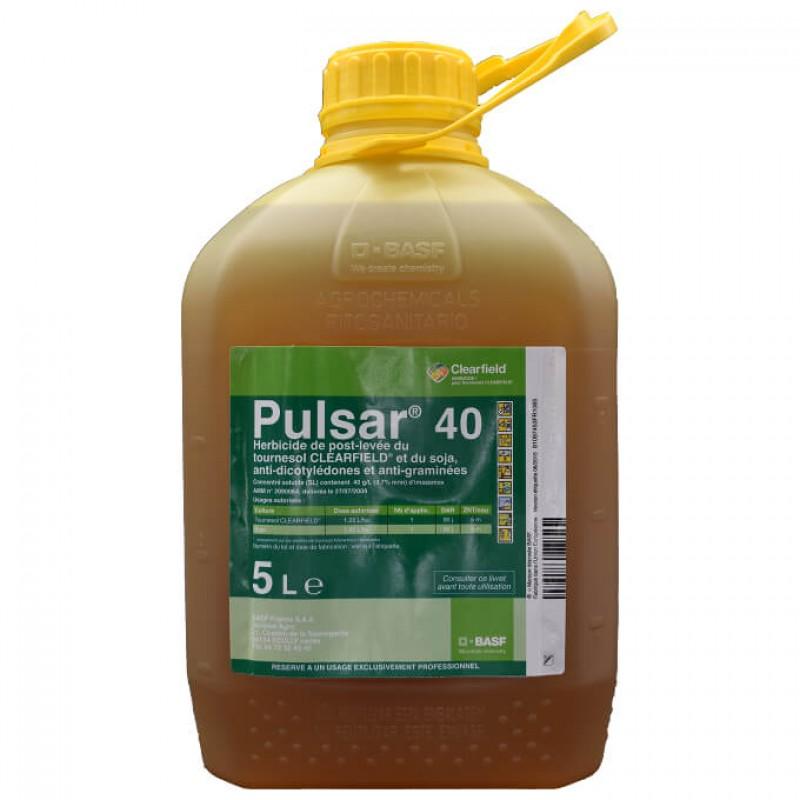
Buy herbicide Pulsar, Kirovohrad region.
Price29.43$
Region:All Ukraine,
Kirovohrad region region.
(Kropivnytskyi)
Updated:
Cereal legumes cultures have always differed in their intensity in terms of growth, harvest, saturation with nutrients. This is the reason for their great importance for agriculture. Recently, the trend towards the emergence of agricultural enterprises that grow soybeans and peas is growing. And this is quite justified. But the difficulties that farmers dealing with these crops have to face are not going anywhere. Weeds and other pests remain a serious problem for any agricultural enterprise. The BASF company presented a new weed control product specially developed for soybeans and peas - the herbicide Pulsar 40, which made the life of many farmers much easier.
The main advantages of Pulsar 40 herbicide
The product perfectly copes with an abundant list of weeds, both cereals and dicotyledons. Thanks to the prolonged soil herbicide action, subsequent waves of weed germination are contained. One-time spraying according to the manufacturer's recommendations will ensure the purity of the crops during almost the entire period of soybean and pea growth. Pulsar herbicide is the gold standard for growing legumes, where minimum costs, minimum treatments and maximum yield are required. It is a post-emergence herbicide, which in turn is quite convenient for the treatment process itself and has a selective effect on the culture. The convenient release form of Pulsar herbicide guarantees safe use and low consumption of the drug. An excellent combination of systemic action and soil activity, minimal restrictions for subsequent crop rotations, undoubtedly, make this drug a premium class SSR.(//tractor-service.com)
Mechanism of influence and important points in application
The main ingredient - imazamox is relatively new in the class of imidazolinones. The principle of its influence is based on inhibition, blockade of certain amino acids that make up proteins, which leads to severe chlorosis of young weeds. Next, necrosis of growth points occurs, the ability of the weed to develop and grow is suspended, the so-called dwarfism is observed, and accordingly the plant dies. Absorption occurs both through the leaves and through the root system of plants. Thus, systemic influence appears. The first visible signs of the herbicidal effect are noticeable after a few days, while internal irreversible processes begin after 2-3 hours. The plant completely dies within 3-6 weeks. It all depends on the type of weed, the dose of the drug and the weather conditions of its application. Since Pulsar herbicide is a high-tech product, there are certain requirements for its use. Before spraying the crops, it is necessary to treat the soil well, the lumps should not exceed 2 cm. During the treatment, it is necessary to exclude or minimize the overlapping of passages, it is important to correctly calculate the uniformity of the spraying, and also to prevent the herbicide from hitting neighboring areas.
Other practical tips
Some special features exist for the general conditions of application of Pulsar herbicide. Like all SZR of the imidazolinone class, this product is allowed to be used no more than once every three years on a specific site. The presence of wind with a force of more than 5 m/s significantly increases the risk of uneven distribution of the drug and its drift to neighboring areas, therefore, under such weather conditions, spraying is not recommended. After processing the crop with Pulsar in the current season, it is prohibited to spray areas with other SZRs from the class of imidazolinones, as well as sulfonylureas. The use of the product in tank mixtures is permitted with the herbicide Bazagran. In each individual case, the dosages of both agents are calculated separately. It is forbidden to combine Pulsar 40 in tank mixtures with other herbicides that protect crops from cereal weeds. The standard consumption of the working fluid is 200-300 l/ha Tips for optimal crop rotation. After the herbicide was applied to the plot, after four months you can start growing winter wheat and rye. Until then - no restrictions on soy, fodder beans, peas. At the end of 9 months, it is allowed to grow spring wheat, spring oats and spring barley, 11 months -maize,sunflower, sorghum, winter barley and rice. The maximum waiting period for metabolizing the product (16 months) should be observed when growing sugar and fodder beets, vegetable and other crops and rapeseed.
The main advantages of Pulsar 40 herbicide
The product perfectly copes with an abundant list of weeds, both cereals and dicotyledons. Thanks to the prolonged soil herbicide action, subsequent waves of weed germination are contained. One-time spraying according to the manufacturer's recommendations will ensure the purity of the crops during almost the entire period of soybean and pea growth. Pulsar herbicide is the gold standard for growing legumes, where minimum costs, minimum treatments and maximum yield are required. It is a post-emergence herbicide, which in turn is quite convenient for the treatment process itself and has a selective effect on the culture. The convenient release form of Pulsar herbicide guarantees safe use and low consumption of the drug. An excellent combination of systemic action and soil activity, minimal restrictions for subsequent crop rotations, undoubtedly, make this drug a premium class SSR.(//tractor-service.com)
Mechanism of influence and important points in application
The main ingredient - imazamox is relatively new in the class of imidazolinones. The principle of its influence is based on inhibition, blockade of certain amino acids that make up proteins, which leads to severe chlorosis of young weeds. Next, necrosis of growth points occurs, the ability of the weed to develop and grow is suspended, the so-called dwarfism is observed, and accordingly the plant dies. Absorption occurs both through the leaves and through the root system of plants. Thus, systemic influence appears. The first visible signs of the herbicidal effect are noticeable after a few days, while internal irreversible processes begin after 2-3 hours. The plant completely dies within 3-6 weeks. It all depends on the type of weed, the dose of the drug and the weather conditions of its application. Since Pulsar herbicide is a high-tech product, there are certain requirements for its use. Before spraying the crops, it is necessary to treat the soil well, the lumps should not exceed 2 cm. During the treatment, it is necessary to exclude or minimize the overlapping of passages, it is important to correctly calculate the uniformity of the spraying, and also to prevent the herbicide from hitting neighboring areas.
Other practical tips
Some special features exist for the general conditions of application of Pulsar herbicide. Like all SZR of the imidazolinone class, this product is allowed to be used no more than once every three years on a specific site. The presence of wind with a force of more than 5 m/s significantly increases the risk of uneven distribution of the drug and its drift to neighboring areas, therefore, under such weather conditions, spraying is not recommended. After processing the crop with Pulsar in the current season, it is prohibited to spray areas with other SZRs from the class of imidazolinones, as well as sulfonylureas. The use of the product in tank mixtures is permitted with the herbicide Bazagran. In each individual case, the dosages of both agents are calculated separately. It is forbidden to combine Pulsar 40 in tank mixtures with other herbicides that protect crops from cereal weeds. The standard consumption of the working fluid is 200-300 l/ha Tips for optimal crop rotation. After the herbicide was applied to the plot, after four months you can start growing winter wheat and rye. Until then - no restrictions on soy, fodder beans, peas. At the end of 9 months, it is allowed to grow spring wheat, spring oats and spring barley, 11 months -maize,sunflower, sorghum, winter barley and rice. The maximum waiting period for metabolizing the product (16 months) should be observed when growing sugar and fodder beets, vegetable and other crops and rapeseed.
|
Shop, contacts | |
Olexii / feedback, info. / activity evaluation | |
|
Phone:
+380xxxxxx
show
| |
All user ads ~87 | |
Ad ID: #832965
(added by a registered user, registration date: 18-07-2018)
Added/Updated: 05-13-2026 08:23 (current, until: 13-05-2027)
Permanent Ad Address:
Impressions / views for today: ?, total: ?
Similar ads
Among them there are many interesting ones...