


For sale / buy
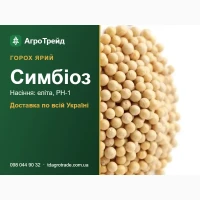
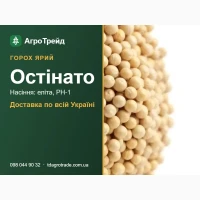
Yellow peas, Dnipropetrovsk region.
Region:All Ukraine,
Dnipropetrovsk region.
(Pyatikhatky)
Grain purpose: Seed material
Pea is an annual self-pollinating herbaceous plant of the legume family. The height of the branching hollow stem can reach up to 250 cm. Flowering of peas begins 30–55 days after sowing the seeds. Peas, like all other plants belonging to the leguminous family, contribute to the enrichment of the soil with nitrogen.
The best predecessors for peas are cucumbers, pumpkins, potatoes and cabbage, and peas themselves are the best predecessors for all cultures without exception. I'll tell you a little secret - potassium and phosphorus fertilizers should be applied to the predecessors of peas, then its fruits will have a more delicate taste.
Sowing seeds in open soil should be carried out in the last days of April (approximately from the twentieth day), after the snow cover has completely melted and the soil has dried slightly. The seedlings that have appeared grow well and do not die even with a mild frost.
Seeds are sown in furrows with a depth of 50 to 70 mm and a width of 15 to 20 centimeters, which must first be made in the garden. The distance between the furrows should be 0.5–0.6 m. During sowing, 15 to 17 seeds should be placed on 1 m of the furrow. The first seedlings should appear after 7–10 days. Between the rows on the bed withpeas you can sow lettuce or radish.(//tractor-service.com)
Germinationpea seeds begins already at an air temperature of 4 to 7 degrees, however, this process takes place best at 10 degrees. It should be taken into account that such a culture reacts extremely negatively to heat, and if it is sown on a hot day, there is a high probability that the grown plants will not bloom. After the height of the bushes is equal to 0.2–0.25 m, supports should be installed in a row, along which the plant will climb up.
Before flowering, the bed should be watered approximately once every 7 days. When the peas will bloom, as well as during the formation of fruits, the frequency of watering is increased up to twice every 7 days. On hot days, peas should also be watered a couple of times a week, while taking 9 to 10 liters of water per 1 square meter of the plot.
Approximately 30 days after the plant blooms, you can start harvesting. The duration of fruiting of this crop is from 35 to 40 days. Such a plant is multi-harvested, so the collection of its fruits is carried out every 2–3 days. Fruits located in the lower part of the bush are the first to ripen.
If it is necessary to obtain grain, after ripeninglower beans, the plant is cut and hung to dry in a ventilated room. After 2 weeks, the beans are husked, and the grains are dried.
The best predecessors for peas are cucumbers, pumpkins, potatoes and cabbage, and peas themselves are the best predecessors for all cultures without exception. I'll tell you a little secret - potassium and phosphorus fertilizers should be applied to the predecessors of peas, then its fruits will have a more delicate taste.
Sowing seeds in open soil should be carried out in the last days of April (approximately from the twentieth day), after the snow cover has completely melted and the soil has dried slightly. The seedlings that have appeared grow well and do not die even with a mild frost.
Seeds are sown in furrows with a depth of 50 to 70 mm and a width of 15 to 20 centimeters, which must first be made in the garden. The distance between the furrows should be 0.5–0.6 m. During sowing, 15 to 17 seeds should be placed on 1 m of the furrow. The first seedlings should appear after 7–10 days. Between the rows on the bed withpeas you can sow lettuce or radish.(//tractor-service.com)
Germinationpea seeds begins already at an air temperature of 4 to 7 degrees, however, this process takes place best at 10 degrees. It should be taken into account that such a culture reacts extremely negatively to heat, and if it is sown on a hot day, there is a high probability that the grown plants will not bloom. After the height of the bushes is equal to 0.2–0.25 m, supports should be installed in a row, along which the plant will climb up.
Before flowering, the bed should be watered approximately once every 7 days. When the peas will bloom, as well as during the formation of fruits, the frequency of watering is increased up to twice every 7 days. On hot days, peas should also be watered a couple of times a week, while taking 9 to 10 liters of water per 1 square meter of the plot.
Approximately 30 days after the plant blooms, you can start harvesting. The duration of fruiting of this crop is from 35 to 40 days. Such a plant is multi-harvested, so the collection of its fruits is carried out every 2–3 days. Fruits located in the lower part of the bush are the first to ripen.
If it is necessary to obtain grain, after ripeninglower beans, the plant is cut and hung to dry in a ventilated room. After 2 weeks, the beans are husked, and the grains are dried.
Ad ID: #830765
(added registered user)
Permanent Ad Address:
Impressions / views for today: ?, total: ?
Similar recent ads
There are many interesting ones among them...
Filters: Pea seeds





Total219 similar fresh adsin the heading "Peas"