/ Bees, honey and beekeeping products, equipment / Beekeeping products / Different beekeeping products + in the assortment / Mordovian sharogolovy (head moth)
Sell / buy
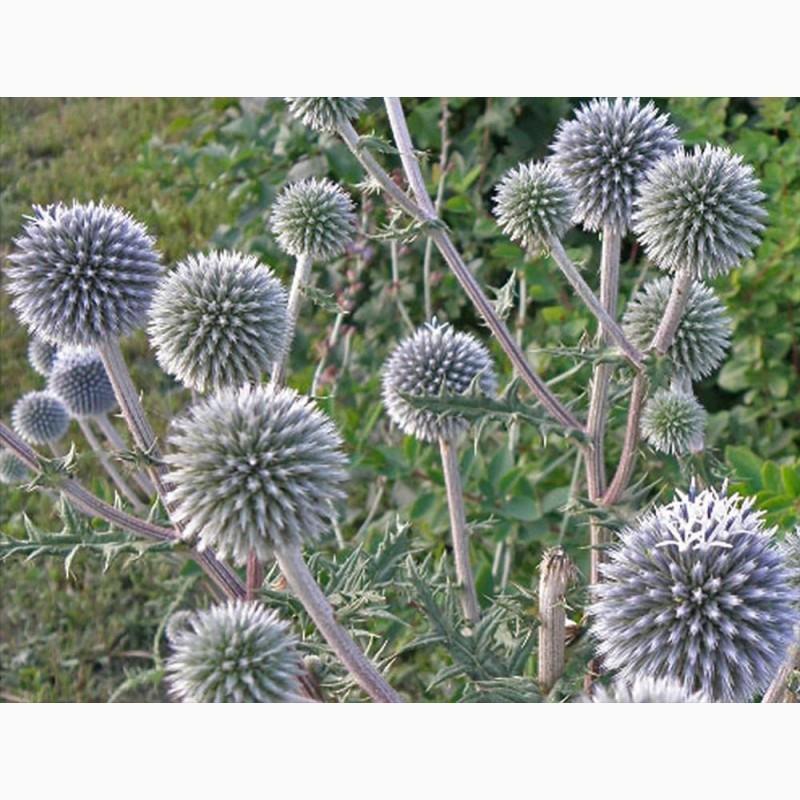
Shoro-headed Mordovian (holovaten), Ivano-Frankivsk region.
Region:
Ivano-Frankivsk region.
Round-headed Mordovnik is a real find for bees. It blooms for more than a month. Nectar-bearing tissue is located in the depth of the flower. Abundantly secreted nectar, coming out into the funnel-shaped expansion of the corolla, sometimes fills the entire inflorescence. With average humidity and very warm weather (25-30°C), the average seasonal nectar content of one flower is more than 2 mg, and in individual flowers it reaches 6 mg. In a drought, the nectar level drops by 50%, but does not stop (unlike buckwheat and many other honey plants). Bees, visiting the mordovnik in large numbers in July-August, often seem to be absorbed in the inflorescences, and several of them work at the same time. Nectar is transparent, colorless, with a light, pleasant, slightly spicy smell. The concentration of sugar in nectar is very high and reaches 65-70%. Nectar productivity of Mordovnica thickets under favorable conditions is up to 600-1200 kg per 1 ha. In addition to nectar,bees take from this plantwhite pollen. Mordovnik grows well on calcareous and chalky soils on wastelands, slopes, among shrubs.
Honey, collected by bees from Mordovnika, has a delicate aroma, has a light amber color and is pleasant to the taste. It is usually included in the composition of honey made from different herbs.
Mordovian honey is considered medicinal, as it contains valuable biologically active substances. Thanks to their medicinal properties, they are able to tone the heart and blood vessels, increase low blood pressure, relieve headaches, eliminate body weakness after fatigue and illness, improve sleep and appetite, and stimulate the nervous system.(//tractor-service.com)
Mordovnik can be successfully used for insemination of plots of land adjacent to apiaries that are not under cultivation (slopes of ravines, meadows, among bushes and other inconveniences), and also sown in apiary plots. The round-headed mordova is not demanding on soil. Mordovnika seeds are easily milked (in mid-August) from the heads. They look like small and thin oat seeds, covered with a light film; floury-vitreous in the fracture; Wormwood-bitter taste. A large amount of valuable oil can be obtained from Mordovnika seeds, the yield of which can reach 20 centners per hectare.
Agrotechnics of the cultivation of Mordovnik sarogolovy is simple. Mordovanny is sown in winter or spring in a mixture with phacelia in the amount of 8 kg of phacelia and 5 kg of mordovanny per 1 ha. The depth of wrapping the seeds — 2 — C cm. The width of the rows — ~70 cm. The seeds do not require preliminary treatment. The similarity of mordovnica seeds is high. To obtain seeds, seeds should be sown in a box in April, and seedlings should be planted in the ground in May, thus obtaining a mother plot. In the first hour, a rosette of leaves grows from the seeds, and in the second hour, a stem grows - a flower-bearing shoot. After insemination, generative shoots die, and new leaf rosettes are formed from the buds of renewal on the root neck, giving rise to a new flower-bearing shoot. It is possible to sow for the winter by simply scattering the seeds on the ground previously loosened with the help of discs. Under the influence of autumn rains, the seeds will be covered with an optimal layer of soil.
Harvesting mordovnika fruits.
Honey, collected by bees from Mordovnika, has a delicate aroma, has a light amber color and is pleasant to the taste. It is usually included in the composition of honey made from different herbs.
Mordovian honey is considered medicinal, as it contains valuable biologically active substances. Thanks to their medicinal properties, they are able to tone the heart and blood vessels, increase low blood pressure, relieve headaches, eliminate body weakness after fatigue and illness, improve sleep and appetite, and stimulate the nervous system.(//tractor-service.com)
Mordovnik can be successfully used for insemination of plots of land adjacent to apiaries that are not under cultivation (slopes of ravines, meadows, among bushes and other inconveniences), and also sown in apiary plots. The round-headed mordova is not demanding on soil. Mordovnika seeds are easily milked (in mid-August) from the heads. They look like small and thin oat seeds, covered with a light film; floury-vitreous in the fracture; Wormwood-bitter taste. A large amount of valuable oil can be obtained from Mordovnika seeds, the yield of which can reach 20 centners per hectare.
Agrotechnics of the cultivation of Mordovnik sarogolovy is simple. Mordovanny is sown in winter or spring in a mixture with phacelia in the amount of 8 kg of phacelia and 5 kg of mordovanny per 1 ha. The depth of wrapping the seeds — 2 — C cm. The width of the rows — ~70 cm. The seeds do not require preliminary treatment. The similarity of mordovnica seeds is high. To obtain seeds, seeds should be sown in a box in April, and seedlings should be planted in the ground in May, thus obtaining a mother plot. In the first hour, a rosette of leaves grows from the seeds, and in the second hour, a stem grows - a flower-bearing shoot. After insemination, generative shoots die, and new leaf rosettes are formed from the buds of renewal on the root neck, giving rise to a new flower-bearing shoot. It is possible to sow for the winter by simply scattering the seeds on the ground previously loosened with the help of discs. Under the influence of autumn rains, the seeds will be covered with an optimal layer of soil.
Harvesting mordovnika fruits.
Ad ID: #792993
(added by registered by the user)
Permanent Ad Address:
Impressions / views for today: ?, total: ?
Similar recent ads
There are many interesting ones among them...


Total229 similar fresh adsin the section "Beekeeping products"
All Ukraine: Bees, honey and beekeeping products, equipment 859 / Products beekeeping 229 / Different beekeeping products + in assortment 74
Ivano-Frankivsk region: Bees, honey and beekeeping products, equipment 84 / Beekeeping products 58 / Different beekeeping products + in assortment 45