/ Agricultural machinery, equipment, inventory / Agricultural equipment, inventory / Laboratory equipment / Laboratory mills + hammer crusher
For sale / buy
Laboratory mills + hammer crusher, Dnipropetrovsk region.
Region:all of Ukraine,
Dnipropetrovsk region.
(Dnipropetrovsk, Filosofskaya street 84)
Updated:
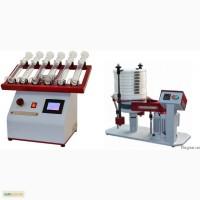
Laboratory mills +hammer crusher
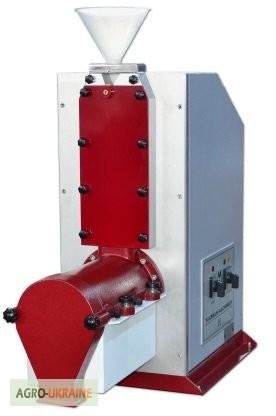
MILL FOR GRINDING WETTED WHEAT YM1
The mill for grinding moistened wheat YM 1 consists of two sections. The first section is located on the right side of the device, where the grinding is done and contains two accumulators. In the second section, on the left side, there is one grain storage. The YM 1 mill is designed for ease of operation, requiring a minimum of working space in the laboratory. Cleaning, maintenance, assembly and disassembly of rollers, as well as control, are easily performed manually. The hardness of the rollers is up to 50-55 HRC. Straight and toothed rollers are made of special steel and with the help of special tools, which reduces the error in their production to 0%. One of the features of this device is that inert materials are used in its production.
Flour (B1 - B2 - B3, C1 - C2 - C3), coarsely ground flour and small bran are obtained by passing through 6 channels using 3 grinding rollers and 2 grinding rollers and sieves 160 μ - 800 μ - 160 μ, respectively. Also, with the help of such a mill, the output of the product from the mill installation is determined.
The mill provides laboratory samples of flour intended for analysis, the following devices:
- Test Analyzer;
- Flour Analyzer;
- Combined dough and flour analyzer;
- Alveograph;
- Apparatus for determining the number of falls.
Advantages
ü Calculation of the productivity of a flour mill in laboratory conditions;
ü Reliable construction;
ü The device is easy to operate;
ü Presence of crushing and grinding parts;
ü Sieve system with blades;
ü The possibility of grinding samples of both moistened and dry wheat (conditioned and not conditioned).(//tractor-service.com)
LABORATORY COMBINED MILL
The device grinds samples of conditioned and non-conditioned wheat, then separates the remaining flour from the bran through sieves with the help of a system of blades. The mill is equipped with 5 rollers (3 grinding and 2 grinding). Cleaning the mill after the end of each subsequent processing of samples is optional, it is enough to turn the switch in the opposite direction and the bran and other similar products remaining on the rollers and sieves of the mill are unloaded with paddles through the output channel located in the front of the device. To determine the milling properties of wheat in each individual flour sample, it is important to use a mill with a grinding capacity that ensures free passage through the sieves. Indicators related to the ashiness and color of the flour sample should also be taken into account. As a result, we obtain grinding of flour and bran samples without any losses whatsoever. Further, after weighing samples of flour and bran, it is very easy and accurate to determine the production output.
The mill produces laboratory samples of flour intended for use in tests on the following equipment:
- Apparatus for washing gluten;
- Apparatus for determining the gluten index;
- Apparatus for determination of dry gluten;
- Apparatus for sedimentation;
- Apparatus for determining the falling number.
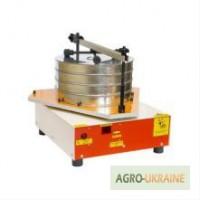
DISC MILL
The disk mill is used for grinding grain, wheat, malt, barley, peas, corn, soybeans, pellets and other raw materials. Samples are quickly ground between sharp steeldisks. Depending on the type of sample, the distance between the grinding discs is adjusted. The disc mill has a reliable design and low noise level.Disks are designed in such a way to prevent them from heating up during operation. The grinding product is collected in a bowl with a volume of 250 ml.
A disc mill can be used to prepare samples for testing moisture, granulometric parameters, and IR spectroscopy. It is possible to grind material with a fat content of less than 20%. Grinding speed of a sample weighing 50 gr. – 15-20 seconds. (depending on the moisture content and density of the sample).
HAMMER CRUSHER
One of the advantages of the device is soundproofing. The device is equipped with a metal grinding disc, to which the product is supplied by air flow. Hammers made of reinforced steel push samples through steel sieves, rotating at a speed of 16,800 rpm. The samples are ground to a homogenized state and collected in a stainless steel container. A motorized feeder is optionally available for constant product supply. Standard sieves (0.8 mm) are used for the following instruments and analyses:
A - determination of the number of falls,
B - gluten washing device,
C - infrared analysis and apparatus for determining the gluten index.
Cleaning the mill for processing each subsequent sample is optional. With a slow feed, samples with a moisture content of up to 25% can be ground. The feed speed of the automatic feeder is adjustable. There is an emergency switch.
MILL FOR GRINDING WETTED WHEAT YM1
The mill for grinding moistened wheat YM 1 consists of two sections. The first section is located on the right side of the device, where the grinding is done and contains two accumulators. In the second section, on the left side, there is one grain storage. The YM 1 mill is designed for ease of operation, requiring a minimum of working space in the laboratory. Cleaning, maintenance, assembly and disassembly of rollers, as well as control, are easily performed manually. The hardness of the rollers is up to 50-55 HRC. Straight and toothed rollers are made of special steel and with the help of special tools, which reduces the error in their production to 0%. One of the features of this device is that inert materials are used in its production.
Flour (B1 - B2 - B3, C1 - C2 - C3), coarsely ground flour and small bran are obtained by passing through 6 channels using 3 grinding rollers and 2 grinding rollers and sieves 160 μ - 800 μ - 160 μ, respectively. Also, with the help of such a mill, the output of the product from the mill installation is determined.
The mill provides laboratory samples of flour intended for analysis, the following devices:
- Test Analyzer;
- Flour Analyzer;
- Combined dough and flour analyzer;
- Alveograph;
- Apparatus for determining the number of falls.
Advantages
ü Calculation of the productivity of a flour mill in laboratory conditions;
ü Reliable construction;
ü The device is easy to operate;
ü Presence of crushing and grinding parts;
ü Sieve system with blades;
ü The possibility of grinding samples of both moistened and dry wheat (conditioned and not conditioned).(//tractor-service.com)
LABORATORY COMBINED MILL
The device grinds samples of conditioned and non-conditioned wheat, then separates the remaining flour from the bran through sieves with the help of a system of blades. The mill is equipped with 5 rollers (3 grinding and 2 grinding). Cleaning the mill after the end of each subsequent processing of samples is optional, it is enough to turn the switch in the opposite direction and the bran and other similar products remaining on the rollers and sieves of the mill are unloaded with paddles through the output channel located in the front of the device. To determine the milling properties of wheat in each individual flour sample, it is important to use a mill with a grinding capacity that ensures free passage through the sieves. Indicators related to the ashiness and color of the flour sample should also be taken into account. As a result, we obtain grinding of flour and bran samples without any losses whatsoever. Further, after weighing samples of flour and bran, it is very easy and accurate to determine the production output.
The mill produces laboratory samples of flour intended for use in tests on the following equipment:
- Apparatus for washing gluten;
- Apparatus for determining the gluten index;
- Apparatus for determination of dry gluten;
- Apparatus for sedimentation;
- Apparatus for determining the falling number.
DISC MILL
The disk mill is used for grinding grain, wheat, malt, barley, peas, corn, soybeans, pellets and other raw materials. Samples are quickly ground between sharp steeldisks. Depending on the type of sample, the distance between the grinding discs is adjusted. The disc mill has a reliable design and low noise level.Disks are designed in such a way to prevent them from heating up during operation. The grinding product is collected in a bowl with a volume of 250 ml.
A disc mill can be used to prepare samples for testing moisture, granulometric parameters, and IR spectroscopy. It is possible to grind material with a fat content of less than 20%. Grinding speed of a sample weighing 50 gr. – 15-20 seconds. (depending on the moisture content and density of the sample).
HAMMER CRUSHER
One of the advantages of the device is soundproofing. The device is equipped with a metal grinding disc, to which the product is supplied by air flow. Hammers made of reinforced steel push samples through steel sieves, rotating at a speed of 16,800 rpm. The samples are ground to a homogenized state and collected in a stainless steel container. A motorized feeder is optionally available for constant product supply. Standard sieves (0.8 mm) are used for the following instruments and analyses:
A - determination of the number of falls,
B - gluten washing device,
C - infrared analysis and apparatus for determining the gluten index.
Cleaning the mill for processing each subsequent sample is optional. With a slow feed, samples with a moisture content of up to 25% can be ground. The feed speed of the automatic feeder is adjustable. There is an emergency switch.
|
Shop, contacts | |
LLC NPO PromInvestServys / reviews, info. / evaluation activities | |
|
Phone:
+38-xxxxxx
show
| |
| http://pis.com.ua/ | |
All user ads ~36 | |
Ad ID: #640448
(added by a registered user, registration date: 26-11-2016)
Added / Updated: 22-09-2026 09:21 (current, until: 09-22-2027)
Permanent Ad Address:
Impressions / views for today: ?, total: ?
Similar ads
There are many interesting ones among them...


Total4 similar adsin the section "Laboratory equipment"
All Ukraine: Agricultural machinery, equipment, inventory 45594 / Agricultural equipment, inventory 1552 / Laboratory equipment 4
Dnipropetrovsk region: Agricultural machinery, equipment, inventory 8764 / Agricultural equipment, inventory 134 / Laboratory equipment 1