/ Agricultural machinery, equipment, inventory / Spare parts for agricultural machinery / Spare parts for tractors, special equipment and auto equipment / Spare parts for tractors / Inserts YMZ-6, D-65 R-1 core and connecting rods

Sell / buy
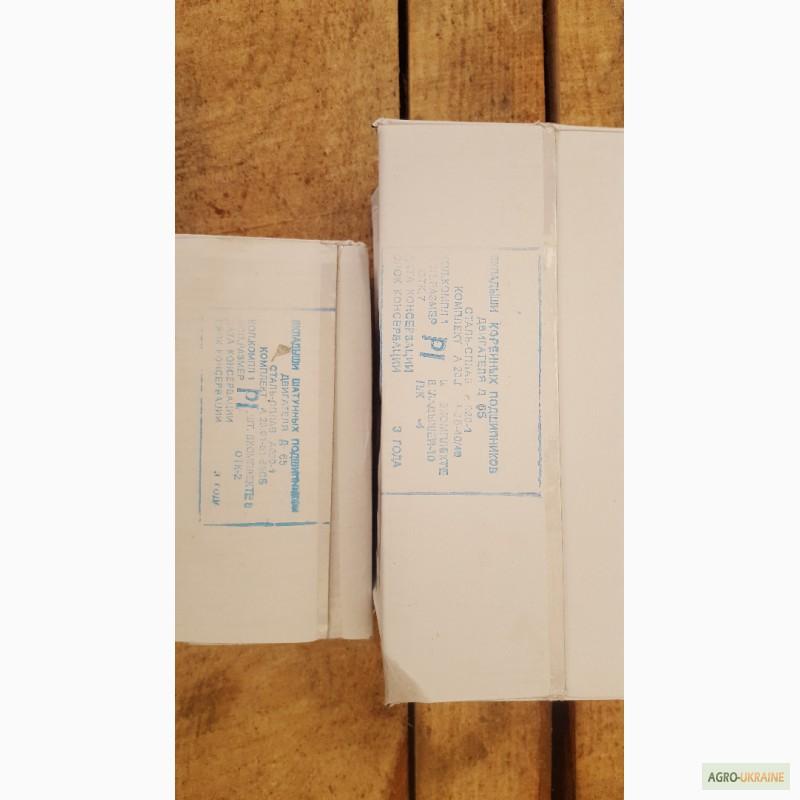
Inserts ЮМЗ-6, D-65 R-1 коренные и шатунные, Kharkiv region.
Price800 UAH.
Region:
Kharkiv region.
Updated:
Inserts YuMZ-6, D-65 P-1 root and connecting rod.
Root and connecting rod liners are radially aligned and loaded by gas pressure forces in the diesel cylinders, as well as by the inertial forces of the moving parts of the crank mechanism. The pressure on the friction surface of the liners during fuel combustion in the cylinders reaches 35..40 MPa and more.
The main requirements for liners are their wear resistance, anti-friction, anti-seize and anti-corrosion properties, thermal conductivity and the ability to absorb abrasive particles in the lubricating oil. Root liners must also have sufficient rigidity, preventing cyclic bending of the crankshaft axis under the action of the listed loads.(//tractor-service.com)
Radial bearings consist of two inserts, about 3 mm thick in connecting rods, and about 4 mm thick in main ones, formed by cold stamping. The basis of the liners is a steel tape, on which a layer of aluminum alloy is poured, and in forced diesels a layer of lead bronze. The third layer is an alloy of lead and tin with a thickness of 0.03...0.04 mm. For the correct installation of the inserts in the sprouts of their beds, the tendrils stamped into them, which enter special grooves in the pastels, are used. When the bolts of the bearing cover are tightened, the liners are loaded into the pastel bore with a tension that prevents them from turning under the action of frictional forces at the shaft necks.
Thrust bearings are loaded by the force of the compression springs of the clutch when it is turned off, as well as the axial component of the force in the helical gear of the drive mechanism of the gas distribution mechanism and the high-pressure fuelpump installed on the crankshaft. These forces, as well as the elongation of the shaft when it is heated, are called its axial displacement, which leads to a violation of the fuel advance angles in the diesel cylindershigh pressure pump pressure and gas distribution phases.
Thrust bearings that prevent axial movement of the shaft are four semi-rings. The location of the semi-rings in front of the shank allows the shaft to be unloaded from the force of the compression springs of the clutch. For uniform distribution of the oil flowing out of the main bearing, on the rubbing surfaces of the shaft cheeks and semi-rings, radial grooves are made on the latter. These surfaces of the semi-rings are covered with a layer of anti-friction alloy.
Root and connecting rod liners are radially aligned and loaded by gas pressure forces in the diesel cylinders, as well as by the inertial forces of the moving parts of the crank mechanism. The pressure on the friction surface of the liners during fuel combustion in the cylinders reaches 35..40 MPa and more.
The main requirements for liners are their wear resistance, anti-friction, anti-seize and anti-corrosion properties, thermal conductivity and the ability to absorb abrasive particles in the lubricating oil. Root liners must also have sufficient rigidity, preventing cyclic bending of the crankshaft axis under the action of the listed loads.(//tractor-service.com)
Radial bearings consist of two inserts, about 3 mm thick in connecting rods, and about 4 mm thick in main ones, formed by cold stamping. The basis of the liners is a steel tape, on which a layer of aluminum alloy is poured, and in forced diesels a layer of lead bronze. The third layer is an alloy of lead and tin with a thickness of 0.03...0.04 mm. For the correct installation of the inserts in the sprouts of their beds, the tendrils stamped into them, which enter special grooves in the pastels, are used. When the bolts of the bearing cover are tightened, the liners are loaded into the pastel bore with a tension that prevents them from turning under the action of frictional forces at the shaft necks.
Thrust bearings are loaded by the force of the compression springs of the clutch when it is turned off, as well as the axial component of the force in the helical gear of the drive mechanism of the gas distribution mechanism and the high-pressure fuelpump installed on the crankshaft. These forces, as well as the elongation of the shaft when it is heated, are called its axial displacement, which leads to a violation of the fuel advance angles in the diesel cylindershigh pressure pump pressure and gas distribution phases.
Thrust bearings that prevent axial movement of the shaft are four semi-rings. The location of the semi-rings in front of the shank allows the shaft to be unloaded from the force of the compression springs of the clutch. For uniform distribution of the oil flowing out of the main bearing, on the rubbing surfaces of the shaft cheeks and semi-rings, radial grooves are made on the latter. These surfaces of the semi-rings are covered with a layer of anti-friction alloy.
|
Author, contacts | |
Oleg Sergeevich Dolgov/ feedback, info. | |
|
Phone:
(067xxxxxx
show
| |
All user ads ~1000 | |
Ad ID: #547859
(added by a registered user)
Added/Updated: 09-21-2026 10:16 (current, until: 09-21-2027)
Permanent Ad Address:
Impressions / views for today: ?, total: ?
Similar ads
Total3586 similar adsin the section "Spare parts for tractors"
All Ukraine: Spare parts for agricultural machinery 18345 / Spare parts for tractors, special equipment and auto equipment 6888 / Spare parts for of tractors 3586
Kharkiv region: Spare parts for agricultural machinery 4766 / Spare parts for tractors, special and autotechnics 3163 / Spare parts for tractors 2677