
For sale / buy
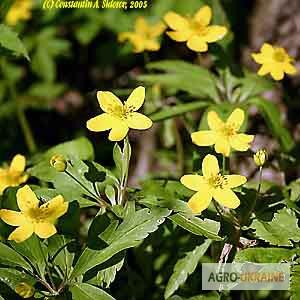
Vetrenitsa lyutikova, Dnipropetrovsk region.
Price50 UAH.
Region:
Dnipropetrovsk region.
(Dnepropetrovsk)
Updated:
Vetrenitsa lytykovaya
Tannins, resin, saponins (0.19-0.75%), raniculin, which, when the plant is dried, splits into protoanemonin, which has the properties of a mitotic poison, and glucose, as well as anemonol, which turns into anemonin. All these substances are poisonous, but poison is also medicine. Thanks to him, the plant has antiseptic, antimicrobial, anti-inflammatory, antispasmodic and pain-relieving properties.
It is used externally: in the form of alcohol tincture - for swelling, pain in the joints and bone tissue (osteochondrosis, rheumatism, radiculitis, gout, toothache) and for skin diseases (furunculosis, abscesses); plant juice - to remove warts.
It is taken internally as an analgesic for headaches, menstrual pain, abdominal and heart pain. As an anti-inflammatory and diuretic plant, it is used for diseases of the gastrointestinal tract, kidneys, bladder, dropsy, inflammation of the spleen and liver, gallstone disease. As an expectorant - for whooping cough and bronchitis.
Fenugreek is also used for paralysis, migraine, impotence, syphilis, gonorrhea, scabies and rickets. Cold infusion is used to strengthen hearing and vision.
Methods of application:
Infusion: pour 1 teaspoon of dry ingredients with a glass of boiling water. Insist a little more than half an hour. Strain. Take a tablespoon three times a day.
Tincture: add 1 part of vodka to 4 parts of fresh raw materials or to 3 parts of dry. Close tightly. Apply the resulting mass in a thin layer (do not rub!) on the sore spot, leave to dry, remove. Do not apply in the form of a compress and do not do the procedure after taking a bath - this will lead to burns.
Tincture for rubbing: prepare similarly to the previous one, but after capping, insist for half an hour and filter through cheesecloth. Squeeze out the remaining raw materials.
Infusion of anemone grass:
Pour 1 cup of cold boiled water with 1 tsp. crushed dry leaves, infuse for 24 hours, strain. Drink 1–2 sips 20 minutes before meals during the day for inflammation of the liver, gallstone disease, inflammation of the spleen, kidneys, and bladder - the daily norm.
Juice from the rhizomes of anemone:
Juice from rhizomes cures warts.
In case of neuralgia, radiculitis, sciatica, osteochondrosis, arthritis, rheumatism, salt deposits: the freshly harvested grass at the collection site must be immediately passed through a meat grinder and preserved with alcohol (preferably denatured) - 1 part of alcohol for 4 parts of grass - and tightly closed.
(//tractor-service.com)
For sexual impotence in men: prepare a water infusion. You need to take 2 teaspoons of anemone grass, pour 300 ml of cold water, leave to infuse for 20 hours, strain.
It is recommended to take 30 ml 3 times a day to increase potency in men. With the same infusion, you can wash the skin with eczema, disinfect purulent wounds that do not heal for a long time.
For inflammation of the liver, gallstone disease: prepare a water infusion of the leaves of anemone. It is necessary to brew 10 g of fresh (or about 2 g of dry) crushed leaves with 1 glass of boiling water, insist in a thermos for 2 hours, strain. Drink a quarter of a glass 20 minutes before meals in sips throughout the day. This same recipe helps well with inflammation of the spleen, kidneys, and bladder.
For rheumatic and joint pains: prepare a decoction of anemone root shoots. It is necessary to take 5 g of crushed roots per 200 ml of boiling water, cook on very low heat for 3 minutes, insist for 20 minutes. They are used for lotions and compresses on sore spots.
Recently, folk medicine advises using alcohol tincture from the plant for cancer, it is believed that the poison of the plant has a detrimental effect on metastases and tumors, and is a good pain reliever.
Tincture: pour 200 grams of dry grass with 1 liter of 25% alcohol (add 375 ml of water to 600 ml of vodka). Insist for 2 weeks in a dark place. Recommended daily dose: 1 teaspoon before meals, can be slightly diluted with water.
Sometimes there is even a complete cure from cancer. It all depends on the patient's attitude and his self-belief. Such serious diseases are best treated according to the following scheme. Add 1 drop of tincture every week: 1st week — 5 drops, 2nd week — 6, and so on up to 10 drops. After 10 weeks of treatment, there is a break for a week. Then he will repeat the course, starting again with 5 drops.
Contraindications of anemone fever:
The use of anemone, as a highly poisonous plant, requires great caution. The leaves have narcotic properties. When the juice of the grass gets on the mucous membranes, there is a strong burning sensation, pain in the nasopharynx, in the eyes, lacrimation.
If it gets on the skin of the hands, the juice of the plant causes severe burns, up to the formation of blisters. At the same time, burnt areas heal very slowly. Even ordinary inhalation of vapors leads to severe poisoning - headaches, dizziness, nausea, vomiting, pain in the liver and spleen, insomnia. This condition lasts for several days. With more severe poisoning, death may occur.
It is prohibited to use it even when consuming alcoholic beverages. It has been noticed that in persons who abuse alcoholic beverages, the therapeutic effect is manifested to a lesser degree and develops much later than in non-drinkers.
In case of toxic skin lesions, wash the affected part of the body with a sufficient amount of water or soapy water. Treatment of the skin and mucous membranes – respectively, with 2% and 0.1% solutions of potassium permanganate, skin – with a 40–50% solution of methylene alcohol. When using organic solvents, one should be careful, since they, due to the dissolution of various ingredients of the plant's active principle in them, can contribute to faster absorption of toxic compounds (especially through damaged skin and mucous membranes).
When bubbles are formed, the latter are opened with subsequent treatment with a solution of potassium permanganate; neutral ointments, pastes, powders are applied to the damaged surface. For the treatment of necrotic, ulcerated lesions, a 0.1% solution of ethacridine lactate (impregnation of bandages), Vishnevsky ointment (for compresses and bandages), neomycin sulfate (500,000 units dissolved in 50 ml of a 0.5% solution of novocaine for irrigation), liniment of synthomycin are indicated. Loka-corten, Synalar ointments are also used.
Tannins, resin, saponins (0.19-0.75%), raniculin, which, when the plant is dried, splits into protoanemonin, which has the properties of a mitotic poison, and glucose, as well as anemonol, which turns into anemonin. All these substances are poisonous, but poison is also medicine. Thanks to him, the plant has antiseptic, antimicrobial, anti-inflammatory, antispasmodic and pain-relieving properties.
It is used externally: in the form of alcohol tincture - for swelling, pain in the joints and bone tissue (osteochondrosis, rheumatism, radiculitis, gout, toothache) and for skin diseases (furunculosis, abscesses); plant juice - to remove warts.
It is taken internally as an analgesic for headaches, menstrual pain, abdominal and heart pain. As an anti-inflammatory and diuretic plant, it is used for diseases of the gastrointestinal tract, kidneys, bladder, dropsy, inflammation of the spleen and liver, gallstone disease. As an expectorant - for whooping cough and bronchitis.
Fenugreek is also used for paralysis, migraine, impotence, syphilis, gonorrhea, scabies and rickets. Cold infusion is used to strengthen hearing and vision.
Methods of application:
Infusion: pour 1 teaspoon of dry ingredients with a glass of boiling water. Insist a little more than half an hour. Strain. Take a tablespoon three times a day.
Tincture: add 1 part of vodka to 4 parts of fresh raw materials or to 3 parts of dry. Close tightly. Apply the resulting mass in a thin layer (do not rub!) on the sore spot, leave to dry, remove. Do not apply in the form of a compress and do not do the procedure after taking a bath - this will lead to burns.
Tincture for rubbing: prepare similarly to the previous one, but after capping, insist for half an hour and filter through cheesecloth. Squeeze out the remaining raw materials.
Infusion of anemone grass:
Pour 1 cup of cold boiled water with 1 tsp. crushed dry leaves, infuse for 24 hours, strain. Drink 1–2 sips 20 minutes before meals during the day for inflammation of the liver, gallstone disease, inflammation of the spleen, kidneys, and bladder - the daily norm.
Juice from the rhizomes of anemone:
Juice from rhizomes cures warts.
In case of neuralgia, radiculitis, sciatica, osteochondrosis, arthritis, rheumatism, salt deposits: the freshly harvested grass at the collection site must be immediately passed through a meat grinder and preserved with alcohol (preferably denatured) - 1 part of alcohol for 4 parts of grass - and tightly closed.
(//tractor-service.com)
For sexual impotence in men: prepare a water infusion. You need to take 2 teaspoons of anemone grass, pour 300 ml of cold water, leave to infuse for 20 hours, strain.
It is recommended to take 30 ml 3 times a day to increase potency in men. With the same infusion, you can wash the skin with eczema, disinfect purulent wounds that do not heal for a long time.
For inflammation of the liver, gallstone disease: prepare a water infusion of the leaves of anemone. It is necessary to brew 10 g of fresh (or about 2 g of dry) crushed leaves with 1 glass of boiling water, insist in a thermos for 2 hours, strain. Drink a quarter of a glass 20 minutes before meals in sips throughout the day. This same recipe helps well with inflammation of the spleen, kidneys, and bladder.
For rheumatic and joint pains: prepare a decoction of anemone root shoots. It is necessary to take 5 g of crushed roots per 200 ml of boiling water, cook on very low heat for 3 minutes, insist for 20 minutes. They are used for lotions and compresses on sore spots.
Recently, folk medicine advises using alcohol tincture from the plant for cancer, it is believed that the poison of the plant has a detrimental effect on metastases and tumors, and is a good pain reliever.
Tincture: pour 200 grams of dry grass with 1 liter of 25% alcohol (add 375 ml of water to 600 ml of vodka). Insist for 2 weeks in a dark place. Recommended daily dose: 1 teaspoon before meals, can be slightly diluted with water.
Sometimes there is even a complete cure from cancer. It all depends on the patient's attitude and his self-belief. Such serious diseases are best treated according to the following scheme. Add 1 drop of tincture every week: 1st week — 5 drops, 2nd week — 6, and so on up to 10 drops. After 10 weeks of treatment, there is a break for a week. Then he will repeat the course, starting again with 5 drops.
Contraindications of anemone fever:
The use of anemone, as a highly poisonous plant, requires great caution. The leaves have narcotic properties. When the juice of the grass gets on the mucous membranes, there is a strong burning sensation, pain in the nasopharynx, in the eyes, lacrimation.
If it gets on the skin of the hands, the juice of the plant causes severe burns, up to the formation of blisters. At the same time, burnt areas heal very slowly. Even ordinary inhalation of vapors leads to severe poisoning - headaches, dizziness, nausea, vomiting, pain in the liver and spleen, insomnia. This condition lasts for several days. With more severe poisoning, death may occur.
It is prohibited to use it even when consuming alcoholic beverages. It has been noticed that in persons who abuse alcoholic beverages, the therapeutic effect is manifested to a lesser degree and develops much later than in non-drinkers.
In case of toxic skin lesions, wash the affected part of the body with a sufficient amount of water or soapy water. Treatment of the skin and mucous membranes – respectively, with 2% and 0.1% solutions of potassium permanganate, skin – with a 40–50% solution of methylene alcohol. When using organic solvents, one should be careful, since they, due to the dissolution of various ingredients of the plant's active principle in them, can contribute to faster absorption of toxic compounds (especially through damaged skin and mucous membranes).
When bubbles are formed, the latter are opened with subsequent treatment with a solution of potassium permanganate; neutral ointments, pastes, powders are applied to the damaged surface. For the treatment of necrotic, ulcerated lesions, a 0.1% solution of ethacridine lactate (impregnation of bandages), Vishnevsky ointment (for compresses and bandages), neomycin sulfate (500,000 units dissolved in 50 ml of a 0.5% solution of novocaine for irrigation), liniment of synthomycin are indicated. Loka-corten, Synalar ointments are also used.
|
Store, contacts | |
Yuriy Yuryevich/ feedback, info./ activity evaluation | |
|
Telephone:
(067xxxxxx
show
| |
| https://dobriy-lis.all.biz/ | |
All ads user ~57 | |
Ad ID: #544429
(added by registered user, registration date: 2014-08-20)
Added / Updated: 07-07-2026 06:14 (current, until: 07-07-2027)
Permanent Ad Address:
Impressions / views for today: ?, total: ?
Similar ads
There are many interesting ones among them...