/ Feeds, mixed feeds, supplements / Different feeds, mixed feeds, supplements + in assortment / It's time to think about harvesting silage
For sale / buying
It's time to think about silage harvesting, Volyn region.
Region:all of Ukraine,
Volyn region.
Updated:
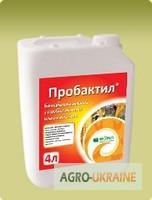
For sale from a distributor. Bio drug Prabactil.
It's time to think about making hay or silage. How to get high-quality feed and at the same time save financial resources? GK Biona offers for your farm the universal biological starter Probactil®, which is based on the latest developments of our laboratory specialists and which has been used by leading livestock farms for several years.
Using Probactil® sourdough, you:
Provide high-qualityfodder, ready for feeding in the shortest possible time of 5-7 days;
Get a quick result in comparison with dry forms of drugs and ease of use;
Reduce costs due to high quality and better feed conversion, preservation of harvested mass, incl. in open state 2 times longer;
Save your money by reducing feed usage rates by 1.5-2 times.
Save more nutrients due to the fast canning process:
a) first of all, it is sugar as a source of energy.
b) digestible protein
c) vitamins, including vitamins of group B, carotenoids and vitamin C;
d) a complex of enzymes that will help withfeeding silage cattle in the digestion process, splitting fiber, grain wall, starch, proteins
Prevent the development of acetic acid fermentation and protect the preserved mass from rotting, the development of fungal and pathogenic microflora.
The drug Probactil® includes 2 components: component A - lactic and propionic cultures, component B - a complex of enzymes.
Composition A: 1) Propionibacterium acidopropionici - forms only propionic acid, which is able to develop in a neutral environment and acidify the silage mass in the first hours of laying to pH 5.2-5.5, while preventing acetic acid fermentation, and also gives a faster start to lactic acid bacteria, which allows you to complete the canning process in a shorter time (5-7 days). 2) Lactobacillus acidophilus – is a producer of lactic acid. Effective in the prevention and treatment of diarrhea and dysbacteriosis. 3) Lactobacillus plantarum – produces both isomers of lactic acid, the microorganism is an antagonist of pathogenic bacteria E. coli and Salmonella typhimurium. 4) Lactococcus lactis – is a producer of the antibiotic substance nisin, active against a number of pathogenic bacteria, including clostridia. 5) Enterococcus faecium is a producer of lactic acid, vitamins of group B, as well as cellulase enzyme, used to fight dysbacteriosis.
(//tractor-service.com)
Composition B: 1) Xylanase - increases the level of free sugars due to the breakdown of hemicellulose of feed. Enzymes, as it were, "break down" the stem of the plant into long fibers, with the formation of free sugars. 2) Amylase and glucoamylase - break down starch into free glucose, which serves as the main source of nutrition for bacteria that acidify silagesilage. 3) Pectinase - increases the nutritional value of feed, hydrolyzes non-starchy polysaccharides and feed proteins. A complex of enzymes increases the activity of bacteria when there is a sharp decrease in the pH of the green mass and prevents the risk of a possible decrease in this process as a result of a deficit of available sugars.
1.25 l per 10 t of mass or 5 l per 40 t of mass
There are two ways to use Probactil® for haylage:
When laying silage by spraying, you will need 1 liter of composition A, as well as 250 ml of composition B per 20 t of mass, the amount of working solution 30-40 l per 20 t of silage mass (consumption of working solution 1.5-2.0 l per 1 t of raw material). Humidity is 45-55%, it is allowed to use sourdough in conditions of increased humidity of 60-65%, provided that it is compacted as much as possible and that the mass is sealed in the shortest possible time.
When introducing leaven through an applicator (forage harvester). The average consumption of the working solution should be 1 liter per 1 ton of silage mass. If the tank is 200 liters and the consumption of the working solution is 1 liter per 1 ton, then we can process 200 tons with the volume of this tank. Then this tank will require 10 liters of composition A, 2.5 liters of composition B and 187.5 liters of water (200 tons / 20 tons x 1.25 liters = 12.5 liters of sourdough (of which 10 liters of composition A and 2.5 liters of composition B).
You can use Probactil® on silage in two ways:
1) Spraying method. The consumption of the working solution is calculated based on the humidity of the mass:
Moisture content of raw materials
Costs of the working solution, l Preparation of the working solution for 200 tons of raw material
Bacterial leaven Probactil®
2) Use of leaven through an applicator. The average consumption of the working solution should be 1 liter per 1 ton of silage mass. If the tank is 200 liters and the consumption of the working solution is 1 liter per 1 ton, then we can process 200 tons with the volume of this tank. Then this tank will require 10 liters of composition A, 2.5 liters of composition B and 187.5 liters of water (200 tons / 20 tons x 1.25 liters = 12.5 liters of sourdough (of which 10 liters of composition A and 2.5 liters of composition B).
Advantages over dry forms. Unlike dry forms of starters, where bacteria are in the stage of anabiosis ("sleep"), Probactil® starter in liquid form provides a quick initial action, because it contains live, active bacteria with a guaranteed titer of at least 2.5x10⁹ CFU/1 ml, as well as active substances that were released during the fermentation process - acids (lactic, acetic, propionic), enzymes. Probactil® liquid leaven is 100% soluble in water - it does not clog the nozzles of the units.
5 liters UAH 450.00
It's time to think about making hay or silage. How to get high-quality feed and at the same time save financial resources? GK Biona offers for your farm the universal biological starter Probactil®, which is based on the latest developments of our laboratory specialists and which has been used by leading livestock farms for several years.
Using Probactil® sourdough, you:
Provide high-qualityfodder, ready for feeding in the shortest possible time of 5-7 days;
Get a quick result in comparison with dry forms of drugs and ease of use;
Reduce costs due to high quality and better feed conversion, preservation of harvested mass, incl. in open state 2 times longer;
Save your money by reducing feed usage rates by 1.5-2 times.
Save more nutrients due to the fast canning process:
a) first of all, it is sugar as a source of energy.
b) digestible protein
c) vitamins, including vitamins of group B, carotenoids and vitamin C;
d) a complex of enzymes that will help withfeeding silage cattle in the digestion process, splitting fiber, grain wall, starch, proteins
Prevent the development of acetic acid fermentation and protect the preserved mass from rotting, the development of fungal and pathogenic microflora.
The drug Probactil® includes 2 components: component A - lactic and propionic cultures, component B - a complex of enzymes.
Composition A: 1) Propionibacterium acidopropionici - forms only propionic acid, which is able to develop in a neutral environment and acidify the silage mass in the first hours of laying to pH 5.2-5.5, while preventing acetic acid fermentation, and also gives a faster start to lactic acid bacteria, which allows you to complete the canning process in a shorter time (5-7 days). 2) Lactobacillus acidophilus – is a producer of lactic acid. Effective in the prevention and treatment of diarrhea and dysbacteriosis. 3) Lactobacillus plantarum – produces both isomers of lactic acid, the microorganism is an antagonist of pathogenic bacteria E. coli and Salmonella typhimurium. 4) Lactococcus lactis – is a producer of the antibiotic substance nisin, active against a number of pathogenic bacteria, including clostridia. 5) Enterococcus faecium is a producer of lactic acid, vitamins of group B, as well as cellulase enzyme, used to fight dysbacteriosis.
(//tractor-service.com)
Composition B: 1) Xylanase - increases the level of free sugars due to the breakdown of hemicellulose of feed. Enzymes, as it were, "break down" the stem of the plant into long fibers, with the formation of free sugars. 2) Amylase and glucoamylase - break down starch into free glucose, which serves as the main source of nutrition for bacteria that acidify silagesilage. 3) Pectinase - increases the nutritional value of feed, hydrolyzes non-starchy polysaccharides and feed proteins. A complex of enzymes increases the activity of bacteria when there is a sharp decrease in the pH of the green mass and prevents the risk of a possible decrease in this process as a result of a deficit of available sugars.
1.25 l per 10 t of mass or 5 l per 40 t of mass
There are two ways to use Probactil® for haylage:
When laying silage by spraying, you will need 1 liter of composition A, as well as 250 ml of composition B per 20 t of mass, the amount of working solution 30-40 l per 20 t of silage mass (consumption of working solution 1.5-2.0 l per 1 t of raw material). Humidity is 45-55%, it is allowed to use sourdough in conditions of increased humidity of 60-65%, provided that it is compacted as much as possible and that the mass is sealed in the shortest possible time.
When introducing leaven through an applicator (forage harvester). The average consumption of the working solution should be 1 liter per 1 ton of silage mass. If the tank is 200 liters and the consumption of the working solution is 1 liter per 1 ton, then we can process 200 tons with the volume of this tank. Then this tank will require 10 liters of composition A, 2.5 liters of composition B and 187.5 liters of water (200 tons / 20 tons x 1.25 liters = 12.5 liters of sourdough (of which 10 liters of composition A and 2.5 liters of composition B).
You can use Probactil® on silage in two ways:
1) Spraying method. The consumption of the working solution is calculated based on the humidity of the mass:
Moisture content of raw materials
Costs of the working solution, l Preparation of the working solution for 200 tons of raw material
Bacterial leaven Probactil®
2) Use of leaven through an applicator. The average consumption of the working solution should be 1 liter per 1 ton of silage mass. If the tank is 200 liters and the consumption of the working solution is 1 liter per 1 ton, then we can process 200 tons with the volume of this tank. Then this tank will require 10 liters of composition A, 2.5 liters of composition B and 187.5 liters of water (200 tons / 20 tons x 1.25 liters = 12.5 liters of sourdough (of which 10 liters of composition A and 2.5 liters of composition B).
Advantages over dry forms. Unlike dry forms of starters, where bacteria are in the stage of anabiosis ("sleep"), Probactil® starter in liquid form provides a quick initial action, because it contains live, active bacteria with a guaranteed titer of at least 2.5x10⁹ CFU/1 ml, as well as active substances that were released during the fermentation process - acids (lactic, acetic, propionic), enzymes. Probactil® liquid leaven is 100% soluble in water - it does not clog the nozzles of the units.
5 liters UAH 450.00
|
Shop, contacts | |
Alexander / feedback, info.: 24 / activity evaluation Attention! The user has manynegative reviews | |
|
Phone:
+380xxxxxx
show
| |
| Skype: potapsan | |
All user ads ~303 | |
Ad ID: #507420
(added by a registered user, registration date: 08-14-2012)
Added / Updated: 11-23-2025 20:19 (current, until: 11-23-2026)
Permanent Ad Address:
Impressions / views for today: ?, total: ?
Similar ads
Among them there are many interesting ones...


Total1081 similar adsin the heading "Feeds, feed, additives"
All Ukraine: Feeds, mixed feeds, supplements 1081 / Different feeds, mixed feeds, supplements + in assortment 275