For sale / buy
Jerusalem, Rivne region.
Region:
Rivnen region.
(Radyvylivskyi district, village of Nova Mytnytsia)
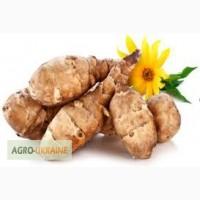
Jerusalem is a fruit crop of the Astrovye family, perennial tuberous plant. It looks like a sunflower, but Jerusalem artichoke flower heads are much smaller and paler. Jerusalem artichoke is popularly known as "earth pear" or "Volga turnip".
History and distribution
For the first time, residents of South America learned about the properties of Jerusalem artichoke. According to one of the versions, the name of the modern earthen pear came from the Tupinambus tribe. At the beginning of the 17th century Jerusalem artichoke was brought to Europe together with American Indians - slaves. Jerusalem artichoke, thanks to its high productivity and unpretentiousness, spread in Europe quite quickly, but due to the inability to cook it correctly, many housewives did not include it in the menu.
Jerusalem artichoke was appreciated for its merit in Belgium and Holland - it was used to prepare exquisite dishes, boiling it into wine. Jerusalem artichoke appeared in Russia only in the 18th century. At first, it was used by healers in the treatment of heart diseases, but soon Jerusalem artichoke dishes began to appear on tables in wealthy homes.
It is known that it was during this period that potato consumption decreased.
Application
The most important thing in Jerusalem artichoke is the tubers, they are the ones that are used for food. Tubers differ from each other in size (from 10 g to 150 g), shape, color (purple, yellow, red). Jerusalem artichoke can be used raw and after heat treatment. Raw Jerusalem artichoke tastes like cabbagecabbage, and fried - like sweet potatoes.
It is important to know that dug Jerusalem artichoke, unlike potatoes, is not stored for long.
Jerusalem artichoke is the most useful in its raw form. It is added to salads, pureed soups, as an exquisite seasoning for various meat and fish dishes, and kvass is prepared from it. Jerusalem artichoke is universal - it can be fried, boiled, pickled, salted, stewed.
Not only root crops are useful, but also other parts of Jerusalem artichoke. When the stem is processed, a sweet juice is obtained, which is necessary for the production of molasses. Jerusalem artichoke is a good honey plant and fodder plant that increases milk yield and fat content.
(//tractor-service.com)
Interesting facts
Jerusalem artichoke is a dietary product in the USA, Japan, and Holland. They even make coffee out of it.
Jerusalem artichoke is an effective remedy for wrinkles. Applying grated Jerusalem artichoke on the face once every 3-4 days, you will be able to notice the result after only 10 procedures.
Composition
Jerusalem artichoke tubers are rich in iron to a greater extent than many othervegetables, such as carrots, potatoes,beets. Jerusalem artichoke contains calcium, potassium, fiber, pectin, and amino acids. Jerusalem artichoke tubers are rich in vitamins B1, B2, B6.
Properties
Jerusalem artichoke juice is used for heartburn to reduce stomach acidity. Ego is used to normalize gastrointestinal processes, it helps with constipation. Polyarthritis is also treated with juice. Doctors advise people with high blood pressure and low hemoglobin to include Jerusalem artichoke in their diet. Jerusalem artichoke is capable of removing various toxins, excess cholesterol, and heavy metal salts from the body.
Calorific value and nutritional value of Jerusalem artichoke
The calorie content of Jerusalem artichoke is 73 kcal.
Nutritional value of Jerusalem artichoke: proteins - 2 g, fats - 0.01 g, carbohydrates - 15.84 g
Price per kilogram. Pickup.
History and distribution
For the first time, residents of South America learned about the properties of Jerusalem artichoke. According to one of the versions, the name of the modern earthen pear came from the Tupinambus tribe. At the beginning of the 17th century Jerusalem artichoke was brought to Europe together with American Indians - slaves. Jerusalem artichoke, thanks to its high productivity and unpretentiousness, spread in Europe quite quickly, but due to the inability to cook it correctly, many housewives did not include it in the menu.
Jerusalem artichoke was appreciated for its merit in Belgium and Holland - it was used to prepare exquisite dishes, boiling it into wine. Jerusalem artichoke appeared in Russia only in the 18th century. At first, it was used by healers in the treatment of heart diseases, but soon Jerusalem artichoke dishes began to appear on tables in wealthy homes.
It is known that it was during this period that potato consumption decreased.
Application
The most important thing in Jerusalem artichoke is the tubers, they are the ones that are used for food. Tubers differ from each other in size (from 10 g to 150 g), shape, color (purple, yellow, red). Jerusalem artichoke can be used raw and after heat treatment. Raw Jerusalem artichoke tastes like cabbagecabbage, and fried - like sweet potatoes.
It is important to know that dug Jerusalem artichoke, unlike potatoes, is not stored for long.
Jerusalem artichoke is the most useful in its raw form. It is added to salads, pureed soups, as an exquisite seasoning for various meat and fish dishes, and kvass is prepared from it. Jerusalem artichoke is universal - it can be fried, boiled, pickled, salted, stewed.
Not only root crops are useful, but also other parts of Jerusalem artichoke. When the stem is processed, a sweet juice is obtained, which is necessary for the production of molasses. Jerusalem artichoke is a good honey plant and fodder plant that increases milk yield and fat content.
(//tractor-service.com)
Interesting facts
Jerusalem artichoke is a dietary product in the USA, Japan, and Holland. They even make coffee out of it.
Jerusalem artichoke is an effective remedy for wrinkles. Applying grated Jerusalem artichoke on the face once every 3-4 days, you will be able to notice the result after only 10 procedures.
Composition
Jerusalem artichoke tubers are rich in iron to a greater extent than many othervegetables, such as carrots, potatoes,beets. Jerusalem artichoke contains calcium, potassium, fiber, pectin, and amino acids. Jerusalem artichoke tubers are rich in vitamins B1, B2, B6.
Properties
Jerusalem artichoke juice is used for heartburn to reduce stomach acidity. Ego is used to normalize gastrointestinal processes, it helps with constipation. Polyarthritis is also treated with juice. Doctors advise people with high blood pressure and low hemoglobin to include Jerusalem artichoke in their diet. Jerusalem artichoke is capable of removing various toxins, excess cholesterol, and heavy metal salts from the body.
Calorific value and nutritional value of Jerusalem artichoke
The calorie content of Jerusalem artichoke is 73 kcal.
Nutritional value of Jerusalem artichoke: proteins - 2 g, fats - 0.01 g, carbohydrates - 15.84 g
Price per kilogram. Pickup.
Ad ID: #320346
(added by an unregistered user)
Permanent Ad Address:
Impressions / views for today: ?, total: ?
Similar recent ads
There are many interesting ones among them...