Sell / buy
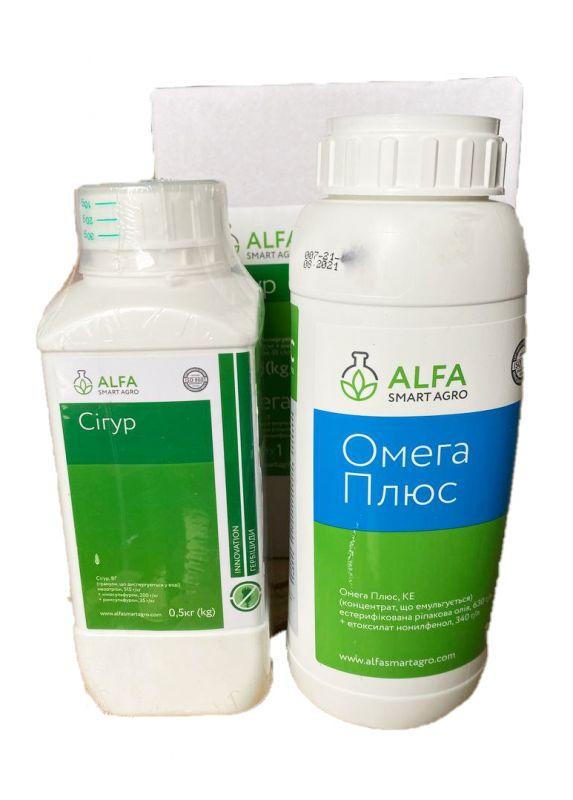
Sigur+PAR Omega Plus, Kharkiv region.
Price87.54$
Region:all of Ukraine,
Kharkiv region.
Updated:
Active substance
Mesotrione, 515 g/kg + nicosulfuron, 200 g/kg + rimsulfuron, 35 g/kg
Preparative form
Water-dispersible granules
Appointment
A new three-component post-emergence herbicide with an extended spectrum of action against grass and dicotyledonous weeds in corn crops
Tara
0.5 kg + 1 l SAE Omega Plus
Culture
Advantages
A unique combination of three active substances with different herbicidal properties.(//tractor-service.com)
A wide period of use - 3-8 (10) leaves of corn.
Expanded spectrum of controlled weeds, improved action against white quinoa, control of carrionsunflower and rapeseed of all species.
Absence of phytotoxicity for culture in all recommended application phases.
Spectrum of action
Sensitive weeds: quinoa (species), gumay, common plantain (chicken millet), fenugreek (species), millet (1-3 leaves), annual thin leg, timothy (species), mouse (species), garden thistle, yellow rough thistle, bitter gorse (species), bitter gorse (species), Canadian sedge, Theophrastus rope, mustard (species), cornflower, rapeseed (common blight and resistant to imidazolinones), sunflower (common blight and resistant to imidazolinones and tribenuron-methyl), poppies (species), wild radish, sedum, common dorsum, black solanum (2-4 leaves), creeping wheatgrass, medium starwort (wetweed), ragweed (up to 4 leaves), common netreba, field birch (seedlings from seeds). Moderately sensitive: small-flowered gorse, common sedum, wild poppy, bitter gorse, common spergel, field violet, common gill, milk thistle (seedlings from seeds). Low sensitivity to the action of the drug is shown by: field birch, milk thistle (perennial form).
Mechanism of action
The active substances rimsulfuron and nicosulfuron belong to the chemical class of sulfonylureas, which, penetrating the plant through the leaves, move to the growth points, where they block the enzyme acetolactate synthase. Mesotrione belongs to the chemical class of triketones, is absorbed by the leaves and roots of weeds, disrupts the biosynthesis of carotenoids. Disruption of vital processes in plants caused by rimsulfuron, nicosulfuron and mesotrione is irreversible, which subsequently leads to the death of sensitive weeds.
Properties
Visible symptoms of herbicidal action (growth arrest, chlorosis, necrosis, whitening and reddening of leaves) appear on the 4-7th day, and the complete death of weeds occurs 10-20 days after the application of the drug. In dicotyledonous weeds sensitive to the active substances, growth stops after treatment, followed by whitening of the growth point and leaves, which subsequently leads to the death of the growth point and the entire plant. Insensitive and overgrown weeds may not die, but their growth and further development are significantly slowed or stopped. Annual cereal weeds stop growing, turn yellow or red within 3-6 days, and then die.
General recommendations
Combined use with Omega Plus surfactant promotes faster and more complete penetration of the active ingredients of the herbicide into weed plants, which ensures high effectiveness of the drug. Optimal conditions for spraying crops with the drug: temperature from +10°С to +25°С and presence of weeds in a state of active growth in the phase of 1-3 leaves for annual cereals, 2-4 leaves for annual dicots and at a height of 10-15 cm for perennials. To achieve maximum effectiveness, the drug must be applied evenly to the leaf surface of plants, using well-adjusted equipment. The drug cannot be used if the plants are wet from dew or rain, as well as if rain is expected within 3 hours after treatment. The herbicide provides crop protection from the moment of spraying until the appearance of a new wave of weeds. Avoid using the drug during heat, drought, frost, strong wind. In the case of reseeding a corn field treated with Sigur herbicide: 1) in the spring of the same year, you cansow corn; 2) after plowing or other mechanical tillage of the soil to a depth of at least 15 cm in the fall of the same year, it is allowed to sow winter wheat, barley or rapeseed. In the spring of the following year, in the fields where the drug was applied: 1) it is not recommended to grow beets, peas, chickpeas, vegetables; 2) after plowing, you can sow sunflower, rapeseed, soybean, sorghum, alfalfa; 3) corn,wheat and barley are grown without restrictions. The herbicide has a high biological efficiency against weeds and therefore there is no need to make tank mixtures with other herbicides and nitrogen fertilizers.
The working fluid consumption rate is 200–300 l/ha. Price for 1 kg+ 2 liters of the drug
Mesotrione, 515 g/kg + nicosulfuron, 200 g/kg + rimsulfuron, 35 g/kg
Preparative form
Water-dispersible granules
Appointment
A new three-component post-emergence herbicide with an extended spectrum of action against grass and dicotyledonous weeds in corn crops
Tara
0.5 kg + 1 l SAE Omega Plus
Culture
Advantages
A unique combination of three active substances with different herbicidal properties.(//tractor-service.com)
A wide period of use - 3-8 (10) leaves of corn.
Expanded spectrum of controlled weeds, improved action against white quinoa, control of carrionsunflower and rapeseed of all species.
Absence of phytotoxicity for culture in all recommended application phases.
Spectrum of action
Sensitive weeds: quinoa (species), gumay, common plantain (chicken millet), fenugreek (species), millet (1-3 leaves), annual thin leg, timothy (species), mouse (species), garden thistle, yellow rough thistle, bitter gorse (species), bitter gorse (species), Canadian sedge, Theophrastus rope, mustard (species), cornflower, rapeseed (common blight and resistant to imidazolinones), sunflower (common blight and resistant to imidazolinones and tribenuron-methyl), poppies (species), wild radish, sedum, common dorsum, black solanum (2-4 leaves), creeping wheatgrass, medium starwort (wetweed), ragweed (up to 4 leaves), common netreba, field birch (seedlings from seeds). Moderately sensitive: small-flowered gorse, common sedum, wild poppy, bitter gorse, common spergel, field violet, common gill, milk thistle (seedlings from seeds). Low sensitivity to the action of the drug is shown by: field birch, milk thistle (perennial form).
Mechanism of action
The active substances rimsulfuron and nicosulfuron belong to the chemical class of sulfonylureas, which, penetrating the plant through the leaves, move to the growth points, where they block the enzyme acetolactate synthase. Mesotrione belongs to the chemical class of triketones, is absorbed by the leaves and roots of weeds, disrupts the biosynthesis of carotenoids. Disruption of vital processes in plants caused by rimsulfuron, nicosulfuron and mesotrione is irreversible, which subsequently leads to the death of sensitive weeds.
Properties
Visible symptoms of herbicidal action (growth arrest, chlorosis, necrosis, whitening and reddening of leaves) appear on the 4-7th day, and the complete death of weeds occurs 10-20 days after the application of the drug. In dicotyledonous weeds sensitive to the active substances, growth stops after treatment, followed by whitening of the growth point and leaves, which subsequently leads to the death of the growth point and the entire plant. Insensitive and overgrown weeds may not die, but their growth and further development are significantly slowed or stopped. Annual cereal weeds stop growing, turn yellow or red within 3-6 days, and then die.
General recommendations
Combined use with Omega Plus surfactant promotes faster and more complete penetration of the active ingredients of the herbicide into weed plants, which ensures high effectiveness of the drug. Optimal conditions for spraying crops with the drug: temperature from +10°С to +25°С and presence of weeds in a state of active growth in the phase of 1-3 leaves for annual cereals, 2-4 leaves for annual dicots and at a height of 10-15 cm for perennials. To achieve maximum effectiveness, the drug must be applied evenly to the leaf surface of plants, using well-adjusted equipment. The drug cannot be used if the plants are wet from dew or rain, as well as if rain is expected within 3 hours after treatment. The herbicide provides crop protection from the moment of spraying until the appearance of a new wave of weeds. Avoid using the drug during heat, drought, frost, strong wind. In the case of reseeding a corn field treated with Sigur herbicide: 1) in the spring of the same year, you cansow corn; 2) after plowing or other mechanical tillage of the soil to a depth of at least 15 cm in the fall of the same year, it is allowed to sow winter wheat, barley or rapeseed. In the spring of the following year, in the fields where the drug was applied: 1) it is not recommended to grow beets, peas, chickpeas, vegetables; 2) after plowing, you can sow sunflower, rapeseed, soybean, sorghum, alfalfa; 3) corn,wheat and barley are grown without restrictions. The herbicide has a high biological efficiency against weeds and therefore there is no need to make tank mixtures with other herbicides and nitrogen fertilizers.
The working fluid consumption rate is 200–300 l/ha. Price for 1 kg+ 2 liters of the drug
|
Author, contacts | |
Olga Ivanivna / reviews, info. / activity evaluation | |
|
Phone:
+380xxxxxx
show
| |
All user ads ~28 | |
Ad ID: #1245211
(added by a registered user, registration date: 10-11-2022)
Added/Updated: 06-18-2025 16:04 (current, until: 06-18-2026)
Permanent Ad Address:
Impressions / views for today: ?, total: ?
Similar ads
There are many interesting ones among them...