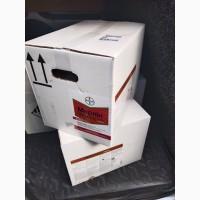
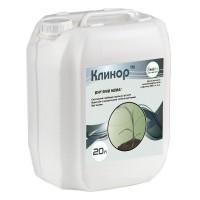
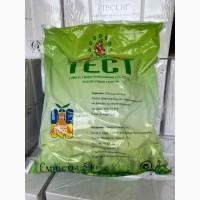
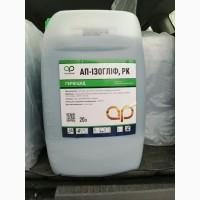
/ Fertilizers and plant protection products / Herbicides / Salar is a systemic selective herbicide, for...

Sell / buy
Salar is a systemic selective herbicide for the control of weeds in sowing grain balls, Kyiv region.
Price12$
Region:all Ukraine,
Kyiv region.
(Vyshhorodok)
Updated:
Salar is a systemic selective post-emergence herbicide designed to combat annual and perennial dicotyledonous weeds. They are used in fields withgrain crops cereal crops.
Active substance: cinidon-ethyl 200 g/l
Toxicity class WHO classification: 3 Preparation form: Emulsion concentrate
Consumption rate 0.15-0.25 l/ha
On the spectrum of action: Selective
Type of effect on the body: Systemic
Manufacturer: Nufarm
Packaging: canisters of 5 liters, the price is indicated for 1 liter.
Main advantages:
There are no restrictions on crop rotation. Productivity of the drug does not depend on the ambient temperature. After application, the first signs of damage appear on the 2-3rd day, and the death of the plant itself occurs 7-10 days after application. Highly effective against podmarenyk. Very fast action, incl. in tank mixtures.
Efficiency practically does not depend on temperature.
No restrictions on crop rotation.(//tractor-service.com)
Recommendations for use:
In order to achieve the best effectiveness from the effects of Salar herbicide, it must be applied at the early stages of the development of annual and perennial dicotyledonous weeds at an optimal air temperature of +5 °С to +25 °С and at a wind speed not exceeding 3-4 m/s.
The working solution of Salar herbicide must be prepared immediately before use. In order to prepare the working solution, it is necessary to fill the tank by 1/3 with water, add the necessary amount of the drug while the mixer is running, and then add water to the full volume.
Salar herbicide can be combined with many herbicides, fungicides and insecticides. Before each combination with a new drug that has not yet been tested, it is recommended to conduct a compatibility test.
The first visible signs of the effect of Salar herbicide appear 2-3 days after application, and immediate death occurs after 7-10 weeks.
Regulations of application:
Harmful object: Dicot annual, Dicot perennial
Culture: Cereals
Application period: After germination (vegetation)
Consumption rate: 0.15-0.25 l/ha
The rate of labor consumption. solution: 200-400 l/ha
Active substance: cinidon-ethyl 200 g/l
Toxicity class WHO classification: 3 Preparation form: Emulsion concentrate
Consumption rate 0.15-0.25 l/ha
On the spectrum of action: Selective
Type of effect on the body: Systemic
Manufacturer: Nufarm
Packaging: canisters of 5 liters, the price is indicated for 1 liter.
Main advantages:
There are no restrictions on crop rotation. Productivity of the drug does not depend on the ambient temperature. After application, the first signs of damage appear on the 2-3rd day, and the death of the plant itself occurs 7-10 days after application. Highly effective against podmarenyk. Very fast action, incl. in tank mixtures.
Efficiency practically does not depend on temperature.
No restrictions on crop rotation.(//tractor-service.com)
Recommendations for use:
In order to achieve the best effectiveness from the effects of Salar herbicide, it must be applied at the early stages of the development of annual and perennial dicotyledonous weeds at an optimal air temperature of +5 °С to +25 °С and at a wind speed not exceeding 3-4 m/s.
The working solution of Salar herbicide must be prepared immediately before use. In order to prepare the working solution, it is necessary to fill the tank by 1/3 with water, add the necessary amount of the drug while the mixer is running, and then add water to the full volume.
Salar herbicide can be combined with many herbicides, fungicides and insecticides. Before each combination with a new drug that has not yet been tested, it is recommended to conduct a compatibility test.
The first visible signs of the effect of Salar herbicide appear 2-3 days after application, and immediate death occurs after 7-10 weeks.
Regulations of application:
Harmful object: Dicot annual, Dicot perennial
Culture: Cereals
Application period: After germination (vegetation)
Consumption rate: 0.15-0.25 l/ha
The rate of labor consumption. solution: 200-400 l/ha
|
Shop, contacts | |
Yuriy / feedback, info. / evaluation activities | |
|
Phone:
+38(xxxxxx
show
| |
All ads user ~1000 | |
Ad ID: #1199751
(added by registered user, registration date: 2016-08-10)
Added / Updated: 12-10-2025 09:10 (current, until: 10-12-2026)
Permanent Ad Address:
Impressions / views for today: ?, total: ?
Similar ads
There are many interesting ones among them...