/ Fertilizers and plant protection products / Herbicides / Elumis - herbicide for complex protection of crops...


Sell / buy
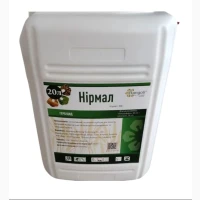
Elumis - herbicide for comprehensive protection of corn crops, Kyiv region.
Price12.5$
Region:all of Ukraine,
Kyiv region.
(Vyshhorodok)
Updated:
Elyumis - comprehensive solution against weeds in corn crops.
Packaging: 20 l, the price is for 1 l.
Active substance content: 30 g/l Nicosulfuron 75 g/l Mesotrione
Chemical group: Sulfonylureas Triketones
Active group: NicosulfuronMesotrione
Toxicity class: III
Preparative form: Oil dispersion.
MAIN ADVANTAGES OF THE DRUG:
• Wide window of application — 2–8 (10) leaves of culture.
• Complete control of a wide range of annual and perennial grass and dicotyledonous weeds.
• Control of the Syrian cotton wool
• Prevents the appearance of several subsequent waves of dicot weeds due to soil action
• Absence of phytotoxicity on the crop even with late application.
• Improved formulation — does not require the addition of surfactants.
APPLICATION OF THE DRUG:
Culture Spectrum of action Application phase Consumption rate, l/ha.
Corn(//tractor-service.com)
Annual and perennial grass and dicotyledonous weeds
Spraying during the growing season in the phase from 2 to 8 leaves of the culture, inclusive, 1.25–2.0*
* The maximum application rate should be applied in the case of a mass appearance of perennial and overgrown weeds.
COMPATIBILITY:
Do not use with trace elements, particularly zinc in any form. It is not recommended to mix with insecticides based on organophosphorus compounds.
Also, do not use on corn crops whose seeds have been treated with insecticides based on organophosphorus compounds and thiocarbamates.
RESTRICTIONS REGARDING CROP CHANGE
It is not recommended to grow sugar beets, peas, chickpeas and vegetables the following year after using Elumis®. Soy,sunflower and rapeseed are recommended to be sown after plowing.Corn, sorghum,wheat, barley — without restrictions.
RECOMMENDED CONSUMPTION RATE OF WORKING SOLUTION;
150–250 l/ha.
APPLICATION TEMPERATURE:
The optimal application temperature is from +12 °C to +25 °C.
COMMENTS:
The combination of two active ingredients provides control of the most problematic weeds, such as wheatgrass, horse sorrel, bitter gorse (species), thistles (species). The application rate depends on the development of weeds.
2–4 leaves — 1.5 l/ha, 6–8 leaves — 1.75 l/ha. Overgrown weeds — 2.0 l/ha. In the event of a mass appearance of perennial grasses and dicotyledonous weeds, the rate of use should be maximum.
Packaging: 20 l, the price is for 1 l.
Active substance content: 30 g/l Nicosulfuron 75 g/l Mesotrione
Chemical group: Sulfonylureas Triketones
Active group: NicosulfuronMesotrione
Toxicity class: III
Preparative form: Oil dispersion.
MAIN ADVANTAGES OF THE DRUG:
• Wide window of application — 2–8 (10) leaves of culture.
• Complete control of a wide range of annual and perennial grass and dicotyledonous weeds.
• Control of the Syrian cotton wool
• Prevents the appearance of several subsequent waves of dicot weeds due to soil action
• Absence of phytotoxicity on the crop even with late application.
• Improved formulation — does not require the addition of surfactants.
APPLICATION OF THE DRUG:
Culture Spectrum of action Application phase Consumption rate, l/ha.
Corn(//tractor-service.com)
Annual and perennial grass and dicotyledonous weeds
Spraying during the growing season in the phase from 2 to 8 leaves of the culture, inclusive, 1.25–2.0*
* The maximum application rate should be applied in the case of a mass appearance of perennial and overgrown weeds.
COMPATIBILITY:
Do not use with trace elements, particularly zinc in any form. It is not recommended to mix with insecticides based on organophosphorus compounds.
Also, do not use on corn crops whose seeds have been treated with insecticides based on organophosphorus compounds and thiocarbamates.
RESTRICTIONS REGARDING CROP CHANGE
It is not recommended to grow sugar beets, peas, chickpeas and vegetables the following year after using Elumis®. Soy,sunflower and rapeseed are recommended to be sown after plowing.Corn, sorghum,wheat, barley — without restrictions.
RECOMMENDED CONSUMPTION RATE OF WORKING SOLUTION;
150–250 l/ha.
APPLICATION TEMPERATURE:
The optimal application temperature is from +12 °C to +25 °C.
COMMENTS:
The combination of two active ingredients provides control of the most problematic weeds, such as wheatgrass, horse sorrel, bitter gorse (species), thistles (species). The application rate depends on the development of weeds.
2–4 leaves — 1.5 l/ha, 6–8 leaves — 1.75 l/ha. Overgrown weeds — 2.0 l/ha. In the event of a mass appearance of perennial grasses and dicotyledonous weeds, the rate of use should be maximum.
|
Shop, contacts | |
Yuriy / feedback, info. / evaluation activities | |
|
Phone:
+38(xxxxxx
show
| |
All ads user ~1000 | |
Ad ID: #1195189
(added by registered user, registration date: 2016-08-10)
Added / Updated: 2026-09-23 09:24 (current, until: 12-22-2026)
Permanent Ad Address:
Impressions / views for today: ?, total: ?
Similar ads
There are many interesting ones among them...