Sell / buy
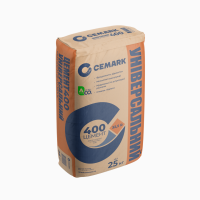
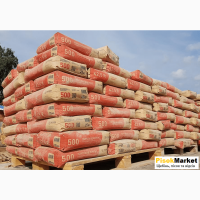
I will sell cement from a supplier from India. Representative in Ukraine, Volyn region.
Region:all of Ukraine,
Volyn region.
(Port)
Updated:
Commercial offer from the cement manufacturer of Indian production. It is sent by ship of not less than 12,500 thousand tons. Representative in Ukraine. My phone numbers are +380502711484 WhatsApp and +380969351156 Viber Alexander. The application from the buyer's company will be sent to my email[email protected].
The Great Wall of China, the Pyramid of Nimus, the Roman Pantheon, all these wonders of architecture are united by an irreplaceable building material - cement. Of course, the composition of cement today differs from what it was in the 2nd century BC.
It is commonly believed that cement is a separate building material, but in fact, it is an artificial binder based on different components. Let's find out what cement is and who invented it.
Where did cement come from?
The ancient Romans were the first to use mass construction from cement. They were the first to come up with a recipe for an astringent. But the main component, namely lime, was discovered by the Etruscans in the 8th century BC. The history of cement began with this discovery.
By mixing slaked lime with the volcanic ash of Vesuvius, the Romans got a building material that remained strong even under water. This is how the first hydraulic cement appeared. And today we can make sure of this, having visited the Colosseum and the Roman Forum.
The Great Wall of China was built and destroyed over many centuries. But only during the Ming dynasty (14th-17th centuries AD) a unique cement mortar made of slaked lime and boiled rice appeared. This mixture made it possible to preserve not only this wonder of the world, but also many tombs and temples.
Professor Joseph Davidovits from Switzerland proved that the pyramid of Cheops was built from concrete. Human hair was found inside one of the investigated blocks. This proved that the solution was first mixed, and then concrete blocks were created.
In 1796, D. Parker patented Romancement, a binding material capable of hardening both in air and in water. But this material was not strong enough.
Thanks to Joseph Aspid, Portland cement appeared on October 21, 1824. This date can be considered the birthday of modern cement. It is named after the town of Portland, where natural stone is mined, the color of which matches cement.
Modern portland cement
Portland cement has become one of the most popular types of cement. It contains crushed clinker and two-water gypsum. Variousadditives are introduced into modern Portland cement, which divide it into 5 main types:
• Fast-setting Portland cement (BTC) consists of clinker, gypsum, mineral additives and slag. This composition allows BTC to harden 70% faster than ordinary cement in the first three days.
• Plasticized Portland cement contains superplasticizers that make concrete more fluid. Such a feature is necessary when building objects that are subject to changes in humidity and temperature.
• Pozzolanic portland cement (PCC) contains, in addition to the main components, an active siliceous additive. It increases resistance to the effects of fresh and salt water. This type of cement is widely used for construction constructed in wet conditions. Also, this type of cement becomes stronger under the influence of high temperatures.
(//tractor-service.com)
• Composite Portland cement is produced with the addition of metallurgical slag. Such a composition allows it to possess super-strong properties. This type of cement is used for the production of reinforced concrete blocks and for construction in wet conditions.
• Portland road cement is mixed with the addition of granulated blast furnace slag. This additive prevents the concrete mixture from setting during the first 2 hours. Such a property is necessary in the conditions of road works. To give the mixture increased frost-resistant properties, plasticizers and air-entraining additives are added to the concrete.
Depending on the strength requirements, Portland cement is divided into grades M100-M600. The most popular brands are M400 and M500.
History of Portland cement production
To get Portland cement, you need to mix crushed clinker and gypsum. Clinker is obtained by burning limestone and clay. Clay limestones were first fired in 1871 in America. For this, they used ovens in which bricks are fired. Such furnaces worked inefficiently. The mixture turned out to be either too baked or not quite ready.
In 1877, the first rotary kiln for clinker firing was patented. The daily productivity of such an installation was 30 tons per day. Modern dry and wet furnaces produce more than 3,000 tons per day.
For the uniform grinding of clinker, in 1892, engineer Davidsen invented the first mill. Today there are mills for both dry and wet grinding.
As 150 years ago, the production of Portland cement takes place in several stages:
• Mining of raw materials
• Grinding of raw materials
• Mixing the necessary ingredients
• Firing (obtaining clinker)
• Clinker grinding with necessaryadditives. The result is Portland cement
Today, Portland cement is produced according to the same principle, only on more modern equipment, and on a different scale.
Concrete production
After the fall of the Roman Empire, concrete was no longer produced. And only in 1844, Johnson patented a modern method of concrete production. Cement acts as a binder when mixing concrete. The class and brand of the concrete mixture depends on the quantity and brand of cement.
In addition to cement, gravel, sand and additives are added to the concrete mixture, which affect the properties of the building material.
The quality of concrete directly depends on the quality of cement. Before mixing concrete, check the authenticity of the cement. The strength of the future building depends on this.
The Great Wall of China, the Pyramid of Nimus, the Roman Pantheon, all these wonders of architecture are united by an irreplaceable building material - cement. Of course, the composition of cement today differs from what it was in the 2nd century BC.
It is commonly believed that cement is a separate building material, but in fact, it is an artificial binder based on different components. Let's find out what cement is and who invented it.
Where did cement come from?
The ancient Romans were the first to use mass construction from cement. They were the first to come up with a recipe for an astringent. But the main component, namely lime, was discovered by the Etruscans in the 8th century BC. The history of cement began with this discovery.
By mixing slaked lime with the volcanic ash of Vesuvius, the Romans got a building material that remained strong even under water. This is how the first hydraulic cement appeared. And today we can make sure of this, having visited the Colosseum and the Roman Forum.
The Great Wall of China was built and destroyed over many centuries. But only during the Ming dynasty (14th-17th centuries AD) a unique cement mortar made of slaked lime and boiled rice appeared. This mixture made it possible to preserve not only this wonder of the world, but also many tombs and temples.
Professor Joseph Davidovits from Switzerland proved that the pyramid of Cheops was built from concrete. Human hair was found inside one of the investigated blocks. This proved that the solution was first mixed, and then concrete blocks were created.
In 1796, D. Parker patented Romancement, a binding material capable of hardening both in air and in water. But this material was not strong enough.
Thanks to Joseph Aspid, Portland cement appeared on October 21, 1824. This date can be considered the birthday of modern cement. It is named after the town of Portland, where natural stone is mined, the color of which matches cement.
Modern portland cement
Portland cement has become one of the most popular types of cement. It contains crushed clinker and two-water gypsum. Variousadditives are introduced into modern Portland cement, which divide it into 5 main types:
• Fast-setting Portland cement (BTC) consists of clinker, gypsum, mineral additives and slag. This composition allows BTC to harden 70% faster than ordinary cement in the first three days.
• Plasticized Portland cement contains superplasticizers that make concrete more fluid. Such a feature is necessary when building objects that are subject to changes in humidity and temperature.
• Pozzolanic portland cement (PCC) contains, in addition to the main components, an active siliceous additive. It increases resistance to the effects of fresh and salt water. This type of cement is widely used for construction constructed in wet conditions. Also, this type of cement becomes stronger under the influence of high temperatures.
(//tractor-service.com)
• Composite Portland cement is produced with the addition of metallurgical slag. Such a composition allows it to possess super-strong properties. This type of cement is used for the production of reinforced concrete blocks and for construction in wet conditions.
• Portland road cement is mixed with the addition of granulated blast furnace slag. This additive prevents the concrete mixture from setting during the first 2 hours. Such a property is necessary in the conditions of road works. To give the mixture increased frost-resistant properties, plasticizers and air-entraining additives are added to the concrete.
Depending on the strength requirements, Portland cement is divided into grades M100-M600. The most popular brands are M400 and M500.
History of Portland cement production
To get Portland cement, you need to mix crushed clinker and gypsum. Clinker is obtained by burning limestone and clay. Clay limestones were first fired in 1871 in America. For this, they used ovens in which bricks are fired. Such furnaces worked inefficiently. The mixture turned out to be either too baked or not quite ready.
In 1877, the first rotary kiln for clinker firing was patented. The daily productivity of such an installation was 30 tons per day. Modern dry and wet furnaces produce more than 3,000 tons per day.
For the uniform grinding of clinker, in 1892, engineer Davidsen invented the first mill. Today there are mills for both dry and wet grinding.
As 150 years ago, the production of Portland cement takes place in several stages:
• Mining of raw materials
• Grinding of raw materials
• Mixing the necessary ingredients
• Firing (obtaining clinker)
• Clinker grinding with necessaryadditives. The result is Portland cement
Today, Portland cement is produced according to the same principle, only on more modern equipment, and on a different scale.
Concrete production
After the fall of the Roman Empire, concrete was no longer produced. And only in 1844, Johnson patented a modern method of concrete production. Cement acts as a binder when mixing concrete. The class and brand of the concrete mixture depends on the quantity and brand of cement.
In addition to cement, gravel, sand and additives are added to the concrete mixture, which affect the properties of the building material.
The quality of concrete directly depends on the quality of cement. Before mixing concrete, check the authenticity of the cement. The strength of the future building depends on this.
|
Shop, contacts | |
Alexander / feedback, info.: 24 / activity assessment Attention! The user has a lot ofnegative reviews | |
|
Phone:
+380xxxxxx
show
| |
| Skype: potapsan | |
All user ads ~322 | |
Ad ID: #1184578
(added by a registered user, registration date: 08-14-2012)
Added / Updated: 08-03-2026 21:15 (current, until: 03-08-2027)
Permanent Ad Address:
Impressions / views for today: ?, total: ?
Similar ads
There are many interesting ones among them...