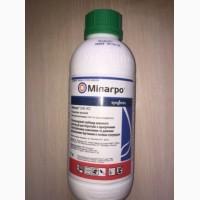
/ Fertilizers and plant protection products / Herbicides / Milagro herbicide is the safest graminicide for...
For sale / buy
Milagro herbicide – the safest graminicide for corn, Kyiv region.
Price2100 UAH.
Region:вся Україна,
Kyiv region.
(Vyshhorodok)
Updated:
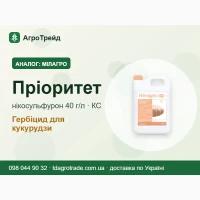
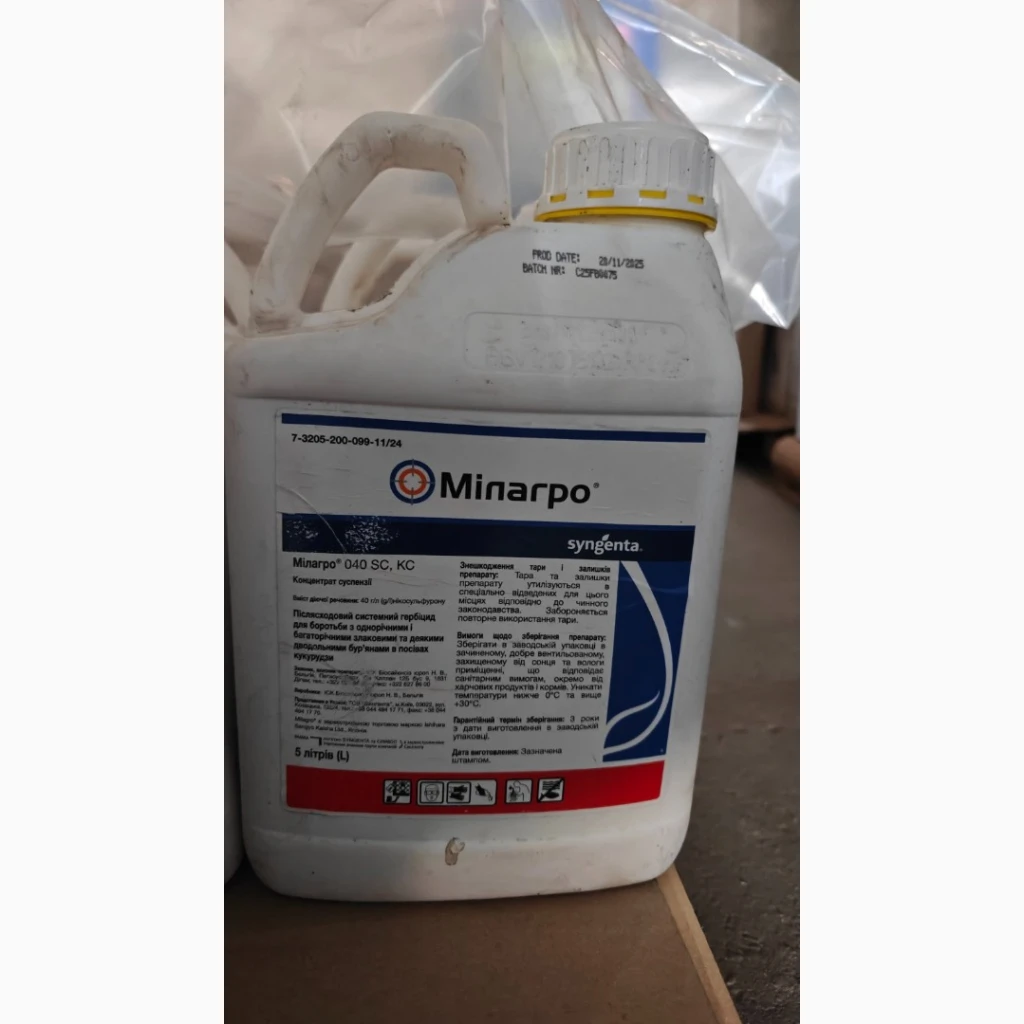
Milagro herbicide is the safest graminicide for corn.
Content of the active substance:
nicosulfuron, 40 g/l
Preparative form: suspension concentrate
Mode of action: systemic
Consumption rate: 1.0-1.25 l/ha
Rate of consumption of the working solution: 143
100-150 л/га
Packaging: 20l box, 4 canisters of 5l each, the price is per canister.
Advantages of Milagro Herbicide:
high selectivity for corn;
complete safety for culture;
has no effect on crop rotation;
destroys all grass weeds together with the root system, including perennial ones, such as creeping wheatgrass and gumii;
quickly stops the growth of weeds and their competition with culture;
ideal partner for herbicides against dicotyledonous weeds;
can be used in areas ofhybridization of corn.
Use of Milagro Herbicide:
Corn
Consumption rate - 1.0-1.25 l/ha
Spectrum of action - Annual and perennial cereals (humay, wheatgrass) and the most common annual dicotyledonous weeds.
Time of application - Spraying of crops in phases from 3 to 10 leaves of the crop inclusive.
Number of treatments - 1.
Mechanism of action of Milagro Herbicide:
Milagro inhibits cell division by blocking the synthesis of essential amino acids. Weeds quickly stop growing and competing with crops, acquire a reddish hue and gradually die completely (after about 3 weeks). Milagro is absorbed by the leaves and stems of weeds, and it quickly moves to the root system of plants. Milagro has no activity in the soil and has no after-effect.
Recommendations for the use of Milagro Herbicide:
perennial cereals - 15-25 cm and 4-5 leaves - 1.25 l/ha, annual cereals - 3-4 leaves - 1.0 l/ha, annual dicotyledons - 2-4 leaves - 1.0 l/ha;
apply the maximum rate of consumption of the drug in case of high weediness and overgrown weeds, as well as in adverse weather conditions;
precipitation that fell four hours after spraying does not reduce the effectiveness of the herbicide;
Milagro destroys only those sensitive weeds that have emerged at the time of processing. Inter-row cultivation may be necessary to destroy weeds that have appeared after herbicide application. Carry out cultivation 10-14 days after spraying. Do not carry out inter-row treatments at least 7 days before applying Milagro.
Precautions for using Milagro Herbicide:
do not use Milagro at temperatures below +8°C and above +25°C;
do not carry out processing in heavy dew and in rainy weather;
organophosphorusinsecticides use 7 days before or 4 days after applying Milagro.
Proven tank mixes of Milagro Herbicide:(//tractor-service.com)
Cereal and dicotyledonous weeds, including sedgesunflower (common): Milagro (1.0-1.25 l/ha) + Peak (5-7 g/ha)
Cereal and dicotyledonous weeds, including thistles (yellow and pink), sunflower sedge (IMI and sulfo-resistant), quinoa, horsetail: Milagro (1.0-1.25 l/ha) + Prima Forte (0.5 l/ha) or (0.7 l/ha) (horsetail, thistles)
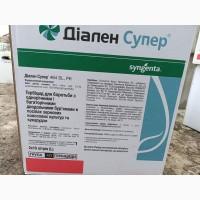
Cereal and dicotyledonous weeds, including field birch: Milagro (1.0-1.25 l/ha) + Dialen Super (0.6-0.8 l/ha)
Cereal and dicotyledonous weeds, including overgrown ones, after the 8th leaf of the crop: Milagro (1.0-1.25 l/ha) + Callisto (0.2 l/ha) + PAR Side-Kick (0.2 l/ha).
Organophosphorus insecticides should be used 7 days before or 4 days after applying Milagro.
Convoy - Systemic herbicide for the protection of grain crops against annual and perennial dicotyledonous weeds.
Active substance: tribenuron-methyl, 300 g/kg; florasulam, 105 g/kg; triasulfuron, 95 g/kg
Manufacturer: Peters & Burg KFT, Hungary
Formulation: water-dispersible granules
Tare unit: 0.25 kg bottle
Efficacy against a wide range of the most common dicotyledonous weeds.
A long "window" of application: from the phase of 3 leaves to the phase of formation of a flag leaf inclusively.
Carcass control of "chemical sunflowers".
Ability to work at temperatures from +5 °C.
Active substances are absorbed by the roots and leaves, easily move in plants, block acetolactate synthase in plants of sensitive weeds - an enzyme involved in the formation of the amino acids valine, leucine and isoleucine. Suppression of acetolactate synthase leads to the arrest of growth and then to the death of plants.
The drug is used on winter and spring barley from the phase of 2-3 leaves until emergence into the tube, on winter wheat from the phase of 2-3 leaves until the appearance of the flag leaf. The highest effectiveness of the drug against annual dicotyledonous weeds is phase 2-4 leaves.
The best time to combat perennial dicot weeds (bristle and yellow thistle, field thistle) is the period of their active growth — the rosette phase or plant height of 10-15 cm.
Late-stage weeds and less sensitive weeds may not die, but their growth and development are stopped and they no longer compete with crops for nutrients.
Culture - Harmful object - Consumption rate of the drug kg/ha - Method and time of processing - Maxim. number of treatments
= Winter and spring wheat
Annual dicotyledons, incl. resistant to 2,4-D and 2M-4X, and some perennial dicotyledonous weeds
0.04 – 0.05 + surfactant Talant (0.1% of the volume of the working solution)
Spraying of crops from the phase of 2-3 leaves of the culture to the phase of flag leaf formation inclusive, and in the early phases of weed development.
1
= Winter and spring barley
Spraying of crops from the phase of 2-3 leaves of the crop to the exit into the tube, and in the early phases of weed development
1
Exit of people to carry out mechanized work - 3 days after applying the drug; for manual work - not installed.
Content of the active substance:
nicosulfuron, 40 g/l
Preparative form: suspension concentrate
Mode of action: systemic
Consumption rate: 1.0-1.25 l/ha
Rate of consumption of the working solution: 143
100-150 л/га
Packaging: 20l box, 4 canisters of 5l each, the price is per canister.
Advantages of Milagro Herbicide:
high selectivity for corn;
complete safety for culture;
has no effect on crop rotation;
destroys all grass weeds together with the root system, including perennial ones, such as creeping wheatgrass and gumii;
quickly stops the growth of weeds and their competition with culture;
ideal partner for herbicides against dicotyledonous weeds;
can be used in areas ofhybridization of corn.
Use of Milagro Herbicide:
Corn
Consumption rate - 1.0-1.25 l/ha
Spectrum of action - Annual and perennial cereals (humay, wheatgrass) and the most common annual dicotyledonous weeds.
Time of application - Spraying of crops in phases from 3 to 10 leaves of the crop inclusive.
Number of treatments - 1.
Mechanism of action of Milagro Herbicide:
Milagro inhibits cell division by blocking the synthesis of essential amino acids. Weeds quickly stop growing and competing with crops, acquire a reddish hue and gradually die completely (after about 3 weeks). Milagro is absorbed by the leaves and stems of weeds, and it quickly moves to the root system of plants. Milagro has no activity in the soil and has no after-effect.
Recommendations for the use of Milagro Herbicide:
perennial cereals - 15-25 cm and 4-5 leaves - 1.25 l/ha, annual cereals - 3-4 leaves - 1.0 l/ha, annual dicotyledons - 2-4 leaves - 1.0 l/ha;
apply the maximum rate of consumption of the drug in case of high weediness and overgrown weeds, as well as in adverse weather conditions;
precipitation that fell four hours after spraying does not reduce the effectiveness of the herbicide;
Milagro destroys only those sensitive weeds that have emerged at the time of processing. Inter-row cultivation may be necessary to destroy weeds that have appeared after herbicide application. Carry out cultivation 10-14 days after spraying. Do not carry out inter-row treatments at least 7 days before applying Milagro.
Precautions for using Milagro Herbicide:
do not use Milagro at temperatures below +8°C and above +25°C;
do not carry out processing in heavy dew and in rainy weather;
organophosphorusinsecticides use 7 days before or 4 days after applying Milagro.
Proven tank mixes of Milagro Herbicide:(//tractor-service.com)
Cereal and dicotyledonous weeds, including sedgesunflower (common): Milagro (1.0-1.25 l/ha) + Peak (5-7 g/ha)
Cereal and dicotyledonous weeds, including thistles (yellow and pink), sunflower sedge (IMI and sulfo-resistant), quinoa, horsetail: Milagro (1.0-1.25 l/ha) + Prima Forte (0.5 l/ha) or (0.7 l/ha) (horsetail, thistles)
Cereal and dicotyledonous weeds, including field birch: Milagro (1.0-1.25 l/ha) + Dialen Super (0.6-0.8 l/ha)
Cereal and dicotyledonous weeds, including overgrown ones, after the 8th leaf of the crop: Milagro (1.0-1.25 l/ha) + Callisto (0.2 l/ha) + PAR Side-Kick (0.2 l/ha).
Organophosphorus insecticides should be used 7 days before or 4 days after applying Milagro.
Convoy - Systemic herbicide for the protection of grain crops against annual and perennial dicotyledonous weeds.
Active substance: tribenuron-methyl, 300 g/kg; florasulam, 105 g/kg; triasulfuron, 95 g/kg
Manufacturer: Peters & Burg KFT, Hungary
Formulation: water-dispersible granules
Tare unit: 0.25 kg bottle
Efficacy against a wide range of the most common dicotyledonous weeds.
A long "window" of application: from the phase of 3 leaves to the phase of formation of a flag leaf inclusively.
Carcass control of "chemical sunflowers".
Ability to work at temperatures from +5 °C.
Active substances are absorbed by the roots and leaves, easily move in plants, block acetolactate synthase in plants of sensitive weeds - an enzyme involved in the formation of the amino acids valine, leucine and isoleucine. Suppression of acetolactate synthase leads to the arrest of growth and then to the death of plants.
The drug is used on winter and spring barley from the phase of 2-3 leaves until emergence into the tube, on winter wheat from the phase of 2-3 leaves until the appearance of the flag leaf. The highest effectiveness of the drug against annual dicotyledonous weeds is phase 2-4 leaves.
The best time to combat perennial dicot weeds (bristle and yellow thistle, field thistle) is the period of their active growth — the rosette phase or plant height of 10-15 cm.
Late-stage weeds and less sensitive weeds may not die, but their growth and development are stopped and they no longer compete with crops for nutrients.
Culture - Harmful object - Consumption rate of the drug kg/ha - Method and time of processing - Maxim. number of treatments
= Winter and spring wheat
Annual dicotyledons, incl. resistant to 2,4-D and 2M-4X, and some perennial dicotyledonous weeds
0.04 – 0.05 + surfactant Talant (0.1% of the volume of the working solution)
Spraying of crops from the phase of 2-3 leaves of the culture to the phase of flag leaf formation inclusive, and in the early phases of weed development.
1
= Winter and spring barley
Spraying of crops from the phase of 2-3 leaves of the crop to the exit into the tube, and in the early phases of weed development
1
Exit of people to carry out mechanized work - 3 days after applying the drug; for manual work - not installed.
|
Shop, contacts | |
Yuriy / feedback, info. / evaluation activities | |
|
Phone:
+38(xxxxxx
show
| |
All ads user ~1000 | |
Ad ID: #1164798
(added by registered user, registration date: 2016-08-10)
Added / Updated: 2026-09-23 09:16 (current, until: 09-23-2027)
Permanent Ad Address:
Impressions / views for today: ?, total: ?
Similar ads
There are many interesting ones among them...