/ Services for agriculture / Plot, garden: services / Plot, garden: various services + in assortment / Construction of cellars of any complexity
I will provide service
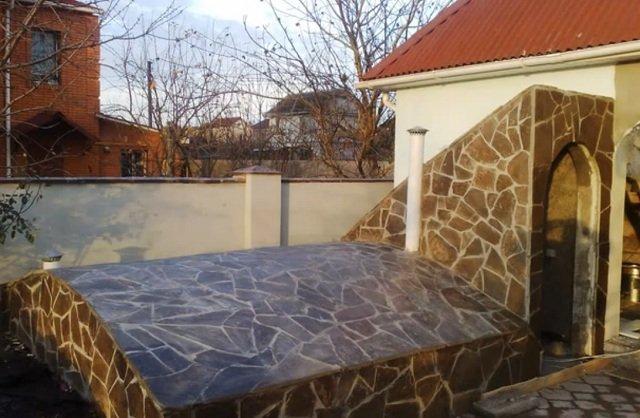
Construction of cellars of any complexity, Kyiv
Price3500 UAH.
Region:
Kyiv
Updated:
For building a cellar, it is very important to choose a suitable location. Such a building is built for years and is designed for long-termfruit storage andfruits. In addition, the cellar must be warm enough, freezing is not allowed. Perhaps that is why many cellars are located under outbuildings, for example, under the summer kitchen. The entrance to the cellar is also in the kitchen itself. Here it is important to remember one important point, the entrance can be made in those rooms where there is no gas stove, otherwise it can be dangerous for health.
The size of the cellar can be completely different. If you place the cellar under the room, then it cannot be larger in size than the room itself, under which the cellar is located. Basically, the sizes depend on the needs of the family. A large family, of course, will need much more space for storing food than a family consisting of several people. On average, the area of the cellar is 10 m².
Selection of material
The walls of the cellar are mostly made of brick. Although, for these purposes, almost any material that is suitable for the construction of residential buildings is used. The floor is laid with bricks or filled with concrete. You can put stone slabs. You can lay wooden boards on the floor, but here you need to think about underground ventilation. It is better not to use wood in cellars. If this is necessary, it should be processed. The fact is that there is high humidity in the cellar. The tree in such conditions begins to rot quite quickly. The ceiling can be built from different materials. For example, from reinforced concrete slabs.
In the hot season, when the street is dry, the cellar should be well ventilated. Do not forget about general cleaning, the cellar also needs it. The surface is thoroughly cleaned of mold, treated with antiseptics. Ego can be fumigated with smoke, this is done mainly to scare away rodents. During fumigation, the cellar is closed, then, after a while, it is opened and ventilated. They say that it is a very good remedy against rats. Rats are quite smart and careful creatures, they do not eat any poison. They are also very careful with rat traps. And such a simple method will help get rid of all rats at once, and without the use of toxic chemicals.(//tractor-service.com)
Technical requirements for the premises
The cellar should have relatively constant temperature and humidity indicators. The optimal temperature regime ranges from 0 to +7°C. Cellars should be dry, but if the humidity is minimal, the vegetables will begin to shrivel. If the humidity is too high, the condensate that will form under the influence of atmospheric and soil moisture will settle on the vegetables. Excess moisture will provoke the development of mold. Vegetables and fruits will begin to rot. If you do not remove such rotting specimens in time, you can lose the entire crop. Rot has the property of spreading to unaffected vegetables and fruits that are nearby. For the same reason, such pests as rodents are capable of causing significant damage. They gnaw whole fruits and vegetables, they do not eat them whole, because of which the latter begin to spoil and rot.
Ventilating the cellar helps fight mold quite effectively. In the winter cold, you won't keep the door open, and you don't need to. Simply, when building a cellar, you need to think about ventilation. Ventilation can be both supply and exhaust. Surely you have seen the pipes rising above the cellars. It is they who perform such an important function of room ventilation. Pipes can be made of any durable material. Asbestos-cement pipes are quite popular.
Choosing an area for construction.
The construction of the basement is largely associated with natural conditions. The ego needs to be protected from stormwater in the summer and severe frosts in the winter. The close location of groundwater makes its adjustments. It is impossible to dig deep cellars in such an area, otherwise it will be flooded by groundwater. This often happens in the spring, when the snow begins to melt. Melt water raises the groundwater level. One day you can go into the cellar and find a flood there. Cans with preserves floating along withpotatoes are an interesting sight, but not very pleasant. You will have to pump out the water and dry the vegetables that are there. If this is not done, the remains of the crop can successfully rot. Cans with preservation must also be wiped with a dry rag. Particular attention should be paid to the covers, otherwise they can quickly rust. And under such rusty lids, preservation will not be able to be stored for a long time. As you can see, an improperly constructed cellar can cause a lot of trouble. If the groundwater in your area is close, you need to build a shallow cellar. This will be a so-called semi-burial, its depth is no more than 1.5 m. Since the cellar will be shallow, it may freeze. In this case, you need to think carefully about insulation. Fortunately, now there is a huge amount of different and quite effective insulation materials. So you shouldn't have any problems with this.
The size of the cellar can be completely different. If you place the cellar under the room, then it cannot be larger in size than the room itself, under which the cellar is located. Basically, the sizes depend on the needs of the family. A large family, of course, will need much more space for storing food than a family consisting of several people. On average, the area of the cellar is 10 m².
Selection of material
The walls of the cellar are mostly made of brick. Although, for these purposes, almost any material that is suitable for the construction of residential buildings is used. The floor is laid with bricks or filled with concrete. You can put stone slabs. You can lay wooden boards on the floor, but here you need to think about underground ventilation. It is better not to use wood in cellars. If this is necessary, it should be processed. The fact is that there is high humidity in the cellar. The tree in such conditions begins to rot quite quickly. The ceiling can be built from different materials. For example, from reinforced concrete slabs.
In the hot season, when the street is dry, the cellar should be well ventilated. Do not forget about general cleaning, the cellar also needs it. The surface is thoroughly cleaned of mold, treated with antiseptics. Ego can be fumigated with smoke, this is done mainly to scare away rodents. During fumigation, the cellar is closed, then, after a while, it is opened and ventilated. They say that it is a very good remedy against rats. Rats are quite smart and careful creatures, they do not eat any poison. They are also very careful with rat traps. And such a simple method will help get rid of all rats at once, and without the use of toxic chemicals.(//tractor-service.com)
Technical requirements for the premises
The cellar should have relatively constant temperature and humidity indicators. The optimal temperature regime ranges from 0 to +7°C. Cellars should be dry, but if the humidity is minimal, the vegetables will begin to shrivel. If the humidity is too high, the condensate that will form under the influence of atmospheric and soil moisture will settle on the vegetables. Excess moisture will provoke the development of mold. Vegetables and fruits will begin to rot. If you do not remove such rotting specimens in time, you can lose the entire crop. Rot has the property of spreading to unaffected vegetables and fruits that are nearby. For the same reason, such pests as rodents are capable of causing significant damage. They gnaw whole fruits and vegetables, they do not eat them whole, because of which the latter begin to spoil and rot.
Ventilating the cellar helps fight mold quite effectively. In the winter cold, you won't keep the door open, and you don't need to. Simply, when building a cellar, you need to think about ventilation. Ventilation can be both supply and exhaust. Surely you have seen the pipes rising above the cellars. It is they who perform such an important function of room ventilation. Pipes can be made of any durable material. Asbestos-cement pipes are quite popular.
Choosing an area for construction.
The construction of the basement is largely associated with natural conditions. The ego needs to be protected from stormwater in the summer and severe frosts in the winter. The close location of groundwater makes its adjustments. It is impossible to dig deep cellars in such an area, otherwise it will be flooded by groundwater. This often happens in the spring, when the snow begins to melt. Melt water raises the groundwater level. One day you can go into the cellar and find a flood there. Cans with preserves floating along withpotatoes are an interesting sight, but not very pleasant. You will have to pump out the water and dry the vegetables that are there. If this is not done, the remains of the crop can successfully rot. Cans with preservation must also be wiped with a dry rag. Particular attention should be paid to the covers, otherwise they can quickly rust. And under such rusty lids, preservation will not be able to be stored for a long time. As you can see, an improperly constructed cellar can cause a lot of trouble. If the groundwater in your area is close, you need to build a shallow cellar. This will be a so-called semi-burial, its depth is no more than 1.5 m. Since the cellar will be shallow, it may freeze. In this case, you need to think carefully about insulation. Fortunately, now there is a huge amount of different and quite effective insulation materials. So you shouldn't have any problems with this.
|
Shop, contacts | |
Dmitriy / feedback, info. / activity evaluation | |
|
Phone:
+380xxxxxx
show
| |
| Telegram: +380938271007 | |
| Viber: +380938271007 | |
| Whatsapp: +380938271007 | |
| https://luks-life.ukrstroy.net | |
All user ads ~85 | |
Ad ID: #1155475
(added by registered user, registration date: 02-16-2021)
Added / Updated: 09-03-2025 11:21 (current, until: 03-09-2026)
Permanent Ad Address:
Impressions / views for today: ?, total: ?
Similar ads
Among them there are many interesting ones...




Total174 similar adsin the heading "Plot, garden: services"
All Ukraine: Services for agriculture 7240 / Plot, garden: services 174 / Plot, garden: various services + in assortment 69