Sell / buy
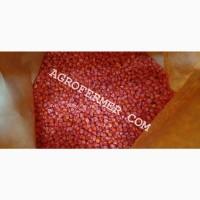
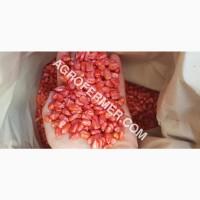
Corn Veles FAO 200-299, Kharkiv region.
Price1400 UAH. / packaging
Region:all of Ukraine,
Kharkiv region.
Updated:
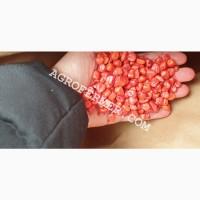
Purpose of grain: Sowing material
Quantity: 100 tons
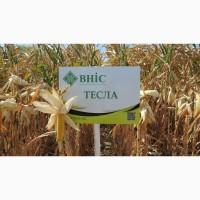
DK VELES
Universal use
Resistant to drought and heat.
Resistant to lying down.
Simple modified mid-early hybrid (FAO 270).
Listed in the Register of Varieties since 2016.
Direction of use -grain,silage.
The plant is 230-240 cm tall, in wet and cool years it shows weak bushiness.
The cob is attached at a height of 85-95 cm.
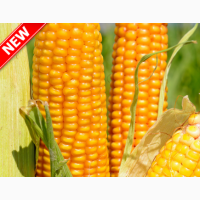
Kachan is 22-23 cm long, cylindrical in shape, the number of rows of grains is 16, the stem is red. The top of the cob is very well seeded.
(//tractor-service.com)
Grain yield is 81-82%.
The grain is yellow-orange, tooth-like, oblong in shape with a well-defined floury layer and a pit at the top of the grain. Weight of 1000 grains 280-300 g.
The hybrid is distinguished by a well-developed leaf apparatus and plant remandability, which makes it versatile for use on grain and silage, especially for the Steppe zone.
The repairability of plants is especially noticeable in dry periods, and leads to slightly increased moisture content of the grain during harvesting by 2-3%.
The hybrid is characterized by high average cold resistance and high drought resistance. It has a slow initial development, but the crops are well aligned.
Resistance to the effect of blistering soot, to stem and vegetative laying of good.
Cultivation zone – Steppe, Forest Steppe, Polissia.
The recommended pre-harvest density of plants in the Steppe 50, Forest Steppe 80, Polyssia zone is 80-90 thousand units/ha.
According to ecological test data, in 2013 the average grain yield in 12 points of different regions of Ukraine was 9.13 t/ha with a grain moisture content of 24.1%, and in 2014 in the same points it was 8.19 t/ha with an average grain moisture content of 20.3%.
For comparison, the average yield of the Solonyanskyi 298 SV hybrid standard was 8.72 and 7.23 t/ha with a grain moisture content of 23.0 and 18.1%, respectively, by year.
The maximum grain yield of 12.82 t/ha was obtained in 2013 at the research plots of the Institute of Agriculture of the National Academy of Sciences. Peculiarities of seed production. The seeds of the first generation on the hybridization sites are grown on a sterile basis according to the scheme of full recovery. The parental components are sown simultaneously, the recommended sowing scheme is 6:2, 4:2.
Universal use
Resistant to drought and heat.
Resistant to lying down.
Simple modified mid-early hybrid (FAO 270).
Listed in the Register of Varieties since 2016.
Direction of use -grain,silage.
The plant is 230-240 cm tall, in wet and cool years it shows weak bushiness.
The cob is attached at a height of 85-95 cm.
Kachan is 22-23 cm long, cylindrical in shape, the number of rows of grains is 16, the stem is red. The top of the cob is very well seeded.
(//tractor-service.com)
Grain yield is 81-82%.
The grain is yellow-orange, tooth-like, oblong in shape with a well-defined floury layer and a pit at the top of the grain. Weight of 1000 grains 280-300 g.
The hybrid is distinguished by a well-developed leaf apparatus and plant remandability, which makes it versatile for use on grain and silage, especially for the Steppe zone.
The repairability of plants is especially noticeable in dry periods, and leads to slightly increased moisture content of the grain during harvesting by 2-3%.
The hybrid is characterized by high average cold resistance and high drought resistance. It has a slow initial development, but the crops are well aligned.
Resistance to the effect of blistering soot, to stem and vegetative laying of good.
Cultivation zone – Steppe, Forest Steppe, Polissia.
The recommended pre-harvest density of plants in the Steppe 50, Forest Steppe 80, Polyssia zone is 80-90 thousand units/ha.
According to ecological test data, in 2013 the average grain yield in 12 points of different regions of Ukraine was 9.13 t/ha with a grain moisture content of 24.1%, and in 2014 in the same points it was 8.19 t/ha with an average grain moisture content of 20.3%.
For comparison, the average yield of the Solonyanskyi 298 SV hybrid standard was 8.72 and 7.23 t/ha with a grain moisture content of 23.0 and 18.1%, respectively, by year.
The maximum grain yield of 12.82 t/ha was obtained in 2013 at the research plots of the Institute of Agriculture of the National Academy of Sciences. Peculiarities of seed production. The seeds of the first generation on the hybridization sites are grown on a sterile basis according to the scheme of full recovery. The parental components are sown simultaneously, the recommended sowing scheme is 6:2, 4:2.
|
Author, contacts | |
TOV Haskom Trade / feedback, info. / activity evaluation | |
|
Phone:
+38(xxxxxx
show
| |
| http://www.khaskom.com.ua | |
All ads user ~599 | |
Ad ID: #1078042
(added by a registered user, registration date: 2016-12-28)
Added / Updated: 2026-07-16 11:41 (current, until: 16-07-2027)
Permanent Ad Address:
Impressions / views for today: ?, total: ?