/ Seeds, seedlings and seeding materials / Seedlings of fruit and berry bushes / Raspberry seedlings / Raspberry seedlings
Sell / buy
Maline seedlings, Dnipropetrovsk region.
Region:all Ukraine,
Dnipropetrovsk region.
(Dnipropetrovsk region. city of Dnipro w/m Topolya-2)
Raspberry seedlings of an early ripening period, 15 gr. FOR ORDERS OF 20 PCS.
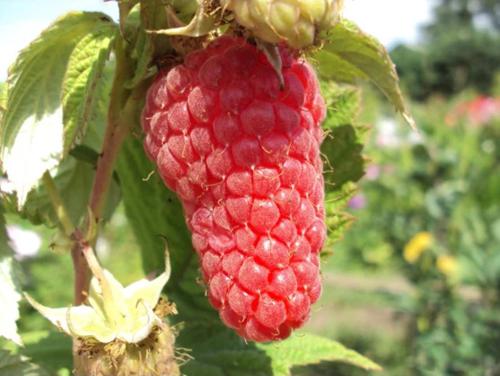
Raspberry Lyachka (Lyashka). TodayPolish raspberry"Lachka" ("Lyachka", "Lyashka") is one of the most popular and valuable berry crops, which is highly valued among the residents of Ukraine.
Everyone's favorite raspberry variety "Lachka" was relatively recently bred by Polish breeders from the Horticulture Research Station in Brzezno (outskirts of Krakow) and entered into the State Register of Poland in 2006.
The bush of the "Lyachka" variety is capable of stretching from two to three meters in height. The stems of the plant have a rigid structure, bent in the upper part, covered with numerous, harmless and small thorns. Fruit branches in large numbers are formed on the shoots 2 years after planting.
Berries on a raspberry bush are large, dessert-like, elongated, with light pubescence, bright red saturated color, with a pleasant aroma and sweet taste. The size of one fruit is 3.5-4 cm in length, it weighs on average 5-6 g.
The very early ripening of its delicious fruits and the long fruiting period (3-3.5 weeks, starting from the middle of July) should be counted among the indisputable advantages of the "Lyachka" variety.
To successfully grow raspberries, it is necessary to plant them correctly (in spring or autumn), feed them, prune them, protect them from diseases and pests, and prepare them for winter.
Varietal raspberry "Lyashka" is distinguished by its high yield, which varies from 170 to 200 t/ha, if a special planting scheme of 2 x 0.5 m is observed.
Berries of this variety perfectly tolerate long transportation, do not crumple, do not release juice and retain their shape for a long time.
Raspberry "Lyachka" is highly resistant to various garden diseases, including some fungal ones.(//tractor-service.com)
It has high frost resistance, but for better preservation, in frosts of -35°С and below, spring thaws and subsequent frosts, the bushes should be bent and covered with spunbond.
Seedlings of raspberries of the middle ripening period, 15 g each.
The beauty of Russia is one of the "trump cards" in Professor Kychyna's selection deck. One of those raspberries, after the creation of which he is credited with exceptional genius in the selection of berry crops. This is a sister variety of Pride of Russia. They are similar in many ways, first of all, their large and sometimes simply huge fruits. But what else do they have in common, and how do sisters differ? Is Krasa really a masterpiece of selection - about it in our article below.
History of creation The large-fruited summer raspberry variety Krasa Rossii was bred at the Moscow Institute of Horticulture and Nursery Cultivation (VSTISP). In 1990, Russian breeders led by Professor V. V. Kichyna crossed two varieties - the already well-proven large-fruited thornless Maroseika and the productive Mirage with Scottish roots. Among the experimental plantings in 1992, saplings corresponding to the required characteristics were selected. Then, having made sure of the stability of the obtained varietal qualities in new generations, raspberries began to be propagated and prepared for open sale. Since 1994, it was officially started to be sold as a new variety under the name Beauty of Russia. Description A variety of the average ripening period, ripens on July 10-15. For example, in the southern regions of the country, fruiting begins from June 15-20, and blooms in the second half of May. Fertilization is quite extended, it can cover the middle to the end of August, depending on the region. It usually lasts 4-5 weeks. The bulk of the crop is harvested 5-6 times. An interesting fact about the Kichinovsky large-fruited varieties is that almost all of them can show partial, insignificant remontantness in the autumn when the weather is favorable. Therefore, some gardeners mistakenly believe that the Beauty of Russia, like the Pride of Russia, are remontant varieties. But this, of course, is fundamentally wrong. All of them belong to the usual summer raspberry. The plant has a good growth force, forms 8-10 replacement shoots per season. The root growth produces an average amount, it does not spread widely to the sides of the site. It is necessary to regulate the amount of stems, regularly cutting out the excess and leaving 5-7 pieces per bush or 10-12 pieces per linear meter of the row. Do not forget to remove the appearing nettles, which, if desired, can be planted in pots with a peat substrate for rooting and obtaining full-fledged seedlings in the futureseedlings. Young growth, as well as young leaves, can be lemon-green in spring. When planting, the distance between plants in a row is 50-70 cm. The habit of the bush is open, the Beauty of Russia bush itself is quite compact, weakly spreading. Shoots of the variety are powerful, absolutely thornless, straight-growing, usually reaching 1.5-1.8 meters, but under conditions suitable for raspberries, they can stretch up to 2 meters. Young stems of a juicy green color mature and become woody in the second hour, acquiring a light brown shade, but the branching fruit branches retain their green color. The stems are medium and thick in diameter, mostly 2−2.5 cm, hard, elastic and durable, short internodes. In autumn, they bend well for shelter for the winter and for binding each other, they do not break or crack. The stems are non-beige, pubescent (covered with a felt coating), with a non-intense waxy coating. Laterals of medium length, strong, thickened. They are bright green, can acquire an anthocyanin (purple) shade. They have up to 2-4 orders of branching. On each of them, 10-20 fruits are formed in dense bunches, but in a well-developed bush, their number can be even more. The fruiting zone occupies most of the shoot.
Raspberry Sokolitsa on the tops of young shoots can show insignificant remontantness until October. Especially during a long, warm autumn. Young shoots are juicy green, with age they can acquire an anthocyanin shade. Closer to winter, they ripen and become light brown in color. The laterals of the variety are of medium length (30−50 cm), well branched, with rare small spines. Each order of branching ripens 20 or more fruits. The leaves are deep green, with a slight shine. They are strongly corrugated, narrow, oval-shaped, mostly straight and slightly twisted. The edges of the leaves consist of small, sharp and frequent teeth. Raspberries bloom profusely, amicably, starting from May. Flowers of medium size, white color, collected in numerous brushes. Berries are polished, leveled, bright, pink-red in color, with a non-intense glossy shine and slight pubescence. In general, the fruits are 2.5-4 cm long, often growing up to 5 cm. The berries are fleshy, wide, elongated obtuse-conical, or rather even cylindrical in shape. The nose is blunt, slightly rounded. The width of the fruit is on average 2−3 cm. The berries of the variety are large and very large, sometimes even huge. The average weight of raspberry fruits in the season is 5−7 grams, but specimens up to 10−13 grams are often found. Moreover, the large size is not something unusual: very large berries are a standard for Sokolitsa. The bones are medium and small, uniform, tightly attached to each other. The fruits are dense, hard, but the pulp is juicy, with a pleasant thick aroma. Contains a small amount of smallseeds, practically imperceptible when used. The fruits are easily removed from the bush, do not crumble when harvested, with a dry tear, do not flow. They are very high quality, have high product characteristics. They do not darken after harvesting. What is remarkable, despite the large size of the berries, the hollow part inside the fruit is small. And this has a great effect on the product quality, in particular, it improves the transportability and portability of the fruits. Another advantage of the variety is the very friendly ripening of berries, which makes mechanized harvesting possible. Sokolitsa fruits have really high tasting characteristics. They are sweet, but without sweetness, juicy, with a rich raspberry taste and a bright aftertaste. Sugar and acid are perfectly balanced in the fruits. According to experts, our heroine scored 9 out of 10 possible points in this indicator. Raspberry fruits are resistant to damage during collection, storage and transportation. And also they do not rot, hanging on the bush, after ripening and during storage. Sokolitsa berries are generally very light and transportable. When stored in the refrigerator, they retain high product characteristics for up to 6-7 days.
Raspberry Phenomen. A variety with a medium ripening period, fruiting begins in the middle of June. A bush with medium foliage, forms a large number of shoots, does not need a garter and pruning. Fruits are large and very dense, their weight is 10-12 grams. The shape is conical with a blunt tip. The pulp is melting, despite all its density, it is very juicy, which gives the variety its uniqueness. Fruits are stored very well for a long time. Frost resistance is high. Diseased root system is not observed.
Repair varieties of raspberries 20 g each, KHIMBO TOP and BRUSNYAVA.
Raspberry Lyachka (Lyashka). TodayPolish raspberry"Lachka" ("Lyachka", "Lyashka") is one of the most popular and valuable berry crops, which is highly valued among the residents of Ukraine.
Everyone's favorite raspberry variety "Lachka" was relatively recently bred by Polish breeders from the Horticulture Research Station in Brzezno (outskirts of Krakow) and entered into the State Register of Poland in 2006.
The bush of the "Lyachka" variety is capable of stretching from two to three meters in height. The stems of the plant have a rigid structure, bent in the upper part, covered with numerous, harmless and small thorns. Fruit branches in large numbers are formed on the shoots 2 years after planting.
Berries on a raspberry bush are large, dessert-like, elongated, with light pubescence, bright red saturated color, with a pleasant aroma and sweet taste. The size of one fruit is 3.5-4 cm in length, it weighs on average 5-6 g.
The very early ripening of its delicious fruits and the long fruiting period (3-3.5 weeks, starting from the middle of July) should be counted among the indisputable advantages of the "Lyachka" variety.
To successfully grow raspberries, it is necessary to plant them correctly (in spring or autumn), feed them, prune them, protect them from diseases and pests, and prepare them for winter.
Varietal raspberry "Lyashka" is distinguished by its high yield, which varies from 170 to 200 t/ha, if a special planting scheme of 2 x 0.5 m is observed.
Berries of this variety perfectly tolerate long transportation, do not crumple, do not release juice and retain their shape for a long time.
Raspberry "Lyachka" is highly resistant to various garden diseases, including some fungal ones.(//tractor-service.com)
It has high frost resistance, but for better preservation, in frosts of -35°С and below, spring thaws and subsequent frosts, the bushes should be bent and covered with spunbond.
Seedlings of raspberries of the middle ripening period, 15 g each.
The beauty of Russia is one of the "trump cards" in Professor Kychyna's selection deck. One of those raspberries, after the creation of which he is credited with exceptional genius in the selection of berry crops. This is a sister variety of Pride of Russia. They are similar in many ways, first of all, their large and sometimes simply huge fruits. But what else do they have in common, and how do sisters differ? Is Krasa really a masterpiece of selection - about it in our article below.
History of creation The large-fruited summer raspberry variety Krasa Rossii was bred at the Moscow Institute of Horticulture and Nursery Cultivation (VSTISP). In 1990, Russian breeders led by Professor V. V. Kichyna crossed two varieties - the already well-proven large-fruited thornless Maroseika and the productive Mirage with Scottish roots. Among the experimental plantings in 1992, saplings corresponding to the required characteristics were selected. Then, having made sure of the stability of the obtained varietal qualities in new generations, raspberries began to be propagated and prepared for open sale. Since 1994, it was officially started to be sold as a new variety under the name Beauty of Russia. Description A variety of the average ripening period, ripens on July 10-15. For example, in the southern regions of the country, fruiting begins from June 15-20, and blooms in the second half of May. Fertilization is quite extended, it can cover the middle to the end of August, depending on the region. It usually lasts 4-5 weeks. The bulk of the crop is harvested 5-6 times. An interesting fact about the Kichinovsky large-fruited varieties is that almost all of them can show partial, insignificant remontantness in the autumn when the weather is favorable. Therefore, some gardeners mistakenly believe that the Beauty of Russia, like the Pride of Russia, are remontant varieties. But this, of course, is fundamentally wrong. All of them belong to the usual summer raspberry. The plant has a good growth force, forms 8-10 replacement shoots per season. The root growth produces an average amount, it does not spread widely to the sides of the site. It is necessary to regulate the amount of stems, regularly cutting out the excess and leaving 5-7 pieces per bush or 10-12 pieces per linear meter of the row. Do not forget to remove the appearing nettles, which, if desired, can be planted in pots with a peat substrate for rooting and obtaining full-fledged seedlings in the futureseedlings. Young growth, as well as young leaves, can be lemon-green in spring. When planting, the distance between plants in a row is 50-70 cm. The habit of the bush is open, the Beauty of Russia bush itself is quite compact, weakly spreading. Shoots of the variety are powerful, absolutely thornless, straight-growing, usually reaching 1.5-1.8 meters, but under conditions suitable for raspberries, they can stretch up to 2 meters. Young stems of a juicy green color mature and become woody in the second hour, acquiring a light brown shade, but the branching fruit branches retain their green color. The stems are medium and thick in diameter, mostly 2−2.5 cm, hard, elastic and durable, short internodes. In autumn, they bend well for shelter for the winter and for binding each other, they do not break or crack. The stems are non-beige, pubescent (covered with a felt coating), with a non-intense waxy coating. Laterals of medium length, strong, thickened. They are bright green, can acquire an anthocyanin (purple) shade. They have up to 2-4 orders of branching. On each of them, 10-20 fruits are formed in dense bunches, but in a well-developed bush, their number can be even more. The fruiting zone occupies most of the shoot.
Raspberry Sokolitsa on the tops of young shoots can show insignificant remontantness until October. Especially during a long, warm autumn. Young shoots are juicy green, with age they can acquire an anthocyanin shade. Closer to winter, they ripen and become light brown in color. The laterals of the variety are of medium length (30−50 cm), well branched, with rare small spines. Each order of branching ripens 20 or more fruits. The leaves are deep green, with a slight shine. They are strongly corrugated, narrow, oval-shaped, mostly straight and slightly twisted. The edges of the leaves consist of small, sharp and frequent teeth. Raspberries bloom profusely, amicably, starting from May. Flowers of medium size, white color, collected in numerous brushes. Berries are polished, leveled, bright, pink-red in color, with a non-intense glossy shine and slight pubescence. In general, the fruits are 2.5-4 cm long, often growing up to 5 cm. The berries are fleshy, wide, elongated obtuse-conical, or rather even cylindrical in shape. The nose is blunt, slightly rounded. The width of the fruit is on average 2−3 cm. The berries of the variety are large and very large, sometimes even huge. The average weight of raspberry fruits in the season is 5−7 grams, but specimens up to 10−13 grams are often found. Moreover, the large size is not something unusual: very large berries are a standard for Sokolitsa. The bones are medium and small, uniform, tightly attached to each other. The fruits are dense, hard, but the pulp is juicy, with a pleasant thick aroma. Contains a small amount of smallseeds, practically imperceptible when used. The fruits are easily removed from the bush, do not crumble when harvested, with a dry tear, do not flow. They are very high quality, have high product characteristics. They do not darken after harvesting. What is remarkable, despite the large size of the berries, the hollow part inside the fruit is small. And this has a great effect on the product quality, in particular, it improves the transportability and portability of the fruits. Another advantage of the variety is the very friendly ripening of berries, which makes mechanized harvesting possible. Sokolitsa fruits have really high tasting characteristics. They are sweet, but without sweetness, juicy, with a rich raspberry taste and a bright aftertaste. Sugar and acid are perfectly balanced in the fruits. According to experts, our heroine scored 9 out of 10 possible points in this indicator. Raspberry fruits are resistant to damage during collection, storage and transportation. And also they do not rot, hanging on the bush, after ripening and during storage. Sokolitsa berries are generally very light and transportable. When stored in the refrigerator, they retain high product characteristics for up to 6-7 days.
Raspberry Phenomen. A variety with a medium ripening period, fruiting begins in the middle of June. A bush with medium foliage, forms a large number of shoots, does not need a garter and pruning. Fruits are large and very dense, their weight is 10-12 grams. The shape is conical with a blunt tip. The pulp is melting, despite all its density, it is very juicy, which gives the variety its uniqueness. Fruits are stored very well for a long time. Frost resistance is high. Diseased root system is not observed.
Repair varieties of raspberries 20 g each, KHIMBO TOP and BRUSNYAVA.
Ad ID: #1069190
(added by a registered user)
Permanent Ad Address:
Impressions / views for today: ?, total: ?
Similar recent ads
Among them there are many interesting ones...




Total51 similar fresh adsin the section "Raspberry seedlings"
All Ukraine:Seeds, seedlings and seedlings materials 1273 / Seedlings of fruit and berry bushes 191 / Seedlings raspberries 51
Dnipropetrovsk Region: Seeds, seedlings and sowing materials 137 / Seedlings of fruit and berries bushes 25 / Raspberry seedlings 1