Seedling Pills
This seedling production material has become very popular these days. They were called pills because of their external resemblance to medical pills. Due to their ability to dramatically increase in volume and shape when moistened, their more accurate name is seedling adsorbing pills.
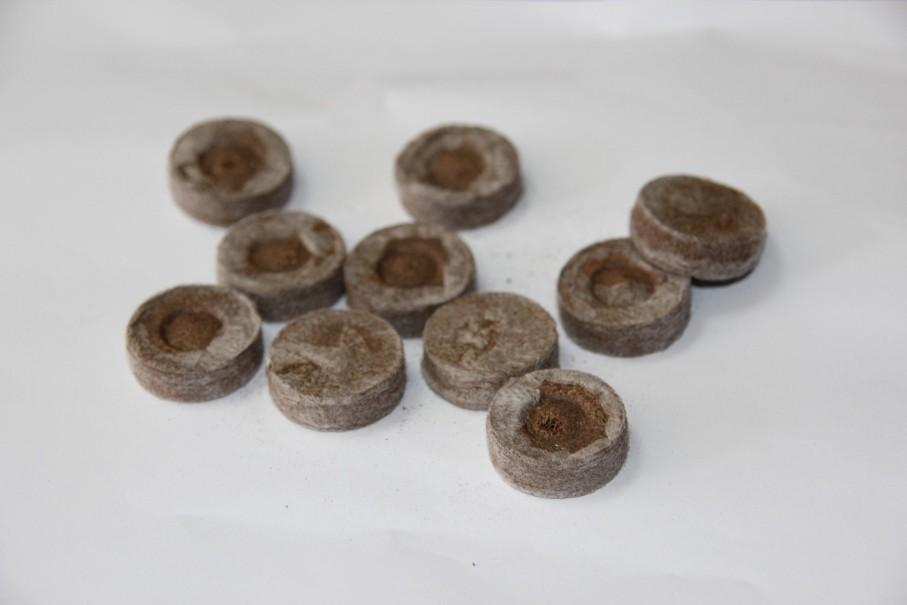
Seeds are placed one by one to each pill, after which they are moistened
The history of their emergence dates back to the 30s of the last century in Norway. And in the 1940s, pills made of pressed cellulose fibers called "Jiffy" (which means "moment" in Norwegian) began to conquer the market.
Plants in them are grown from seeds to 1-2 real leaves, after which they are dived into pots with a peat mixture (no more than 15-20 days). At the same time, the meaning of the word "pikirovka" is unconventional - you only need to take a swollen pill and rearrange it in a pot, adding peat mixture from all sides. This ensures complete preservation of all roots. Even the smallest breaks and damages are excluded.
As early as 1956, the production of pellets reached the level of 20 million per month, and at the same time the official name "Jiffy" became the name of the company.

All pellets are made of high-quality sphagnum peat with the addition of nutrients (including trace elements), and in the proportions necessary for seedlings. The name "Jiffy" is followed by a number that shows how many times they swell, increasing in volume when moistened.
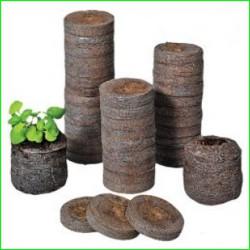
An example of the use of pills - an increase in volume about 7 times after soaking (photo from the site domicad.com.ua)
Depending on the size of the seeds, the types are distinguished:
- "Jiffy-7" with a shell diameter of 2.4 cm;
- "Jiffy-7" with a shell diameter of 3.3 cm;
- "Jiffy-7" with a shell diameter of 4.1 cm;
- "Jiffy-7" with a shell diameter of 4.4 cm.
This division into 4 types is not accidental, becauseseeds are divided into 4 groups - very small, small, medium and large. For wholesale sale, pills are produced in rolls. If you unfold it, they will be laid out on it in the shape of the symbol of the Olympics, so that the seedlings do not overshadow each other. After moisturizing after 1-2 hours, they are unrecognizable - the shape and volume change dramatically, they grow on the eyes 7 times (coconut is less - up to 3.5-4). It remains to periodically moisten them. In 15-20 days, white roots will appear outside through the mesh (when 1-2 true leaves appear), pick up inpots, with a volume of 0.5 l. Being late with it leads to their drying out, which, of course, will have a negative effect on the seedlings.
In order to avoid scattering during swelling or during storage, the pills are wrapped in a fine mesh nylon mesh. There are many reasons for choosing nylon. This material is light, wear-resistant (does not wear out, does not shed, does not lose its properties during intensive use).
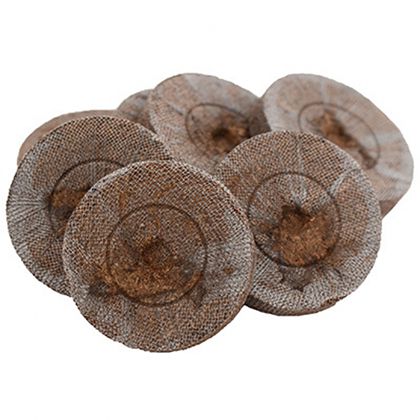
Peat mixture or coconut fiber is wrapped in a nylon net, which prevents disintegration after moistening and during operations with seedlings (photo from the website www.aroks.net.ua)
Its tear resistance and elasticity are no less important. That is, it can be stretched many times, keeping its original shape well, which is very useful when the tablet swells and increases in size. In addition, nylon maintains a presentable appearance and dries quickly, resembling silk in appearance, but unlike it, it is much cheaper. It is recommended to remove this net when digging, simply by cutting it and throwing it away - synthetics do not decompose in the soil, and the roots are not able to overcome this obstacle. Today, they are trying to replace nylon with agrofiber.
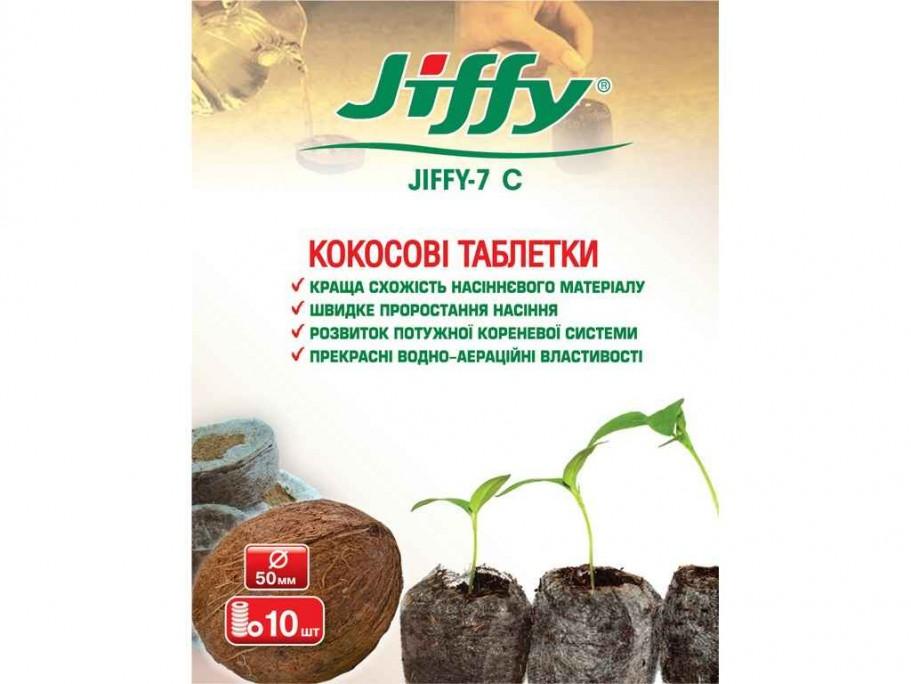
Packaging of coconut seedling tablets (photo from the svitidey.com website)
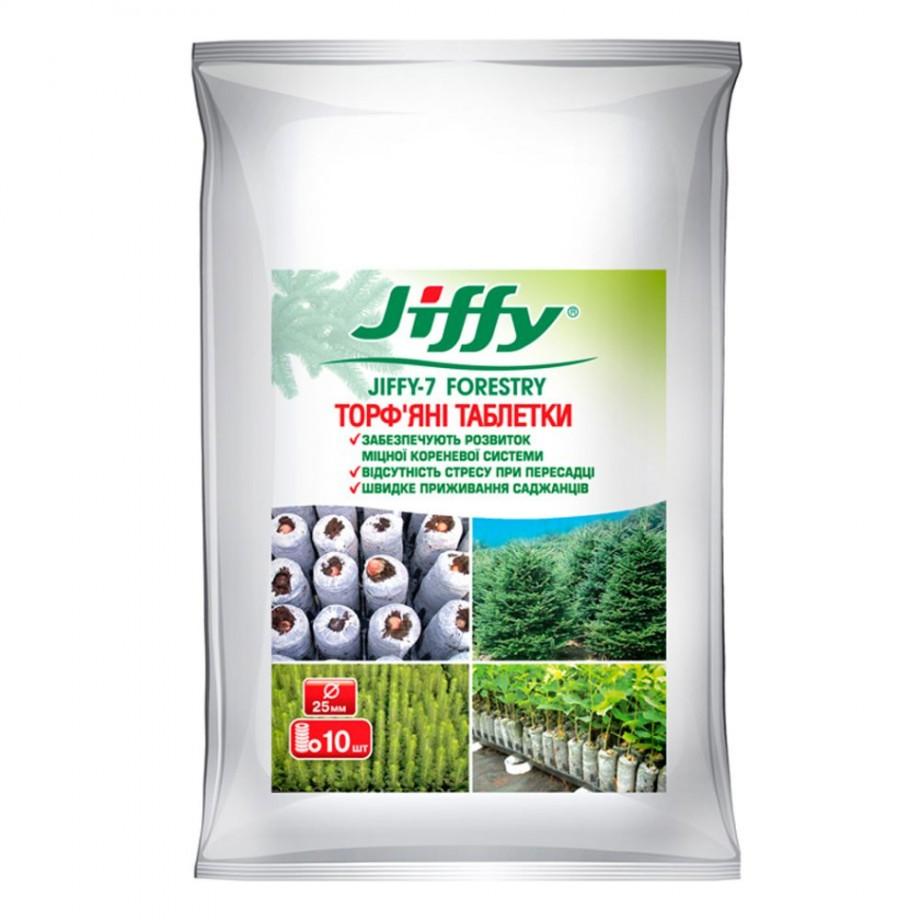
Packaging of peat seedling tablets (photo from the agrohimpak.com.ua website)
In addition to Jiffy tablets, some manufacturers also offer their products of a similar type and purpose on the market. Here you can meet with a lower quality product. This is due to the desire to save on production, when choosing not high-quality sphagnum peat, but cheaper species with a large number of dust-like fractions. But today there is a choice for all needs and all wallets.
But seedling tablets are the first stage. Next, we will be served pots after picking. What are they, of what quality, what is the alternative for them, and what operations in the process should be carried out for maximum success - in the corresponding article "Growing seedlings in pots"