Sale / buy
Esparcet Honeysuckle, Dnepropetrovsk region.
Region:all of Ukraine,
Dnepropetrovsk region.
(Dnipro)
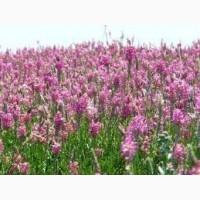
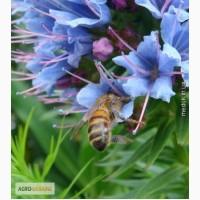
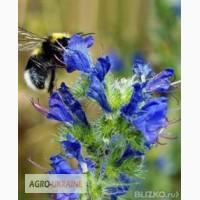
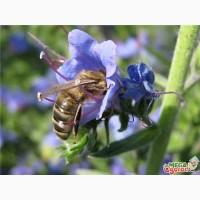
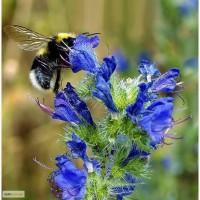
Asparagus is a herbaceous perennial plant that appears honey bee Beekeepers appreciate safflower for its long flowering period, abundant nectar production and high honey productivity, as well as the numerous beneficial properties of honey obtained from the plant's flowers.
Honey productivityesparceta can reach 300 kg/ha. Since the flowering of honey bees falls on the period of growing bee offspring, most of the collected honey is used for feeding it.
Sowing rate is 10 kg/ha (100 g per hectare).
Features of growth and flowering
Asparagus, like honeysuckle, begins to bloom in the second year of life. Flowering occurs in May-June, when spring honeydews have bloomed, and summer honeydews are just getting ready to bloom, and lasts 2.5-3 weeks. The flowers open sequentially, one after the other, the lifespan of one flower is short and averages a day. The whole brush blooms in 2-9 days.
Nectar secretion begins at a comfortable temperature of 22-25 degrees. The more insects choose nectar, the more actively it is produced by flowers. Esparceta nectar is transparent, with a high sugar content - 46-47%.
The plant tolerates heat and lack of moisture poorly, therefore, in dry periods, the plantation must be irrigated regularly to increase nectar production.
Sowing and growing asparagus
The sowing of asparagus should begin with the preparation of the soil: the soil is cultivated, cleaned of weeds, if necessary, the poor soil is fertilized with phosphorus andpotassium fertilizers. The plant does not tolerate acidic soils: before sowing, they should be subjected to liming. Cultivation of the soil is best done in October, while sowing begins in spring.
(//tractor-service.com)
Seeds must be prepared before sowing: treated with "Fundazol" or "Rhizotorphin" preparations and trace elements. The most effective method of sowing is short.
It is very important to observe the seeding depth:
2-3 cm in heavy soil,
3-4 - in medium and light soils.
If the seeding depth is not observed, the seeds may not germinate. The sowing rate is 100 grams of seeds per one hectare of land.
After sowing, the soil is tightly covered. To prevent the reproduction of pests and parasites, it is possible to treat the soil with special insecticidal compositions.
Asparagus grows well in fodder multi-fields. The plant develops best in fields where potatoes, beets, and corn used to grow.
In addition to its wonderful honey-bearing qualities, saffron has other uses. Due to the high content of proteins, carbohydrates, fats and amino acids, the plant has a high fodder value. During the season, it gives two or three full-fledged slopes. Many zootechnicians recognize the superiority of asparagus over alfalfa, one of the main fodder crops. Ego is used not only for obtaining hay, but also for the production of herbal flour.
Esparcet is also used as a sider fertilizer: the green mass is crushed and mixed with the soil. This fertilizer contributes to the faster restoration of soil fertility, enriching it with phosphorus, nitrogen and organic compounds.
Asparagus, without a doubt, deserves attention as an agricultural crop: in addition to excellent honey-bearing qualities, it has a number of medicinal properties, and is also successfully used as livestock feed and sider fertilizer. Подробнее: https://medoray.top/p911914095-espartset.html
Honey productivityesparceta can reach 300 kg/ha. Since the flowering of honey bees falls on the period of growing bee offspring, most of the collected honey is used for feeding it.
Sowing rate is 10 kg/ha (100 g per hectare).
Features of growth and flowering
Asparagus, like honeysuckle, begins to bloom in the second year of life. Flowering occurs in May-June, when spring honeydews have bloomed, and summer honeydews are just getting ready to bloom, and lasts 2.5-3 weeks. The flowers open sequentially, one after the other, the lifespan of one flower is short and averages a day. The whole brush blooms in 2-9 days.
Nectar secretion begins at a comfortable temperature of 22-25 degrees. The more insects choose nectar, the more actively it is produced by flowers. Esparceta nectar is transparent, with a high sugar content - 46-47%.
The plant tolerates heat and lack of moisture poorly, therefore, in dry periods, the plantation must be irrigated regularly to increase nectar production.
Sowing and growing asparagus
The sowing of asparagus should begin with the preparation of the soil: the soil is cultivated, cleaned of weeds, if necessary, the poor soil is fertilized with phosphorus andpotassium fertilizers. The plant does not tolerate acidic soils: before sowing, they should be subjected to liming. Cultivation of the soil is best done in October, while sowing begins in spring.
(//tractor-service.com)
Seeds must be prepared before sowing: treated with "Fundazol" or "Rhizotorphin" preparations and trace elements. The most effective method of sowing is short.
It is very important to observe the seeding depth:
2-3 cm in heavy soil,
3-4 - in medium and light soils.
If the seeding depth is not observed, the seeds may not germinate. The sowing rate is 100 grams of seeds per one hectare of land.
After sowing, the soil is tightly covered. To prevent the reproduction of pests and parasites, it is possible to treat the soil with special insecticidal compositions.
Asparagus grows well in fodder multi-fields. The plant develops best in fields where potatoes, beets, and corn used to grow.
In addition to its wonderful honey-bearing qualities, saffron has other uses. Due to the high content of proteins, carbohydrates, fats and amino acids, the plant has a high fodder value. During the season, it gives two or three full-fledged slopes. Many zootechnicians recognize the superiority of asparagus over alfalfa, one of the main fodder crops. Ego is used not only for obtaining hay, but also for the production of herbal flour.
Esparcet is also used as a sider fertilizer: the green mass is crushed and mixed with the soil. This fertilizer contributes to the faster restoration of soil fertility, enriching it with phosphorus, nitrogen and organic compounds.
Asparagus, without a doubt, deserves attention as an agricultural crop: in addition to excellent honey-bearing qualities, it has a number of medicinal properties, and is also successfully used as livestock feed and sider fertilizer. Подробнее: https://medoray.top/p911914095-espartset.html
Ad ID: #979785
(added by a registered user)
Permanent ad address:
Showed / watched for today: ?, total: ?