/ Agricultural equipment, equipment, inventory / Spare parts for agricultural machinery / Spare parts for machinery post-harvest processing / Spare parts for grain cleaners, grain separators / Sieves for determining the contamination of weeds...
Sell / buy
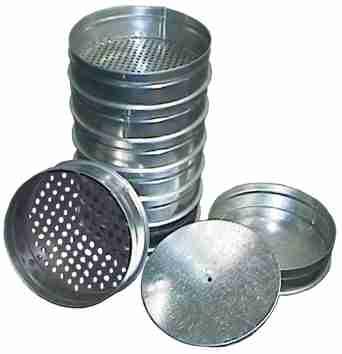
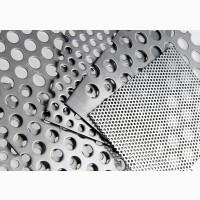
Sieves for determining the contamination of weed impurities in grain, laboratory sieves, Odessa region.
Price1750 UAH.
Region:all of Ukraine,
Odessa region.
Updated:
Determination of grain contamination
When determining the contamination of grain by pests, the form (overt or hidden) and the degree of contamination and damage are established. The contamination of grain and seeds of oilseed crops by pests is determined by sieving the entire average sample. The degree of contamination is determined by the number of live pests in 1 kg of grain or oilseeds. Grain stored inwarehouses is checked for contamination by pests of bread stocks based on average samples taken separately from each layer. Samples are taken from each section with an area of 100 m2 at a grain mound height of more than 1.5 m from three layers: upper (at a depth of up to 10 cm), middle (from the middle of the mound), and lower (at the very floor); when the height of the embankment is lower than 1.5 m, excavations are taken from the upper and lower layers.
Grain stored inelevators is checked for contamination by means of average samples taken from above with a warehouse feeler at an accessible depth separately from eachdog silo and the grain mound layer similarly to the sampling of grain stored in warehouses. Each sample is checked separately and the degree of contamination of the lot is established based on the highest contamination of the sample.
Contamination of grain in wagons and cars is determined by sifting the entire average sample.
When grain is transported by water transport, grain contamination is checked by means of average samples taken from each hold separately.
To determine the obvious contamination of grain by pests, the average sample of grain is sieved on sieves (the lower one with holes of 01.5 mm and the upper one of 0 2.5 mm) manually for 2 minutes at 120 circular movements per minute or mechanized method for 1 minute at 150 circular movements. A lower sieve with holes of 0 1 mm, and an upper sieve of 0 1.5 mm is used for seeds of fennel, ryegrass and poppy seeds.
If the temperature of the grain tested for contamination is lower than 5°C, the resulting exit from the sieve and the passage through the sieve are heated at a temperature of 25-30°C for 10-20 minutes to activate the insects that have fallen into cold stupor.
After sifting, they first determine the contamination of the grain with large types of insects (Moorish weevil, large mealybug and pitch-brown weevil, weevil and their larvae). To do this, carefully inspect the ladder with a sieve with holes of 0 2.5 mm on a collapsible board, level it with a thin layer and disassemble it manually. Then the passages through sieves with holes of 0 2.5 mm (on white glass) and 0 1.5 mm (on black glass) are examined separately, scattering the grain in a thin cut layer.
The passage through the sieve with holes of 0 1.5 mm is viewed under a conical magnifying glass with a magnification of 4-4.5 times.(//tractor-service.com)
During the inspection, live pests are selected (dead ones are classified as weeds and not taken into account when determining the degree of contamination), their type and quantity are determined in 1 kg of grain.
When grain contamination with a weevil or mite is detected, the degree of contamination is established.
Number of specimens of pests in 1 kg of grain (inclusive)
The degree of infestation of Longhorned Ticks
1 From 1 to 5 From 1 to 20
2 From 6 to 10 Over 20
3
More than 10 ticks form a continuous felt layer.
When determining the contamination of corn in the beginning with insect pests, every tenth beginning of the initial sample is carefully examined for the presence of live specimens. When pests are detected in the beginning, write "Infested" in the analysis card and in the quality certificate and indicate the types and number of pests.
In order to detect the contamination of the ear by mites from the original sample, 10 ears taken in pairs are selected, they are lightly tapped against each other over a sheet of black paper, and the obtained residue on the paper is viewed with a magnifying glass with a magnification of 4-4.5" times. When mites are detected, in the analysis card and in the quality certificate, a note is made about the infection of the corn with an indication of the quantity ticks.
When determining the contamination of grain by pests, the form (overt or hidden) and the degree of contamination and damage are established. The contamination of grain and seeds of oilseed crops by pests is determined by sieving the entire average sample. The degree of contamination is determined by the number of live pests in 1 kg of grain or oilseeds. Grain stored inwarehouses is checked for contamination by pests of bread stocks based on average samples taken separately from each layer. Samples are taken from each section with an area of 100 m2 at a grain mound height of more than 1.5 m from three layers: upper (at a depth of up to 10 cm), middle (from the middle of the mound), and lower (at the very floor); when the height of the embankment is lower than 1.5 m, excavations are taken from the upper and lower layers.
Grain stored inelevators is checked for contamination by means of average samples taken from above with a warehouse feeler at an accessible depth separately from eachdog silo and the grain mound layer similarly to the sampling of grain stored in warehouses. Each sample is checked separately and the degree of contamination of the lot is established based on the highest contamination of the sample.
Contamination of grain in wagons and cars is determined by sifting the entire average sample.
When grain is transported by water transport, grain contamination is checked by means of average samples taken from each hold separately.
To determine the obvious contamination of grain by pests, the average sample of grain is sieved on sieves (the lower one with holes of 01.5 mm and the upper one of 0 2.5 mm) manually for 2 minutes at 120 circular movements per minute or mechanized method for 1 minute at 150 circular movements. A lower sieve with holes of 0 1 mm, and an upper sieve of 0 1.5 mm is used for seeds of fennel, ryegrass and poppy seeds.
If the temperature of the grain tested for contamination is lower than 5°C, the resulting exit from the sieve and the passage through the sieve are heated at a temperature of 25-30°C for 10-20 minutes to activate the insects that have fallen into cold stupor.
After sifting, they first determine the contamination of the grain with large types of insects (Moorish weevil, large mealybug and pitch-brown weevil, weevil and their larvae). To do this, carefully inspect the ladder with a sieve with holes of 0 2.5 mm on a collapsible board, level it with a thin layer and disassemble it manually. Then the passages through sieves with holes of 0 2.5 mm (on white glass) and 0 1.5 mm (on black glass) are examined separately, scattering the grain in a thin cut layer.
The passage through the sieve with holes of 0 1.5 mm is viewed under a conical magnifying glass with a magnification of 4-4.5 times.(//tractor-service.com)
During the inspection, live pests are selected (dead ones are classified as weeds and not taken into account when determining the degree of contamination), their type and quantity are determined in 1 kg of grain.
When grain contamination with a weevil or mite is detected, the degree of contamination is established.
Number of specimens of pests in 1 kg of grain (inclusive)
The degree of infestation of Longhorned Ticks
1 From 1 to 5 From 1 to 20
2 From 6 to 10 Over 20
3
More than 10 ticks form a continuous felt layer.
When determining the contamination of corn in the beginning with insect pests, every tenth beginning of the initial sample is carefully examined for the presence of live specimens. When pests are detected in the beginning, write "Infested" in the analysis card and in the quality certificate and indicate the types and number of pests.
In order to detect the contamination of the ear by mites from the original sample, 10 ears taken in pairs are selected, they are lightly tapped against each other over a sheet of black paper, and the obtained residue on the paper is viewed with a magnifying glass with a magnification of 4-4.5" times. When mites are detected, in the analysis card and in the quality certificate, a note is made about the infection of the corn with an indication of the quantity ticks.
|
Shop, contacts | |
Oleg/ отзывы, инфо./ activity assessment | |
|
Phone:
+38 xxxxxx
show
| |
Advertisement ID: #959908
(added by a registered user, registration date: 09-17-2019)
Added / Updated: 14-01-2026 13:06 (relevant, until: 14-01-2027)
Permanent ad address:
Showed / watched for today: ?, total: ?
Similar ads
Among them there are many interesting ones...


All Ukraine: Spare parts for agricultural machinery 19199 / Spare parts for machinery for post-harvest processing 905 / Spare parts for grain cleaners, separators grains 113
Odessa region: Spare parts for agricultural machinery 669 / Spare parts for post-harvest machinery processing 47 / Spare parts for grain cleaners, grain separators 3