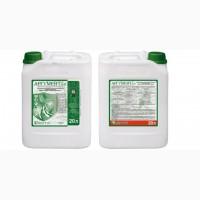
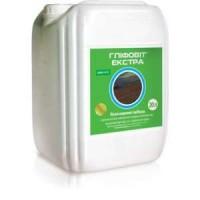
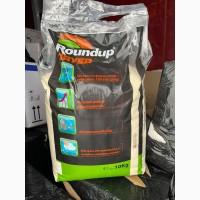
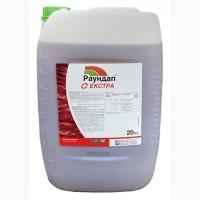
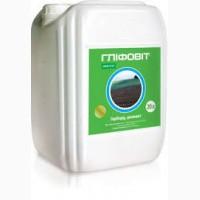
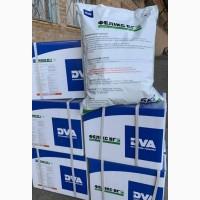
/ Fertilizers and plant protection products / Herbicides / Herbicide and desiccant Roundup glyphosate salts, 480 g/...
For sale / buy
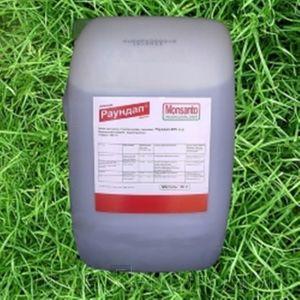
Herbicide and desiccant Roundup glyphosate salts, 480 g/l, continuous action, Kirovohrad region.
Region:all Ukraine,
Kirovohrad region.
(Belaya tserkov)
HerbicideRoundup Glyphosate salts, 480 g/l, soil herbicide before germination of the main plants
Category: Herbicides
Chemical characteristics
Active substance content: glyphosate isopropylamine salt, 480 g/l
Chemical group: glycines
Preparative form: Aqueous solution
Packaging: 10 and 20 l
An effective tool for the destruction of harmful rhizome and rhizome weeds, as well as unwanted tree-shrub vegetation (both above-ground and underground parts)
It is also used as a desiccant.
Quickly decomposes in the soil into safe compounds, allows sowing of cultivated plants 3-7 days after application.
Mechanism of action
The active substance of the herbicide by the method of action on the plant belongs to the group of inhibitors of amino acid synthesis and penetrates into the plant through its actively growing green aerial parts. Due to its systemic properties, in a short period of time it gets into all the vital organs of the plant (above-ground and root system), disrupts the synthesis of amino acids necessary for growth and development, which causes a rapid cessation of growth, chlorosis of young leaves, death of above-ground and underground organs. After 3-4 days, the first signs of the herbicidal effect appear, first it is yellowing, then browning and wilting of the leaves begin. Complete death of weeds occurs after 8-10 days, depending on weather conditions and type of weeds.
Spectrum of action
Sensitive weeds
Completely destroys all types of annual and perennial grasses and dicotyledonous weeds (including such malicious perennials as creeping wheatgrass, gumay, field thistle, field birch, field horsetail), as well as unwanted tree-shrub vegetation.
Used as a desiccant.
Cost norms and terms of application.
Culture,
object that
being processed
Malicious
object
Cost norms
of the drug,
l/ha (t)
Method and terms.
application
Quantity
processing
Fields designated by
for sowing cereals,
of sugar beets,
corn, potatoes,
soybean, sunflower, rapeseed,
alfalfa, flax,
vegetables and melons
crops, steam and land
non-agricultural
destination
Annual cereals
and dicotyledonous weeds
2.0 - 4.0
Spraying vegetation
weeds in the spring, in two weeks
before sowing, after sowing,
but before the crop sprouts or in autumn,
after collecting the predecessor
1
Perennial cereals
and dicotyledonous weeds
4.0 – 6.0(//tractor-service.com)
Evil Perennials
(pork, gumay,
birch, thistle)
6.0 - 8.0
For the information of the consumer: preparations with a similar active ingredient are also used in the world:
Culture,
an object that
being processed
Malicious
object
Cost norms
of the drug,
l/ha (t)
Method and terms
application
Quantity
processing
Cereal crops,
peas, rape,
sunflower,
flax
Desiccation of culture
and destruction
perennial weeds
3.0 - 5.0
Spraying crops
two weeks before harvesting,
for grain moisture content of no more than 30%
1
Properties of the drug
The use of the herbicide NAPALM indesiccant quality facilitates and accelerates harvesting and reduces crop losses by 2-3 times. It is necessary to apply the drug at a time when the humidity of the grain does not exceed 30%. This moment corresponds to the phase of waxy grain maturity. The use of the drug allows to reduce grain moisture to 14.5-16%. Simultaneously with desiccation, the herbicide frees fields from perennial weeds.
Recommendations for use
Application features
The best effect of the drug is achieved by spraying actively growing weeds with a herbicide at a height of 10-20 cm. The speed of the drug depends on the air temperature and other weather and climate conditions. The optimal conditions for application are a temperature from 12° to 25°C, sufficient soil moisture and no precipitation within three hours after application.
Spending rate
of the working solution
200-300 l/ha
Compatibility
Compatible with most herbicides. With a high number of thistles and birches, a tank mixture with a herbicide based on 2,4-D is advisable. However, in each specific case, before preparing the tank mixture, a trial test for compatibility should be carried out.
Restrictions
in application
In order to ensure the conditions for the complete death of the root system of perennial grass weeds for at least 15 days after the application of the drug, it is forbidden to carry out mechanical tillage of the soil.
WHO classification, toxicological.
III class (low toxicity), not toxic for bees.
Storage of the drug
Storage conditions
The drug should be stored in specialized warehouses designed for the storage of pesticides, at a temperature from 0°C to +30°C.
Storage period
2 years from the date of manufacture in undamaged factory packaging
Category: Herbicides
Chemical characteristics
Active substance content: glyphosate isopropylamine salt, 480 g/l
Chemical group: glycines
Preparative form: Aqueous solution
Packaging: 10 and 20 l
An effective tool for the destruction of harmful rhizome and rhizome weeds, as well as unwanted tree-shrub vegetation (both above-ground and underground parts)
It is also used as a desiccant.
Quickly decomposes in the soil into safe compounds, allows sowing of cultivated plants 3-7 days after application.
Mechanism of action
The active substance of the herbicide by the method of action on the plant belongs to the group of inhibitors of amino acid synthesis and penetrates into the plant through its actively growing green aerial parts. Due to its systemic properties, in a short period of time it gets into all the vital organs of the plant (above-ground and root system), disrupts the synthesis of amino acids necessary for growth and development, which causes a rapid cessation of growth, chlorosis of young leaves, death of above-ground and underground organs. After 3-4 days, the first signs of the herbicidal effect appear, first it is yellowing, then browning and wilting of the leaves begin. Complete death of weeds occurs after 8-10 days, depending on weather conditions and type of weeds.
Spectrum of action
Sensitive weeds
Completely destroys all types of annual and perennial grasses and dicotyledonous weeds (including such malicious perennials as creeping wheatgrass, gumay, field thistle, field birch, field horsetail), as well as unwanted tree-shrub vegetation.
Used as a desiccant.
Cost norms and terms of application.
Culture,
object that
being processed
Malicious
object
Cost norms
of the drug,
l/ha (t)
Method and terms.
application
Quantity
processing
Fields designated by
for sowing cereals,
of sugar beets,
corn, potatoes,
soybean, sunflower, rapeseed,
alfalfa, flax,
vegetables and melons
crops, steam and land
non-agricultural
destination
Annual cereals
and dicotyledonous weeds
2.0 - 4.0
Spraying vegetation
weeds in the spring, in two weeks
before sowing, after sowing,
but before the crop sprouts or in autumn,
after collecting the predecessor
1
Perennial cereals
and dicotyledonous weeds
4.0 – 6.0(//tractor-service.com)
Evil Perennials
(pork, gumay,
birch, thistle)
6.0 - 8.0
For the information of the consumer: preparations with a similar active ingredient are also used in the world:
Culture,
an object that
being processed
Malicious
object
Cost norms
of the drug,
l/ha (t)
Method and terms
application
Quantity
processing
Cereal crops,
peas, rape,
sunflower,
flax
Desiccation of culture
and destruction
perennial weeds
3.0 - 5.0
Spraying crops
two weeks before harvesting,
for grain moisture content of no more than 30%
1
Properties of the drug
The use of the herbicide NAPALM indesiccant quality facilitates and accelerates harvesting and reduces crop losses by 2-3 times. It is necessary to apply the drug at a time when the humidity of the grain does not exceed 30%. This moment corresponds to the phase of waxy grain maturity. The use of the drug allows to reduce grain moisture to 14.5-16%. Simultaneously with desiccation, the herbicide frees fields from perennial weeds.
Recommendations for use
Application features
The best effect of the drug is achieved by spraying actively growing weeds with a herbicide at a height of 10-20 cm. The speed of the drug depends on the air temperature and other weather and climate conditions. The optimal conditions for application are a temperature from 12° to 25°C, sufficient soil moisture and no precipitation within three hours after application.
Spending rate
of the working solution
200-300 l/ha
Compatibility
Compatible with most herbicides. With a high number of thistles and birches, a tank mixture with a herbicide based on 2,4-D is advisable. However, in each specific case, before preparing the tank mixture, a trial test for compatibility should be carried out.
Restrictions
in application
In order to ensure the conditions for the complete death of the root system of perennial grass weeds for at least 15 days after the application of the drug, it is forbidden to carry out mechanical tillage of the soil.
WHO classification, toxicological.
III class (low toxicity), not toxic for bees.
Storage of the drug
Storage conditions
The drug should be stored in specialized warehouses designed for the storage of pesticides, at a temperature from 0°C to +30°C.
Storage period
2 years from the date of manufacture in undamaged factory packaging
Ad ID: #834764
(added by registered users) by the user)
Permanent ad address:
Showed / watched for today: ?, total: ?