Sell / buy
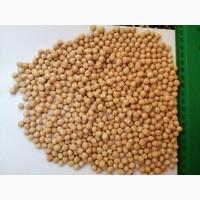
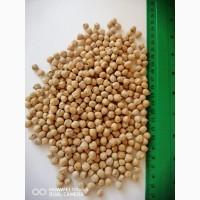
We sell chickpea seeds Sierra, Zagovyt, Jordan, Azkan, Orion, Norteno, Triumf, Rosana, Kyiv
Price45 UAH. / kg. material
Регион: вся Украина,
Киев
Обновлено:
Назначение зерна: Посевной материал
Quantity: 30 tons
We sellchickpea seeds Sierra, Zagovit, Jordan, Azkan, Orion, Norteno, Triumf, Rosana.
Large-fruited, elite;
Sierra (USA, new)
Chagatai (Turkey) - large
Zuhal (Turkey) - large
Norteno (Argentina) - large
Azkan (Turkey) - large
Traditional varieties;
Sauco (Argentina) - large
Zagovit (Israel) - large
Jordan (Israel) - large
Orion (Canada) - large
Bujak (Ukraine) - large
Memory (Ukraine) -small
Triumph (Ukraine) - average
Rozana (Ukraine) -small
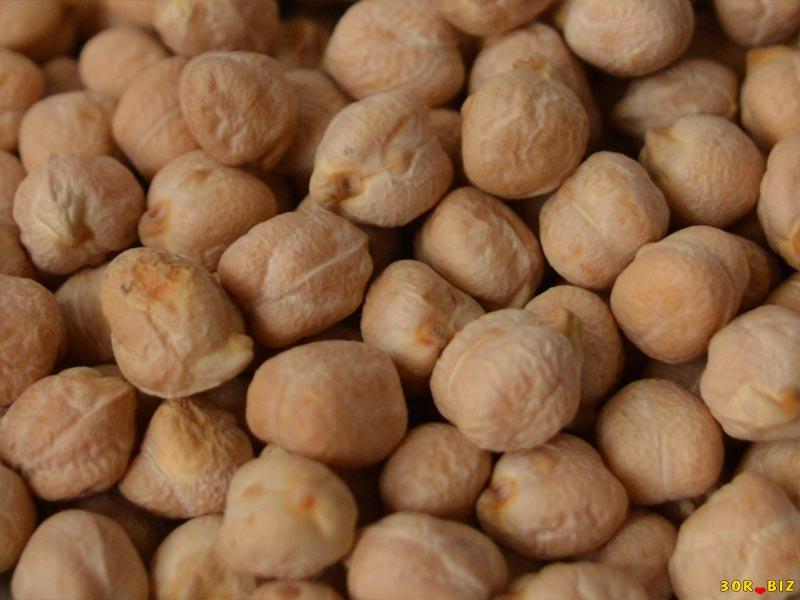
Grainchickpeas is characterized by the presence of an elongated nose. Its surface is wrinkled or smooth. There are three types of grains: angular, similar to a ram's head; rounded, i.e. pea-shaped; intermediate, resembling an owl's head. The color of the grain husk can be white or yellow, orange, gray, green, light brown, brown, black, pink, and dark brown, occasionally variegated varieties are found. In wet growing conditions, the color of the grain husk has a darker shade, and in dry conditions, it is lighter. Cotyledons are usually yellow, of varying intensity, in rare cases there are varieties with green cotyledons.
The mass of 1000 grains varies from 60 to 700 g.
Usually chickpea varieties are divided into three groups by grain size: small-grained - up to 200 g; medium-grain - 200-350 g.; large-seeded - more than 350 g.
The growing season of chickpeas is 80-120 days, depending on the variety and growing conditions. According to the photoperiodic response, chickpeas belong to long-day crops, therefore, with later sowing, the phases of the vegetation period of plants are shortened and the yield decreases.
Agricultural technology.
Place in crop rotation: Chickpeas are not demanding of their predecessors.
The main condition for the placement of the culture is weak weediness of the site and the absence of perennial rhizome weeds.
In turn, chickpeas are an excellent precursor for most agricultural crops. The yield of winter wheat after chickpea is the same as after black steam, and in some cases even exceeds it. The main criterion determining the yield of the subsequent chickpea crop is the level of nodule development. When there is a sufficient amount of bacteria in the soil and excellent conditions for their development (optimal humidity, aeration), the yield of the subsequent crop is greater. Chickpea clears the field early and therefore creates favorable conditions for soil preparation and moisture accumulation. Thus, it is most expedient to place chickpeas in the "winter wheat-chickpea-winter wheat" crop rotation, which gives a high economic effect.
If there are causative agents of ascochytosis and fusarium, the culture should be placed on the same field no more than once every four years.
Soil treatment: Soil treatment for chickpeas is usual for early spring crops: one or two discs of the predecessor, deep plowing, autumn leveling of the ridge and early spring closing of moisture.
It is very important to disk the stubble immediately after harvesting the predecessor. This event contributes to the preservation of moisture, the destruction of vegetative weeds and creates favorable provocative conditions for the germination of weed seeds. When the field is clogged with perennial rhizome weeds, the field is discusted two or three times at different angles with a difference of 10-15 days. Two or three weeks after the last disking, they plow for finches. It was experimentally proven that increasing the depth of soil plowing from 13.5 to 27 cm increased the yield of chickpeas by 36.2%. Deep plowing loosens the soil, while creating favorable conditions for moisture accumulation and good aeration. And under such conditions, nodule bacteria develop well, on which the yield of the crop significantly depends.
Since chickpeas are sown early in the spring and there is little time to level the ground, this event should be carried out in the fall, which helps to preserve soil moisture. At the same time, it is enough to carry out one harrowing and pre-sowing cultivation in the spring.(//tractor-service.com)
Preparation of seeds for sowing: Immediately before sowing, the seeds are treated with a preparation of nodule bacteria, which increases the yield by 20-30%.
Sowing: Chickpeas are sown after early grain crops, when the soil at the depth of seed placement warms up to 5-6°С. They are sown with seeders SZ-3.6 (top seeding), SKON-4.2, Valga-2000 and others. The depth of seed placement depends on soil moisture. Seeds for swelling and germination consume 140-160% of moisture from their weight. With sufficient moisture, the seed depth should be 6-8 cm, with average - 9-10, and when sowing in dry soil, the seeds should still be placed on a moist layer (up to 15 cm).
Chickpeas can be sown both by the usual row method (15 cm), which is recommended in clean fields, and by tape (45 + 15 cm) or wide-row methods (45 or 60 cm). The seed sowing rate also depends on the chosen sowing method. So, with the linear method, it amounts to 500 thousand. / ha of germinating seeds, with tape-400 thousand / ha, and with wide-row - 300 thousand / ha.
An important condition for obtaining friendly seedlings is the uniform planting of seeds at the same depth and in a moist layer of soil. Rolling (preferably ring-spur rollers) is an effective measure for obtaining uniform and friendly seedlings, especially in arid conditions.
Crop care: One pre-emergence harrowing and two post-emergence harrowings should be used to destroy weed seedlings. Long-distance harrowing, in addition to weed seedlings, also destroys the soil crust after rain. It is carried out with medium harrows or regional harrows across or diagonally across the crops 3-4 days before the emergence of seedlings. The first post-emergence harrowing is performed on the 7-8th day after the appearance of seedlings in the phase of 3-5 leaves, when the weeds are in the "stilt" stage, and the second - a week after the first. The crop is harrowed across or diagonally, setting the harrow teeth with the beveled side forward. The speed of movement of the unit is 5-6 km/h. For less trauma to the plants, post-emergence harrowing is carried out in the afternoon, when the turgor in the plants is weakened and they are less fragile.
On row crops, mechanical methods of weed control end with harrowing. On wide-row and strip crops, 2-3 inter-row treatments are carried out. The first one is carried out to a depth of 5-6 cm with a protective strip of 8-10 cm, the second - after 8-10 days to a depth of 6-8 cm, and if necessary, the third - before closing the rows.
Harvesting: The chickpea grain ripens fairly evenly on the entire plant, the beans do not crack and fall off, the plants do not lie down, so harvesting by direct combining is the most acceptable. The growing season of chickpeas is 80-120 days, depending on the variety and growing conditions, so it is harvested at the end of July-beginning of August after the completion of harvesting of grain crops.
For this purpose, combine harvesters SK-5, SK-6, "Enisei", "Don" or others are used. The height of the cut is adjusted so that there are noneubrannykh beans left on the field, usually about 10-13 cm. You should additionally stuff tarpaulin strips on the reel of the combine so that they protrude 5-7 cm to soften the blows. The progressive movement of the reel should not be much ahead of the speed of the harvester. The number of revolutions of the threshing machine should be reduced to 450-500 rpm. For less injury to the grain, it is desirable to remove one of the pins in the drum, as well as to increase the clearance between the drum and the drum (25-30 mm at the entrance, 14-17 mm at the exit). The number of revolutions of the ear auger is increased to -288, and the grain auger is reduced to -1200 revolutions. / min. In the SK-6 combine, screw conveyors are replaced by scrapers. When resting on the root, harvesting should be carried out in the morning so that the beans do not fly away.
On weedy crops, separate harvesting is used. Chickpeas are mown with bean harvesters, the mown plants are dried for two or three days, then threshed with a combine harvester.
Chickpea straw can be used for feeding cattle and pigs after preliminary crushing and mixing with cereal straw.
Post-harvest processing and seed storage: The grain coming out of the combine must be immediately cleaned of impurities and, if necessary, dried to a moisture content of 14%. The presence of even a small amount of green remnants of weeds in the pile contributes to an increase in the moisture content of the grain, so it is necessary to clean it as early as possible. It is carried out on OPV-20 A, ZAV-40, OSM-3 U, OS-4.5 A machines. "Petkus" seed cleaning units are used to prepare small batches of seeds.
In the process of drying wet grain, it is important to monitor the temperature of the coolant and the processing time. At a grain humidity of 16-19%, the coolant temperature should not exceed 40°C, at a humidity of 25-30% - 30°C. One pass should not reduce grain moisture by more than 4%.
In good sunny weather, grain drying in the open air is more acceptable. Seeds are scattered in a thin layer and shoveled. From 0.5 to 1.5% of moisture is lost for each shoveling.
Cleaned and dried chickpea seeds are stored in sacks with a stack height of no more than 2.5 m or in bulk, in a layer of no more than 1.5 m. Such seeds do not lose their germination for ten years.
Irrigation: Chickpea is one of the most drought-resistant agricultural crops, however, with sufficient moisture, its yield increases dramatically. If the crops are placed on irrigated areas, in the development phases "flowering" and "flowering-beginning of bean formation" it is possible to water at a rate of 250-300 m3 / ha. This makes it possible to increase the yield of chickpeas in a dry hour by almost two times. However, in wet years or with greater irrigation, there is a risk of developing fungal diseases.
The price depends on the variety, reproduction and volume.
Delivery across Ukraine;
Free of charge by our transport (depending on the volume of the order), 199
попутным наёмным транспортом.
Sending by carriers;
Nova Pochta, InTime, Delivery, etc.
1) Cash on delivery (payment after inspection and receipt of goods).
2) 100% prepayment.
3) Cash settlement with VAT or without VAT.
4) Pickup from our warehouse.
t.066.281-42-43,
t.098.448-29-88,
t.093.490-10-41.
Large-fruited, elite;
Sierra (USA, new)
Chagatai (Turkey) - large
Zuhal (Turkey) - large
Norteno (Argentina) - large
Azkan (Turkey) - large
Traditional varieties;
Sauco (Argentina) - large
Zagovit (Israel) - large
Jordan (Israel) - large
Orion (Canada) - large
Bujak (Ukraine) - large
Memory (Ukraine) -small
Triumph (Ukraine) - average
Rozana (Ukraine) -small
Grainchickpeas is characterized by the presence of an elongated nose. Its surface is wrinkled or smooth. There are three types of grains: angular, similar to a ram's head; rounded, i.e. pea-shaped; intermediate, resembling an owl's head. The color of the grain husk can be white or yellow, orange, gray, green, light brown, brown, black, pink, and dark brown, occasionally variegated varieties are found. In wet growing conditions, the color of the grain husk has a darker shade, and in dry conditions, it is lighter. Cotyledons are usually yellow, of varying intensity, in rare cases there are varieties with green cotyledons.
The mass of 1000 grains varies from 60 to 700 g.
Usually chickpea varieties are divided into three groups by grain size: small-grained - up to 200 g; medium-grain - 200-350 g.; large-seeded - more than 350 g.
The growing season of chickpeas is 80-120 days, depending on the variety and growing conditions. According to the photoperiodic response, chickpeas belong to long-day crops, therefore, with later sowing, the phases of the vegetation period of plants are shortened and the yield decreases.
Agricultural technology.
Place in crop rotation: Chickpeas are not demanding of their predecessors.
The main condition for the placement of the culture is weak weediness of the site and the absence of perennial rhizome weeds.
In turn, chickpeas are an excellent precursor for most agricultural crops. The yield of winter wheat after chickpea is the same as after black steam, and in some cases even exceeds it. The main criterion determining the yield of the subsequent chickpea crop is the level of nodule development. When there is a sufficient amount of bacteria in the soil and excellent conditions for their development (optimal humidity, aeration), the yield of the subsequent crop is greater. Chickpea clears the field early and therefore creates favorable conditions for soil preparation and moisture accumulation. Thus, it is most expedient to place chickpeas in the "winter wheat-chickpea-winter wheat" crop rotation, which gives a high economic effect.
If there are causative agents of ascochytosis and fusarium, the culture should be placed on the same field no more than once every four years.
Soil treatment: Soil treatment for chickpeas is usual for early spring crops: one or two discs of the predecessor, deep plowing, autumn leveling of the ridge and early spring closing of moisture.
It is very important to disk the stubble immediately after harvesting the predecessor. This event contributes to the preservation of moisture, the destruction of vegetative weeds and creates favorable provocative conditions for the germination of weed seeds. When the field is clogged with perennial rhizome weeds, the field is discusted two or three times at different angles with a difference of 10-15 days. Two or three weeks after the last disking, they plow for finches. It was experimentally proven that increasing the depth of soil plowing from 13.5 to 27 cm increased the yield of chickpeas by 36.2%. Deep plowing loosens the soil, while creating favorable conditions for moisture accumulation and good aeration. And under such conditions, nodule bacteria develop well, on which the yield of the crop significantly depends.
Since chickpeas are sown early in the spring and there is little time to level the ground, this event should be carried out in the fall, which helps to preserve soil moisture. At the same time, it is enough to carry out one harrowing and pre-sowing cultivation in the spring.(//tractor-service.com)
Preparation of seeds for sowing: Immediately before sowing, the seeds are treated with a preparation of nodule bacteria, which increases the yield by 20-30%.
Sowing: Chickpeas are sown after early grain crops, when the soil at the depth of seed placement warms up to 5-6°С. They are sown with seeders SZ-3.6 (top seeding), SKON-4.2, Valga-2000 and others. The depth of seed placement depends on soil moisture. Seeds for swelling and germination consume 140-160% of moisture from their weight. With sufficient moisture, the seed depth should be 6-8 cm, with average - 9-10, and when sowing in dry soil, the seeds should still be placed on a moist layer (up to 15 cm).
Chickpeas can be sown both by the usual row method (15 cm), which is recommended in clean fields, and by tape (45 + 15 cm) or wide-row methods (45 or 60 cm). The seed sowing rate also depends on the chosen sowing method. So, with the linear method, it amounts to 500 thousand. / ha of germinating seeds, with tape-400 thousand / ha, and with wide-row - 300 thousand / ha.
An important condition for obtaining friendly seedlings is the uniform planting of seeds at the same depth and in a moist layer of soil. Rolling (preferably ring-spur rollers) is an effective measure for obtaining uniform and friendly seedlings, especially in arid conditions.
Crop care: One pre-emergence harrowing and two post-emergence harrowings should be used to destroy weed seedlings. Long-distance harrowing, in addition to weed seedlings, also destroys the soil crust after rain. It is carried out with medium harrows or regional harrows across or diagonally across the crops 3-4 days before the emergence of seedlings. The first post-emergence harrowing is performed on the 7-8th day after the appearance of seedlings in the phase of 3-5 leaves, when the weeds are in the "stilt" stage, and the second - a week after the first. The crop is harrowed across or diagonally, setting the harrow teeth with the beveled side forward. The speed of movement of the unit is 5-6 km/h. For less trauma to the plants, post-emergence harrowing is carried out in the afternoon, when the turgor in the plants is weakened and they are less fragile.
On row crops, mechanical methods of weed control end with harrowing. On wide-row and strip crops, 2-3 inter-row treatments are carried out. The first one is carried out to a depth of 5-6 cm with a protective strip of 8-10 cm, the second - after 8-10 days to a depth of 6-8 cm, and if necessary, the third - before closing the rows.
Harvesting: The chickpea grain ripens fairly evenly on the entire plant, the beans do not crack and fall off, the plants do not lie down, so harvesting by direct combining is the most acceptable. The growing season of chickpeas is 80-120 days, depending on the variety and growing conditions, so it is harvested at the end of July-beginning of August after the completion of harvesting of grain crops.
For this purpose, combine harvesters SK-5, SK-6, "Enisei", "Don" or others are used. The height of the cut is adjusted so that there are noneubrannykh beans left on the field, usually about 10-13 cm. You should additionally stuff tarpaulin strips on the reel of the combine so that they protrude 5-7 cm to soften the blows. The progressive movement of the reel should not be much ahead of the speed of the harvester. The number of revolutions of the threshing machine should be reduced to 450-500 rpm. For less injury to the grain, it is desirable to remove one of the pins in the drum, as well as to increase the clearance between the drum and the drum (25-30 mm at the entrance, 14-17 mm at the exit). The number of revolutions of the ear auger is increased to -288, and the grain auger is reduced to -1200 revolutions. / min. In the SK-6 combine, screw conveyors are replaced by scrapers. When resting on the root, harvesting should be carried out in the morning so that the beans do not fly away.
On weedy crops, separate harvesting is used. Chickpeas are mown with bean harvesters, the mown plants are dried for two or three days, then threshed with a combine harvester.
Chickpea straw can be used for feeding cattle and pigs after preliminary crushing and mixing with cereal straw.
Post-harvest processing and seed storage: The grain coming out of the combine must be immediately cleaned of impurities and, if necessary, dried to a moisture content of 14%. The presence of even a small amount of green remnants of weeds in the pile contributes to an increase in the moisture content of the grain, so it is necessary to clean it as early as possible. It is carried out on OPV-20 A, ZAV-40, OSM-3 U, OS-4.5 A machines. "Petkus" seed cleaning units are used to prepare small batches of seeds.
In the process of drying wet grain, it is important to monitor the temperature of the coolant and the processing time. At a grain humidity of 16-19%, the coolant temperature should not exceed 40°C, at a humidity of 25-30% - 30°C. One pass should not reduce grain moisture by more than 4%.
In good sunny weather, grain drying in the open air is more acceptable. Seeds are scattered in a thin layer and shoveled. From 0.5 to 1.5% of moisture is lost for each shoveling.
Cleaned and dried chickpea seeds are stored in sacks with a stack height of no more than 2.5 m or in bulk, in a layer of no more than 1.5 m. Such seeds do not lose their germination for ten years.
Irrigation: Chickpea is one of the most drought-resistant agricultural crops, however, with sufficient moisture, its yield increases dramatically. If the crops are placed on irrigated areas, in the development phases "flowering" and "flowering-beginning of bean formation" it is possible to water at a rate of 250-300 m3 / ha. This makes it possible to increase the yield of chickpeas in a dry hour by almost two times. However, in wet years or with greater irrigation, there is a risk of developing fungal diseases.
The price depends on the variety, reproduction and volume.
Delivery across Ukraine;
Free of charge by our transport (depending on the volume of the order), 199
попутным наёмным транспортом.
Sending by carriers;
Nova Pochta, InTime, Delivery, etc.
1) Cash on delivery (payment after inspection and receipt of goods).
2) 100% prepayment.
3) Cash settlement with VAT or without VAT.
4) Pickup from our warehouse.
t.066.281-42-43,
t.098.448-29-88,
t.093.490-10-41.
|
Author, contacts | |
S.M. / отзывы, инфо. / activity evaluation | |
|
Phone:
(098xxxxxx
show
| |
| Telegram: 380984482988 | |
| Viber: 380984482988 | |
| Whatsapp: 380984482988 | |
All ads пользователя ~103 | |
Ad ID: #788646
(added by a registered user, registration date: 03-14-2011)
Added / Updated: 09-28-2026 12:22 (relevant, until: 09-28-2027)
Permanent ad address:
Showed / watched for today: ?, total: ?