/ Fertilizers and plant protection products / Complex fertilizers / Boron-molybdenum fertilizer BOR + MOLYBDENUM "...

For sale / buy
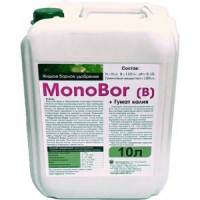
Boron-molybdenum fertilizer BOR + MOLYBDENUM "GOOD MASTER", Cherkassy region.
Price380 UAH.
Region:all Ukraine,
Cherkasskaya region.
(Bul. Shevchenko266/1)
Updated:
BORON + MOLYBDENUM "GOOD MASTER"®
Liquid boron fertilizer with a high concentration of boron and molybdenum enrichment, for foliar feeding
Composition: Boron (B)=168g/l; Molybdenum (Mo)=5g/l; Nitrogen (N-NH2)=5g/l; pH≤8
Boron is the most important element of plant nutrition and a source of increasing the profitability of crop production.
Boron+molybdenum "Good Master" provides: regular nutrition with boron in critical phases of plant development, stress resistance and resistance to low temperatures, and in combination with molybdenum increases the yield and improves the quality of production. Boron is contained in the maximum possible concentration and in an easily digestible form for plants.
The following crops are most sensitive to boron deficiency: beets (sugar, table, fodder), rapeseed (winter and spring), soybeans, peas, beans, chickpeas, alfalfa, clover, seed crops of legumes, potatoes, tomatoes, carrots, cabbage, cauliflower, celery, broccoli, Brussels sprouts, corn,sunflower, flax, cotton, buckwheat, apple tree, pear, grape, plum, citrus, berry crops.
Boron is involved in the formation of the structure of cell walls and the synthesis of nucleic acids. Sufficient supply of boron to plants increases the intensity of photosynthesis, improves carbohydrate and protein metabolism, activates the activity of enzymes, and positively affects the processes of cell division.
In addition, the product is enriched with sugar, starch, vitamins, plant diseases are reduced. On soils poor in boron content, the application of boron fertilizers increases the yield of agricultural crops by 10-20%.
The presence of the necessary amount of boron is invariably important for the actively growing parts of the plant - new leaves, root tips, as well as for the development of buds. That is, boron helps cells multiply quickly, therefore, promotes active plant growth.
Boron has a positive effect on the accumulation of sugar in sugar beets, starch in potatoes, promotes the processes of flowering and fertilization, increases the yield and quality of seeds.
With boron deficiency in plants, the following signs appear:
• stoppage of root and stem growth;
• chlorosis of the apical growth point, and later, with severe boron starvation, its complete death;
• small amount of flowers and infertility;
• the ugly shape of the fruit with the formation of inside the tissue, etc.
Lack of boron leads to the accumulation of toxic substances (quinones) in plant tissues, which cause plant poisoning. With a lack of boron, the apical buds die off and rot, and young plants die. The leaves turn brown, deform and die. With long-term boron deficiency, young leaves appear small, stems and leaves thin out, flowers fall off or flowers do not appear at all.(//tractor-service.com)
Boron deficiency causes profound disturbances of carbohydrate metabolism in the plant: death of the growth point is observed, conduction system is disturbed, root supply of carbohydrates decreases.
This leads to weak development of the root system and is the main cause of plant disease (in rapeseed, cracking of the stem at the root neck is noted, the root system is deformed, overwintering worsens, flowering is delayed, becomes uneven, core rot or hollowness appears in beets, vascular necrosis in grapes, yellowing of tops in alfalfa, browning of cauliflower, bacteriosis of flax, spread of scab in potatoes, etc.). Due to the disorder of the conduction system, carbohydrates accumulate in the leaves without reaching other parts of the plant, and the process of photosynthesis slows down.
Molybdenum plays an important role in the processes of nitrogen fixation from the atmosphere by nodule and free-living bacteria. Under the influence of molybdenum, the content of carbohydrates, carotene and ascorbic acid, protein substances, chlorophyll increases in plants, and the intensity of photosynthesis increases.
With insufficient molybdenum, plants become unstable to low temperatures and water deficit. Plant growth is weakened, flowering is delayed.
When using liquid boronудобрения:
• Firstly, there is an opportunity to make a balanced solution, which, along with boron, will contain other microelements and agrochemicals necessary for this field and culture at the moment.
• Secondly, during the period of the maximum need for boron, growing plants cannot get this element in the necessary amount due to absorption only by the root system - the leaves are needed.
• Thirdly, the use of tank mixtures, which contain, among other things, boron, as part of the fertilization program allows farms to reduce costs for plant nutrition.
Boron, like molybdenum, has a positive effect on the activity of nitrate reductase in the leaves of sugar beet and oilseed rape and the reduction of nitrates to ammonia.
Method of application: for foliar fertilization of all agricultural crops:
Cereal crops (spring and winter): 0.5 - 1 l/ha
Corn: 0.5 - 1 l/ha
Sunflower: 1 - 1.5 l/ha
Beet (sugar, table and fodder): 0.5 - 1.5 l/ha
Soy, peas, beans, chickpeas andother legumes crops: 1 - 1.5 l/ha
Rapeseed (spring and winter): 1 - 1.5 l/ha
Vegetable crops (carrots, tomatoes, potatoes, cabbage, celery, etc.): 0.5 - 1 l/ha
Fruit and berry crops (apple, grape, citrus, pear, etc.): 1 - 2 l/ha.
Liquid boron fertilizer with a high concentration of boron and molybdenum enrichment, for foliar feeding
Composition: Boron (B)=168g/l; Molybdenum (Mo)=5g/l; Nitrogen (N-NH2)=5g/l; pH≤8
Boron is the most important element of plant nutrition and a source of increasing the profitability of crop production.
Boron+molybdenum "Good Master" provides: regular nutrition with boron in critical phases of plant development, stress resistance and resistance to low temperatures, and in combination with molybdenum increases the yield and improves the quality of production. Boron is contained in the maximum possible concentration and in an easily digestible form for plants.
The following crops are most sensitive to boron deficiency: beets (sugar, table, fodder), rapeseed (winter and spring), soybeans, peas, beans, chickpeas, alfalfa, clover, seed crops of legumes, potatoes, tomatoes, carrots, cabbage, cauliflower, celery, broccoli, Brussels sprouts, corn,sunflower, flax, cotton, buckwheat, apple tree, pear, grape, plum, citrus, berry crops.
Boron is involved in the formation of the structure of cell walls and the synthesis of nucleic acids. Sufficient supply of boron to plants increases the intensity of photosynthesis, improves carbohydrate and protein metabolism, activates the activity of enzymes, and positively affects the processes of cell division.
In addition, the product is enriched with sugar, starch, vitamins, plant diseases are reduced. On soils poor in boron content, the application of boron fertilizers increases the yield of agricultural crops by 10-20%.
The presence of the necessary amount of boron is invariably important for the actively growing parts of the plant - new leaves, root tips, as well as for the development of buds. That is, boron helps cells multiply quickly, therefore, promotes active plant growth.
Boron has a positive effect on the accumulation of sugar in sugar beets, starch in potatoes, promotes the processes of flowering and fertilization, increases the yield and quality of seeds.
With boron deficiency in plants, the following signs appear:
• stoppage of root and stem growth;
• chlorosis of the apical growth point, and later, with severe boron starvation, its complete death;
• small amount of flowers and infertility;
• the ugly shape of the fruit with the formation of inside the tissue, etc.
Lack of boron leads to the accumulation of toxic substances (quinones) in plant tissues, which cause plant poisoning. With a lack of boron, the apical buds die off and rot, and young plants die. The leaves turn brown, deform and die. With long-term boron deficiency, young leaves appear small, stems and leaves thin out, flowers fall off or flowers do not appear at all.(//tractor-service.com)
Boron deficiency causes profound disturbances of carbohydrate metabolism in the plant: death of the growth point is observed, conduction system is disturbed, root supply of carbohydrates decreases.
This leads to weak development of the root system and is the main cause of plant disease (in rapeseed, cracking of the stem at the root neck is noted, the root system is deformed, overwintering worsens, flowering is delayed, becomes uneven, core rot or hollowness appears in beets, vascular necrosis in grapes, yellowing of tops in alfalfa, browning of cauliflower, bacteriosis of flax, spread of scab in potatoes, etc.). Due to the disorder of the conduction system, carbohydrates accumulate in the leaves without reaching other parts of the plant, and the process of photosynthesis slows down.
Molybdenum plays an important role in the processes of nitrogen fixation from the atmosphere by nodule and free-living bacteria. Under the influence of molybdenum, the content of carbohydrates, carotene and ascorbic acid, protein substances, chlorophyll increases in plants, and the intensity of photosynthesis increases.
With insufficient molybdenum, plants become unstable to low temperatures and water deficit. Plant growth is weakened, flowering is delayed.
When using liquid boronудобрения:
• Firstly, there is an opportunity to make a balanced solution, which, along with boron, will contain other microelements and agrochemicals necessary for this field and culture at the moment.
• Secondly, during the period of the maximum need for boron, growing plants cannot get this element in the necessary amount due to absorption only by the root system - the leaves are needed.
• Thirdly, the use of tank mixtures, which contain, among other things, boron, as part of the fertilization program allows farms to reduce costs for plant nutrition.
Boron, like molybdenum, has a positive effect on the activity of nitrate reductase in the leaves of sugar beet and oilseed rape and the reduction of nitrates to ammonia.
Method of application: for foliar fertilization of all agricultural crops:
Cereal crops (spring and winter): 0.5 - 1 l/ha
Corn: 0.5 - 1 l/ha
Sunflower: 1 - 1.5 l/ha
Beet (sugar, table and fodder): 0.5 - 1.5 l/ha
Soy, peas, beans, chickpeas andother legumes crops: 1 - 1.5 l/ha
Rapeseed (spring and winter): 1 - 1.5 l/ha
Vegetable crops (carrots, tomatoes, potatoes, cabbage, celery, etc.): 0.5 - 1 l/ha
Fruit and berry crops (apple, grape, citrus, pear, etc.): 1 - 2 l/ha.
|
Store, contacts | |
Grydnev K.K. / отзывы, инфо./ evaluation activities | |
|
Telephone:
(067xxxxxx
показать
| |
| http://www.planeta2012.com.ua/ | |
All ads user ~37 | |

Ad ID: #770274
(added by a registered user, registration date: 07-09-2012)
Added / Updated: 12-04-2025 10:19 (current, until: 04-12-2026)
Permanent ad address:
Showed / watched for today: ?, total: ?
Similar ads
Among them there are many interesting...