/ Fertilizers and plant protection products / Nitrogenous fertilizers / Urea 46, 2% VAT "Nitrogen" Cherkassy...
For sale / buy
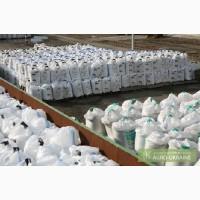
Urea 46, 2% OJSC "Azot" Cherkassy bag, Rivne region.
Region:all Ukraine,
Roven region.
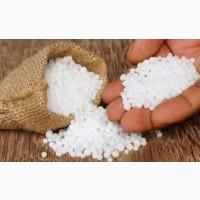
Urea CO(NO2)2 is called amide of carbonic acid. It is colorless, odorless crystals. The technical product looks like white or yellow crystals. Nitrogen in pure urea contains about 46.2%.
Norms and terms of application of urea.
• Cereals (wheat, oats, rye) - 100-150 kg/ha with the main application;
• Corn for grain - 110-160 kg/ha with pre-sowing or main application;(//tractor-service.com)
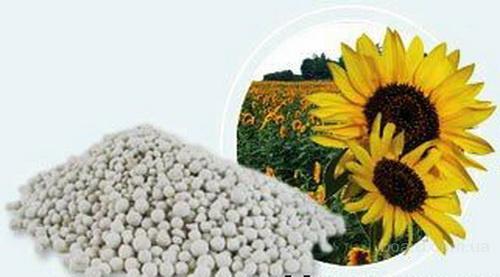
• Sunflower - 80-120 kg/ha with the main application;
• Vegetable crops - 5-10g/m2 before planting, 5-10g/m2 - fertilizing during the growing season, before flowering, foliar fertilizing - 50-60g per 10 liters of water (working solution per 100m2 of processed crops);
• Trees and shrubs - 20-30g/10l of water or 15-20g/m2 of granulatedcarbamide after 5-7 days after flowering and repeated feeding after 21 days.
A high yield of grain crops when fed with urea can be achieved on the condition that the plants do not lack sulfur. This is especially often observed in crops whose predecessor was winter rapeseed. It takes a large amount of sulfur from the soil, thereby impoverishing it. The ratio of sulfur to nitrogen should be 1:10.
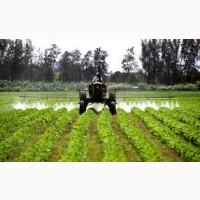
Top dressing can be combined with the treatment of plants with pesticides, if there is no special reservation about the incompatibility of the substances used. For foliar feeding, it is more effective to use the fine-drop method of applying urea to the surface of the leaves. With such avariant of fertilizer, a large area of leaf mass is covered. At the same time, with the large-drop method of applying the solution, heavy drops often hang down and run down. When drying, salt crystals may form in their place. They lead to death of leaf tissues.
Norms and terms of application of urea.
• Cereals (wheat, oats, rye) - 100-150 kg/ha with the main application;
• Corn for grain - 110-160 kg/ha with pre-sowing or main application;(//tractor-service.com)
• Sunflower - 80-120 kg/ha with the main application;
• Vegetable crops - 5-10g/m2 before planting, 5-10g/m2 - fertilizing during the growing season, before flowering, foliar fertilizing - 50-60g per 10 liters of water (working solution per 100m2 of processed crops);
• Trees and shrubs - 20-30g/10l of water or 15-20g/m2 of granulatedcarbamide after 5-7 days after flowering and repeated feeding after 21 days.
A high yield of grain crops when fed with urea can be achieved on the condition that the plants do not lack sulfur. This is especially often observed in crops whose predecessor was winter rapeseed. It takes a large amount of sulfur from the soil, thereby impoverishing it. The ratio of sulfur to nitrogen should be 1:10.
Top dressing can be combined with the treatment of plants with pesticides, if there is no special reservation about the incompatibility of the substances used. For foliar feeding, it is more effective to use the fine-drop method of applying urea to the surface of the leaves. With such avariant of fertilizer, a large area of leaf mass is covered. At the same time, with the large-drop method of applying the solution, heavy drops often hang down and run down. When drying, salt crystals may form in their place. They lead to death of leaf tissues.
Ad ID: #724887
(added by a registered user)
Permanent ad address:
Showed / watched for today: ?, total: ?