For sale / buy
Udobrenie Halper, Gr., Donetsk region.
Region:all of Ukraine,
Donetsk region.
(Mariupol)
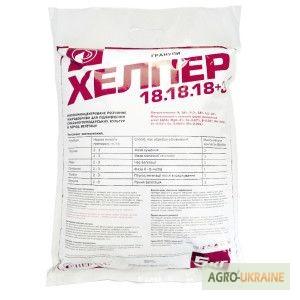
For sale Fertilizer Helper, gr.
Highly concentrated soluble fertilizer with a set of macro- and microelements for fertilizing agricultural crops during the growing season
Formulation: granules
Manufacturer: Peters & Burg Ltd, Hungary
Packing unit: package, 5 kg.
Composition
Name of macro-/microelementBrand of fertilizer and content of macro- and microelements
18.18.18 13.40.13 3.11.38 15.5.30
N total content 18 13 3 15
N in nitrate form 5.1 3.7 3 8.4
N in ammonia form 3.5 9.3 3.6
N in the form of uric acid 9.4 3
Phosphorus (P2O5) in the form of phosphoric acid hydride 18 40 11 5
Potassium (K2O) in the form of an oxide soluble in water 18 13 38 30
Magnesium (MgO) in the form of an oxide soluble in water 3 4 2
Boron, soluble in water 0.02 0.02 0.02 0.02
Copper in the form of EDTA chelate 0.005 0.005 0.005 0.005
Iron in the form of EDTA chelate 0.07 0.07 0.07 0.07
Manganese in the form of EDTA chelate 0.03 0.03 0.03 0.03
Zinc in the form of EDTA chelate 0.01 0.01 0.01 0.01
Physico-chemical properties of fertilizer.
pH of 1% solution 4.3 4.7 3.4 5.6
Fertilizer solubility at t 20 oС, g/l 58 42 20 35
Recommendations for use
Microfertilizer helper is used prophylactically in those cases when the results of the soil analysis indicate a deficiency of microelements, or when the first single symptoms of a lack of microelements appear on cultivated plants. The drug is applied by spraying cultivated plants during the vegetation period in accordance with the application regulations.(//tractor-service.com)
Rate of consumption of working solution
When applying with the help of groundsprinklers, the norm consumption is 200–300 l/ha. During application of the drug, it is necessary to ensure complete and uniform wetting of the entire surface of cultivated plants with the working solution.
They will prevent the working solution from running off the surface of the plants when applying the drug.
It is not recommended to apply the drug during fog and dew, this can lead to the running of the working solution from the surface of the plants and somewhat reduce the effectiveness of fertilizing.
Regulation of drug use
Culture Brand Rate of drug consumption, kg/ha Processing time Maximum frequency of processing
Winter wheat 18.18.18 3 2–3 Threshing phase 1
18.18.18 3 2–3 Milk ripeness phase 1
Rapeseed 18.18.18 3 2–3 Vegetation time 1
13.40.13 2–3 Bud phase before flowering 1
Sunflower 13.40.13 2–3 Phase 4–6 leaves 1
18.18.18 3 2–3 Phase 6–8 leaves 1
Tomatoes 18.18.18 3 2–3 Vegetation period after planting 1
15.5.30 2 2–3 The flowering phase — the beginning of fruiting 1
3.11.38 4 2–3 Fruiting phase 1
Cabbage 18.18.18 3 2–3 Early vegetation 1
15.5.30 2 2–3 Formation of the head 1
3.11.38 4 2–3 Formation of the head 1
Potatoes 13.40.13 3–4 Before flowering 1
15.5.30 2 3 Growth of tubers 1
3.11.38 4 2–3 Maturation phase 1
Compatibility with other drugs
Microfertilizer is compatible with the vast majority of fertilizers and pesticides. However, in each individual case, it is necessary to do a preliminary check of the components of the tank mixture for physical compatibility and phytotoxicity.
Preparation of working solution
To prepare the working solution, fill the sprayer tank with water to 1/4–1/3 volume, turn on the mixing mode and add the necessary amount of microfertilizer or its mother solution. After complete dissolution of the drug, fill the tank of the sprayer to the full volume with the mixing mode turned on. When applying the drug, the mixing mode should be turned on to maintain the working solution in a homogeneous state.
Highly concentrated soluble fertilizer with a set of macro- and microelements for fertilizing agricultural crops during the growing season
Formulation: granules
Manufacturer: Peters & Burg Ltd, Hungary
Packing unit: package, 5 kg.
Composition
Name of macro-/microelementBrand of fertilizer and content of macro- and microelements
18.18.18 13.40.13 3.11.38 15.5.30
N total content 18 13 3 15
N in nitrate form 5.1 3.7 3 8.4
N in ammonia form 3.5 9.3 3.6
N in the form of uric acid 9.4 3
Phosphorus (P2O5) in the form of phosphoric acid hydride 18 40 11 5
Potassium (K2O) in the form of an oxide soluble in water 18 13 38 30
Magnesium (MgO) in the form of an oxide soluble in water 3 4 2
Boron, soluble in water 0.02 0.02 0.02 0.02
Copper in the form of EDTA chelate 0.005 0.005 0.005 0.005
Iron in the form of EDTA chelate 0.07 0.07 0.07 0.07
Manganese in the form of EDTA chelate 0.03 0.03 0.03 0.03
Zinc in the form of EDTA chelate 0.01 0.01 0.01 0.01
Physico-chemical properties of fertilizer.
pH of 1% solution 4.3 4.7 3.4 5.6
Fertilizer solubility at t 20 oС, g/l 58 42 20 35
Recommendations for use
Microfertilizer helper is used prophylactically in those cases when the results of the soil analysis indicate a deficiency of microelements, or when the first single symptoms of a lack of microelements appear on cultivated plants. The drug is applied by spraying cultivated plants during the vegetation period in accordance with the application regulations.(//tractor-service.com)
Rate of consumption of working solution
When applying with the help of groundsprinklers, the norm consumption is 200–300 l/ha. During application of the drug, it is necessary to ensure complete and uniform wetting of the entire surface of cultivated plants with the working solution.
They will prevent the working solution from running off the surface of the plants when applying the drug.
It is not recommended to apply the drug during fog and dew, this can lead to the running of the working solution from the surface of the plants and somewhat reduce the effectiveness of fertilizing.
Regulation of drug use
Culture Brand Rate of drug consumption, kg/ha Processing time Maximum frequency of processing
Winter wheat 18.18.18 3 2–3 Threshing phase 1
18.18.18 3 2–3 Milk ripeness phase 1
Rapeseed 18.18.18 3 2–3 Vegetation time 1
13.40.13 2–3 Bud phase before flowering 1
Sunflower 13.40.13 2–3 Phase 4–6 leaves 1
18.18.18 3 2–3 Phase 6–8 leaves 1
Tomatoes 18.18.18 3 2–3 Vegetation period after planting 1
15.5.30 2 2–3 The flowering phase — the beginning of fruiting 1
3.11.38 4 2–3 Fruiting phase 1
Cabbage 18.18.18 3 2–3 Early vegetation 1
15.5.30 2 2–3 Formation of the head 1
3.11.38 4 2–3 Formation of the head 1
Potatoes 13.40.13 3–4 Before flowering 1
15.5.30 2 3 Growth of tubers 1
3.11.38 4 2–3 Maturation phase 1
Compatibility with other drugs
Microfertilizer is compatible with the vast majority of fertilizers and pesticides. However, in each individual case, it is necessary to do a preliminary check of the components of the tank mixture for physical compatibility and phytotoxicity.
Preparation of working solution
To prepare the working solution, fill the sprayer tank with water to 1/4–1/3 volume, turn on the mixing mode and add the necessary amount of microfertilizer or its mother solution. After complete dissolution of the drug, fill the tank of the sprayer to the full volume with the mixing mode turned on. When applying the drug, the mixing mode should be turned on to maintain the working solution in a homogeneous state.
Advertisement ID: #693742
(added by registered user)
Permanent ad address:
Showed / watched for today: ?, total: ?
Similar fresh ads
Among them there are many interesting ones...