/ Fertilizers and plant protection products / Herbicides / Herbicide for sugar beet Controller - new era...

For sale / buy
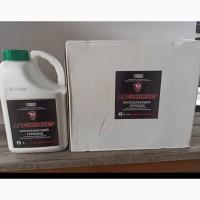
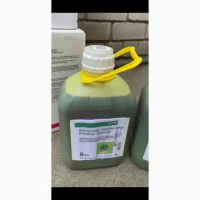
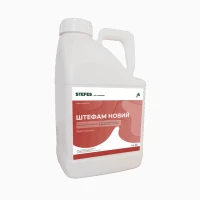
Herbicide for sugar beet Controller - a new era of field cleanliness for beet, Khmelnitskaya oblast.
Region:all of Ukraine,
Khmelnitskaya oblast.
Controller herbicide, triflusulfuron-methyl 500 g/kg, for sugar beet
Active substance
Triflusulfuron-methyl, 500 g/kg
Formulation
Wettable powder
Appointment
Systemic post-emergence herbicide against annual dicotyledons and some other weeds, including resistant to desmedipham and phenmedipham, on sugar beet crops
Tara
0.6 kg
Culture Sugar beets
Method of application and cost norms
Objects
Annual dicots and some other weeds, including resistant to desmedipham and phenmedipham
The consumption rate of the drug, g/ha - 30
Processing method
Maximum number of treatments - 2(//tractor-service.com)
Spraying of crops from the emergence of seedlings to closing the rows of culture.
Advantages
· Excellent control of a wide range of dicotyledonous weeds.
· Long deposit period.
· Excellent selectivity.
· Low application rate (30 g/ha).
Mechanism of action
The herbicide is absorbed by weeds and transferred to the growth points, negatively affecting the enzyme system of sensitive plants. The active substance blocks the enzyme acetolactate synthetase, which is responsible for the synthesis of the main amino acids involved in protein synthesis. Thanks to this, in sensitive plants, cell division quickly slows down and growth stops.
Properties
Most weeds are best controlled from the cotyledon phase to the 2-leaf phase. Field mustard and carrionsunflower are sensitive to the drug up to the stage of 6 leaves. The range of effects on weeds: very sensitive (over 90-95%) – Persian veronica, creeping crow’s foot, field mustard, knotty and kidney mustard, deaf nettle (species), common sorrel, common gill, nettle dicotyledons, field chicken eye, false flax, milk thistle, field forget-me-not, tenacious nightshade, black solanum, common praselen, wild radish, yellow reseda, chamomile (species), field sedum, bent scotch, rape and sunflower carrion; sensitive (85-95 %) – abutilon theofrasta, ami dental, one-year coppice, cock millet, thistle (seedlings),dog parsley common; moderately sensitive (70-85 %) – ragweed, mousetail sedge, wild poppy, common sedum, field violet; resistant (50-70 %) – field birch, ivy-leaved veronica, birch bitter gourd, medium star, white quinoa, sedge (species), pink thistle, rutabaga, one-year-old chives, quinoa.
General recommendations
CONTROLLER is safe for all types of beets at any stage of growth (do not apply before emergence!) provided the beets are not stressed. The optimal temperature for spraying is from +15 °C to +25 °C during application and several hours after it. If the temperature is higher than +25 °C or lower than +10 °C within 3–5 hours after application, the rate of metabolism decreases. This can lead to temporary yellowing of beet leaves. These symptoms disappear within 10 days, without affecting the further development of the culture, yield and sugar content. Avoid using the drug during heat, drought, frost, strong wind and other adverse weather conditions. Speed of action: 5–10 days after processing.
CONTROLLER is compatible with most preparations (except organophosphorusinsecticides), however, before preparing the tank mixture, it is necessary to conduct a trial mixing. The tank mixture should be used immediately after preparation. Apply the CONTROLLER with the addition of Alfalip adhesive (0.1 l / 100 l of water).
Rate of consumption of working fluid
200–400 l/ha
Active substance
Triflusulfuron-methyl, 500 g/kg
Formulation
Wettable powder
Appointment
Systemic post-emergence herbicide against annual dicotyledons and some other weeds, including resistant to desmedipham and phenmedipham, on sugar beet crops
Tara
0.6 kg
Culture Sugar beets
Method of application and cost norms
Objects
Annual dicots and some other weeds, including resistant to desmedipham and phenmedipham
The consumption rate of the drug, g/ha - 30
Processing method
Maximum number of treatments - 2(//tractor-service.com)
Spraying of crops from the emergence of seedlings to closing the rows of culture.
Advantages
· Excellent control of a wide range of dicotyledonous weeds.
· Long deposit period.
· Excellent selectivity.
· Low application rate (30 g/ha).
Mechanism of action
The herbicide is absorbed by weeds and transferred to the growth points, negatively affecting the enzyme system of sensitive plants. The active substance blocks the enzyme acetolactate synthetase, which is responsible for the synthesis of the main amino acids involved in protein synthesis. Thanks to this, in sensitive plants, cell division quickly slows down and growth stops.
Properties
Most weeds are best controlled from the cotyledon phase to the 2-leaf phase. Field mustard and carrionsunflower are sensitive to the drug up to the stage of 6 leaves. The range of effects on weeds: very sensitive (over 90-95%) – Persian veronica, creeping crow’s foot, field mustard, knotty and kidney mustard, deaf nettle (species), common sorrel, common gill, nettle dicotyledons, field chicken eye, false flax, milk thistle, field forget-me-not, tenacious nightshade, black solanum, common praselen, wild radish, yellow reseda, chamomile (species), field sedum, bent scotch, rape and sunflower carrion; sensitive (85-95 %) – abutilon theofrasta, ami dental, one-year coppice, cock millet, thistle (seedlings),dog parsley common; moderately sensitive (70-85 %) – ragweed, mousetail sedge, wild poppy, common sedum, field violet; resistant (50-70 %) – field birch, ivy-leaved veronica, birch bitter gourd, medium star, white quinoa, sedge (species), pink thistle, rutabaga, one-year-old chives, quinoa.
General recommendations
CONTROLLER is safe for all types of beets at any stage of growth (do not apply before emergence!) provided the beets are not stressed. The optimal temperature for spraying is from +15 °C to +25 °C during application and several hours after it. If the temperature is higher than +25 °C or lower than +10 °C within 3–5 hours after application, the rate of metabolism decreases. This can lead to temporary yellowing of beet leaves. These symptoms disappear within 10 days, without affecting the further development of the culture, yield and sugar content. Avoid using the drug during heat, drought, frost, strong wind and other adverse weather conditions. Speed of action: 5–10 days after processing.
CONTROLLER is compatible with most preparations (except organophosphorusinsecticides), however, before preparing the tank mixture, it is necessary to conduct a trial mixing. The tank mixture should be used immediately after preparation. Apply the CONTROLLER with the addition of Alfalip adhesive (0.1 l / 100 l of water).
Rate of consumption of working fluid
200–400 l/ha
Ad ID: #685528
(added by registered users) by the user)
Permanent ad address:
Showed / watched for today: ?, total: ?
Similar fresh ads
Among them there are many interesting ones...