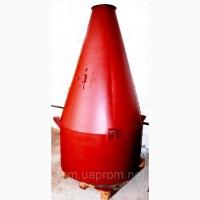
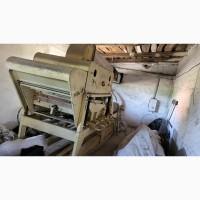
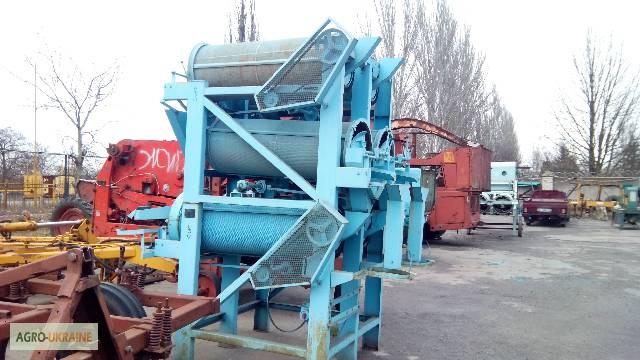
/ Agricultural equipment, equipment, inventory / Post-harvest processing, storage (equipment) / Grain cleaners, grain separators / Different grain cleaners, grain separators + in assortment / Trier block Petkus K-553 Second-hand overhaul

Sell / buy
used
Trier block Petkus K-553 Used repair shop, Kherson region.
Region:all Ukraine,
Khersonskaya region.
(Bireslavskoe shosse 44a)
Trier block K553 Petkus. It is used for processing pre-cleanedgrass seeds, garden, medicinal, and spice plants, as well assugar beet stalks.
They are used in a unit with an air sieve machine Petkuc Selektra K218 or independently, primarily for the processing of small-seeded crops.
The block (Fig. 19) has three trier sections (two cylinders each), which are installed on the frame one above the other. The angle of inclination of the cylinders is 1°30'. There are swinging trays inside the cylinders. Guide sheets attached from below to the trays prevent arching. Trays, sheets and transitional funnels receive vibrations from eccentric shafts through wooden connecting rods. The position of the trays is regulated by handles. The cylinders rotate from the electric motor through V-belt and toothed gears. A V-belt transmission is applied to the middle cylinders.
Seven suspensions for bags (bag holders) are mounted on the frame of the lower section on the ends on both sides. One collection and two discharge funnels are intended for the removal of short impurities from the trays of the upper and middle pairs of cylinders. When cleaning seeds only from short impurities, all cylinders with cells for removing short impurities are installed in the block. In this case, cleaning happens like this. The initial mixture enters the upper pair of cylinders in two streams through the intake funnels. Short impurities are fed into the trays by the cylinder-DOB cells, from which they are removed through the estrus into bags through the collecting funnel. The rest of the mass coming east from the cylinders will be fed into the middle pair of cylinders through the passage funnels. From the trays of these cylinders, short impurities are removed into bags through the funnel. The flow from these cylinders is fed into the lower pair of cylinders through the transition funnel. In these cylinders, short impurities are also thrown into trays through cells, which are then removed into bags. (the fraction coming from the cylinders (cleaned seeds) falls into the ladlewheel, which is fed into the seed receiver, and from it into the bags. When cleaning seeds from short and long impurities, the upper and middle pairs of cylinders must have cells for removing short impurities, and the lower pair for removing long impurities (to the east of the cylinders). In this case, the upper and middle sections work in the same way as when cleaning only short impurities. In the lower pair, the seeds of the main crop are thrown into trays from which they are taken out into the bags through the outlet TU, and the long impurities coming out of the cylinders fall into the scoop wheel, which is fed into the receiver, and then from it through the outlet IV into the bags. Since the sections are removable, if necessary, you can use only one lower section or only two (lower and middle). A set of replaceable cylinders (shells) with different cell diameters is used for the block. Depending on the installation of these or other cylinders in the section, the processing order can be second, that is, long impurities can be removed first, and then short ones(//tractor-service.com)
Technical characteristics
Productivity: the degree of contamination is 0.15-0.35 t/h with a maximum humidity of 14%.
Mass, kg 1200
Overall dimensions, mm length x width x height 2800 x 1660 x 2820
The installed capacity of the electric motor is 1.1 kW
They are used in a unit with an air sieve machine Petkuc Selektra K218 or independently, primarily for the processing of small-seeded crops.
The block (Fig. 19) has three trier sections (two cylinders each), which are installed on the frame one above the other. The angle of inclination of the cylinders is 1°30'. There are swinging trays inside the cylinders. Guide sheets attached from below to the trays prevent arching. Trays, sheets and transitional funnels receive vibrations from eccentric shafts through wooden connecting rods. The position of the trays is regulated by handles. The cylinders rotate from the electric motor through V-belt and toothed gears. A V-belt transmission is applied to the middle cylinders.
Seven suspensions for bags (bag holders) are mounted on the frame of the lower section on the ends on both sides. One collection and two discharge funnels are intended for the removal of short impurities from the trays of the upper and middle pairs of cylinders. When cleaning seeds only from short impurities, all cylinders with cells for removing short impurities are installed in the block. In this case, cleaning happens like this. The initial mixture enters the upper pair of cylinders in two streams through the intake funnels. Short impurities are fed into the trays by the cylinder-DOB cells, from which they are removed through the estrus into bags through the collecting funnel. The rest of the mass coming east from the cylinders will be fed into the middle pair of cylinders through the passage funnels. From the trays of these cylinders, short impurities are removed into bags through the funnel. The flow from these cylinders is fed into the lower pair of cylinders through the transition funnel. In these cylinders, short impurities are also thrown into trays through cells, which are then removed into bags. (the fraction coming from the cylinders (cleaned seeds) falls into the ladlewheel, which is fed into the seed receiver, and from it into the bags. When cleaning seeds from short and long impurities, the upper and middle pairs of cylinders must have cells for removing short impurities, and the lower pair for removing long impurities (to the east of the cylinders). In this case, the upper and middle sections work in the same way as when cleaning only short impurities. In the lower pair, the seeds of the main crop are thrown into trays from which they are taken out into the bags through the outlet TU, and the long impurities coming out of the cylinders fall into the scoop wheel, which is fed into the receiver, and then from it through the outlet IV into the bags. Since the sections are removable, if necessary, you can use only one lower section or only two (lower and middle). A set of replaceable cylinders (shells) with different cell diameters is used for the block. Depending on the installation of these or other cylinders in the section, the processing order can be second, that is, long impurities can be removed first, and then short ones(//tractor-service.com)
Technical characteristics
Productivity: the degree of contamination is 0.15-0.35 t/h with a maximum humidity of 14%.
Mass, kg 1200
Overall dimensions, mm length x width x height 2800 x 1660 x 2820
The installed capacity of the electric motor is 1.1 kW
Ad ID: #497140
(added by a registered user)
Permanent ad address:
Showed / watched for today: ?, total: ?
Similar fresh ads
Among them there are many interesting ones...