/ Agricultural equipment, equipment, inventory / Preparation of fodder (equipment) / Crushers, fodder shredders / Instructions for the use of fodder preparation "...

Sell / buy
used
Instructions for the use of feed processor "Appetite-100", Nikolaev region.
Price1 UAH.
Region:
Nikolaevskaya reg.
(G. Nikolaev)
Updated:
Liquid feeding is used on 70% of pig farms in Denmark and about 90% of farms in Sweden, because has many advantages over dry feeding, which ultimately increase production efficiency.
Not one of the well-known methods of preparing fodder from grain - dry grinding, flattening, extrusion, steaming ... does not give fodder of such high quality as processing on a cavitator/hydromill (GM) "Appetite". As a result, consumption of fodder and grain is reduced, weight gain, milk yield, and egg production are increased... In addition, porridge is more friendly to any stomach, both animal and human, than dry mixes.
To prepare porridge - pour water, turn on the GM, lay out the products and do the household chores. Pour the porridge after 30-40 minutes. Rinse the unit. Actions with the unit are described in more detail below. The instructions for more powerful, productive aggregators are similar, because the principle of action is the same.
Instructions for the use of feed preparation "Appetite-100"
(See the description, photo of the "Appetite-100" feed processor on the website)
Purpose: prepares nutritious fodder porridges from any grain, from millet to corn, compound feed, grain mixtures... with additives of crushed alfalfa, straw, food waste - for economical fattening and maintenance of domestic animals - piglets, cattle, domestic animals, ducks, dogs...
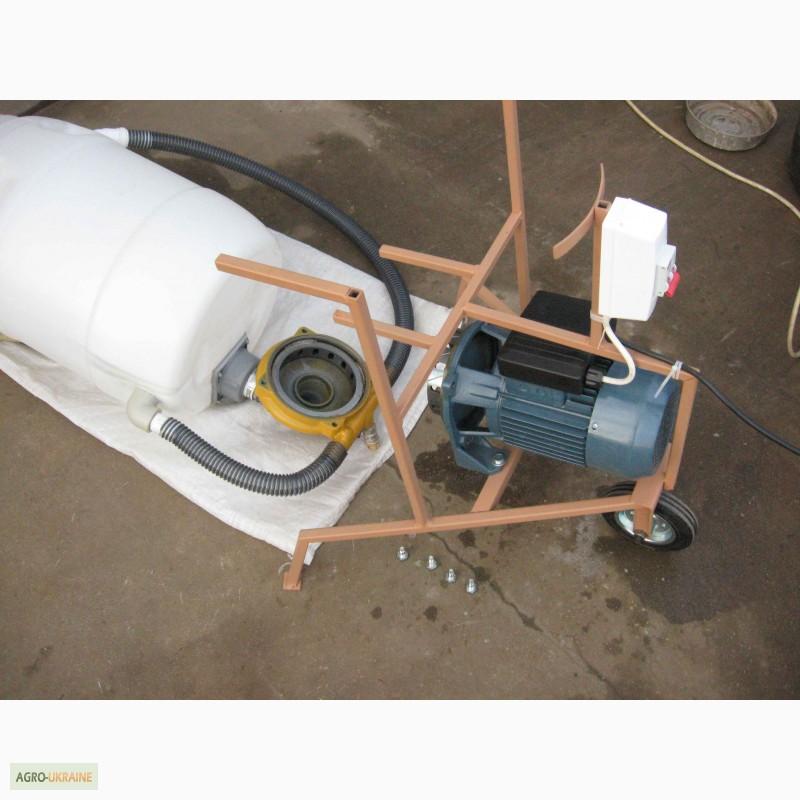
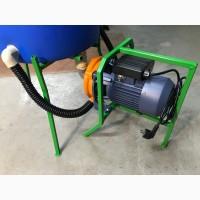
Composition: hydromill (GM) with a wear-resistant activator and ceramic graphite end seal (seal) on the el shaft. engine 2 kW/2850 rpm/220V; hopper - 55-liter capacity with a suction and supply pipe with a diameter of 50 and 32 mm and a 3/4 drain valve; wheel frame
All units are run-in on water. Before sending, they are partially disassembled. When reassembling, all hose connections sit on sealant.
Order of works:
-- place the installation on a flat surface, in the shade; close the drain taps, connect the unit to the network, through a socket with grounding!!
-- pour water into the bunker at the rate of two volumes of water to one part of grain (grit) for pigs and 3/1 for cattle. The total amount of min/max mixture is 15/50 l. If there is less water - air is captured, the work is not in the mode. Milk waste can be used instead of water. Water temperature 10–25˚С
-- turn on the installation - the machine is in the "top" position. Operation without water, in a "dry" state, leads to damage to the oil seal.
-- without overloading the engine, pour small portions of grain into the bubbling water. During the cooking process, the porridge heats up. Optimum heating up to 50˚C. Heating above 60ºС leads to decomposition of useful components of the grain. During the tests, the water was heated to 92 degrees.
-- porridge of better quality and faster is obtained if you use prepared grain, namely - grain crushed in a grain crusher, passed through a thresher and the simplest option - grain soaked in water overnight, two days is possible! Soaking softens the grain, washes away abrasive dust, which reduces the wear of the activator and most importantly improves the quality of the porridge! Sprouted grain porridge is doubly useful! Even for the owner!
-- the cooking cycle of a full tank (50 l) up to 45 minutes or minimal heating up to 40-45º depends on the temperature of the filled water, ambient air, grain preparation.(//tractor-service.com)
-- at the end - turn off the installation. Porridge will be poured into the hopper through the tap. The rest of the porridge is poured through the tap on the GM. Rinse the unit. To do this, pour half a bucket of water into the tank and turn on the unit for 5 seconds. Flush the unit after each feeding cycle. Do not allow acidification of residues. Flushing cleans the oil seal spring for reliable operation. Use the wash for future porridge.
When performing work and during breaks:
-- do not leave the unit in the rain, at a temperature below +1ºС with the drain valve closed - defrosting of the cast iron body of the mill, the oil seal, is possible.
-- the thicker the mixture, the harder it is for the engine. At low voltage, make the porridge more watery. Prepared porridge can be thickened with grass flour, chopped straw, alfalfa... Straw, greens can be seasoned with porridge - like a salad.
-- control the temperature of the engine - normal up to 60 degrees - the hand is patient, let the engine cool down. Work with constant overheating, more than 90 degrees, is undesirable.
-- monitor the network voltage, if the engine starts sluggishly, with difficulty - the network is plugged - less than 200 V. To exclude dependence on the network voltage, it is necessary to conduct a network audit - pay attention to the cross-section of the supply wires (if the length of the supply line is more than 5 m - the cross-section of the wire is 2.5 mm sq.), their connections - twists, tighten the contacts... AP100 connection - as close as possible to the meter. Voltage measurement - with the engine running, i.e. under load! When the mains voltage drops to less than 200V, the current consumption increases dangerously - the engine may burn! Protection usually works. A stabilizer with a power of at least 6 kW can solve the problem of low voltage. It is better to turn to an experienced electrician.
-- when extraneous noises appear - turn off the installation - find out the reason.
-- for feeding a large number of animals, it is possible to collect several batches of porridge in a separate container for subsequent, simultaneous distribution. Additives, salt, chalk, vitamins are added at the last moment.
-- if you use hot water, more than 25ºС the porridge will heat up quickly, but in this case there will be insufficient time, cavitation* effect on the composition. That is, it is more rational to use hot water for soaking grain, especially corn, and if time allows, do not distribute the ready-made porridge immediately, but let it steep. There is an option when the porridge is cooked in the evening, insists in an insulated AP100 bunker, and is only heated in the morning.
It should be noted that well-prepared porridge is the key to a quick set of slaughter weight by animals - this is what a reasonable owner strives for. The norm is 1 kg/day for ordinary piglets and more than 1.5 for thoroughbreds. At the same time, grain savings of 30-40% when fattening with GM compared to dry feeding (crushed grain + drinker) is not an end in itself. Animals should eat enough, without overeating. Moreover, porridge guarantees an excellent appetite.
The main problems with the operation of the unit are associated with low voltage in the network - less than 200 volts under load (when the unit is turned on). The rest - wear of the activator, end seal (seal). These parts are consumables and are replaced as necessary. They usually last for years.
If the oil seal (located under the activator) begins to leak, it must be removed, washed, and inspected. When the graphite ring wears out, replace the oil seal!Sprut pumps HPF 550 are suitable; DTm -30; ADK-30. Seat - 30 mm, shaft diameter - 16 mm (there is an option - 18 mm - do not take!)
– if after disassembling the stuffing box it turns out that there is no wear on the graphite ring - a leak is possible due to the wear of the rubber seal. The seal can be restored if, during assembly, the movable part of the oil seal is put on a polished shaft lubricated with a thin layer of sealant. Perhaps this will solve the problem of leakage. It is not permissible to get the sealant on the rubbing surfaces of the oil seal.
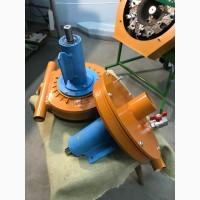
- to inspect the stuffing box - unscrew 4 bolts and put the snail together with the hopper on the floor (see photo) Unscrew the nut, remove the activator from the shaft - the stuffing box is under it.
Any questions about the use of the unit -[email protected] tel: +38 067 2825117; +38 095 3505197 Viber, WhatsApp, Skype: voka531
* Cavitation is a process that destroys solids in a liquid - ship propellers,impellers pumps... In our case, it decomposes grain, sterilizes the substance without boiling, killing spores and bacteria.
Not one of the well-known methods of preparing fodder from grain - dry grinding, flattening, extrusion, steaming ... does not give fodder of such high quality as processing on a cavitator/hydromill (GM) "Appetite". As a result, consumption of fodder and grain is reduced, weight gain, milk yield, and egg production are increased... In addition, porridge is more friendly to any stomach, both animal and human, than dry mixes.
To prepare porridge - pour water, turn on the GM, lay out the products and do the household chores. Pour the porridge after 30-40 minutes. Rinse the unit. Actions with the unit are described in more detail below. The instructions for more powerful, productive aggregators are similar, because the principle of action is the same.
Instructions for the use of feed preparation "Appetite-100"
(See the description, photo of the "Appetite-100" feed processor on the website)
Purpose: prepares nutritious fodder porridges from any grain, from millet to corn, compound feed, grain mixtures... with additives of crushed alfalfa, straw, food waste - for economical fattening and maintenance of domestic animals - piglets, cattle, domestic animals, ducks, dogs...
Composition: hydromill (GM) with a wear-resistant activator and ceramic graphite end seal (seal) on the el shaft. engine 2 kW/2850 rpm/220V; hopper - 55-liter capacity with a suction and supply pipe with a diameter of 50 and 32 mm and a 3/4 drain valve; wheel frame
All units are run-in on water. Before sending, they are partially disassembled. When reassembling, all hose connections sit on sealant.
Order of works:
-- place the installation on a flat surface, in the shade; close the drain taps, connect the unit to the network, through a socket with grounding!!
-- pour water into the bunker at the rate of two volumes of water to one part of grain (grit) for pigs and 3/1 for cattle. The total amount of min/max mixture is 15/50 l. If there is less water - air is captured, the work is not in the mode. Milk waste can be used instead of water. Water temperature 10–25˚С
-- turn on the installation - the machine is in the "top" position. Operation without water, in a "dry" state, leads to damage to the oil seal.
-- without overloading the engine, pour small portions of grain into the bubbling water. During the cooking process, the porridge heats up. Optimum heating up to 50˚C. Heating above 60ºС leads to decomposition of useful components of the grain. During the tests, the water was heated to 92 degrees.
-- porridge of better quality and faster is obtained if you use prepared grain, namely - grain crushed in a grain crusher, passed through a thresher and the simplest option - grain soaked in water overnight, two days is possible! Soaking softens the grain, washes away abrasive dust, which reduces the wear of the activator and most importantly improves the quality of the porridge! Sprouted grain porridge is doubly useful! Even for the owner!
-- the cooking cycle of a full tank (50 l) up to 45 minutes or minimal heating up to 40-45º depends on the temperature of the filled water, ambient air, grain preparation.(//tractor-service.com)
-- at the end - turn off the installation. Porridge will be poured into the hopper through the tap. The rest of the porridge is poured through the tap on the GM. Rinse the unit. To do this, pour half a bucket of water into the tank and turn on the unit for 5 seconds. Flush the unit after each feeding cycle. Do not allow acidification of residues. Flushing cleans the oil seal spring for reliable operation. Use the wash for future porridge.
When performing work and during breaks:
-- do not leave the unit in the rain, at a temperature below +1ºС with the drain valve closed - defrosting of the cast iron body of the mill, the oil seal, is possible.
-- the thicker the mixture, the harder it is for the engine. At low voltage, make the porridge more watery. Prepared porridge can be thickened with grass flour, chopped straw, alfalfa... Straw, greens can be seasoned with porridge - like a salad.
-- control the temperature of the engine - normal up to 60 degrees - the hand is patient, let the engine cool down. Work with constant overheating, more than 90 degrees, is undesirable.
-- monitor the network voltage, if the engine starts sluggishly, with difficulty - the network is plugged - less than 200 V. To exclude dependence on the network voltage, it is necessary to conduct a network audit - pay attention to the cross-section of the supply wires (if the length of the supply line is more than 5 m - the cross-section of the wire is 2.5 mm sq.), their connections - twists, tighten the contacts... AP100 connection - as close as possible to the meter. Voltage measurement - with the engine running, i.e. under load! When the mains voltage drops to less than 200V, the current consumption increases dangerously - the engine may burn! Protection usually works. A stabilizer with a power of at least 6 kW can solve the problem of low voltage. It is better to turn to an experienced electrician.
-- when extraneous noises appear - turn off the installation - find out the reason.
-- for feeding a large number of animals, it is possible to collect several batches of porridge in a separate container for subsequent, simultaneous distribution. Additives, salt, chalk, vitamins are added at the last moment.
-- if you use hot water, more than 25ºС the porridge will heat up quickly, but in this case there will be insufficient time, cavitation* effect on the composition. That is, it is more rational to use hot water for soaking grain, especially corn, and if time allows, do not distribute the ready-made porridge immediately, but let it steep. There is an option when the porridge is cooked in the evening, insists in an insulated AP100 bunker, and is only heated in the morning.
It should be noted that well-prepared porridge is the key to a quick set of slaughter weight by animals - this is what a reasonable owner strives for. The norm is 1 kg/day for ordinary piglets and more than 1.5 for thoroughbreds. At the same time, grain savings of 30-40% when fattening with GM compared to dry feeding (crushed grain + drinker) is not an end in itself. Animals should eat enough, without overeating. Moreover, porridge guarantees an excellent appetite.
The main problems with the operation of the unit are associated with low voltage in the network - less than 200 volts under load (when the unit is turned on). The rest - wear of the activator, end seal (seal). These parts are consumables and are replaced as necessary. They usually last for years.
If the oil seal (located under the activator) begins to leak, it must be removed, washed, and inspected. When the graphite ring wears out, replace the oil seal!Sprut pumps HPF 550 are suitable; DTm -30; ADK-30. Seat - 30 mm, shaft diameter - 16 mm (there is an option - 18 mm - do not take!)
– if after disassembling the stuffing box it turns out that there is no wear on the graphite ring - a leak is possible due to the wear of the rubber seal. The seal can be restored if, during assembly, the movable part of the oil seal is put on a polished shaft lubricated with a thin layer of sealant. Perhaps this will solve the problem of leakage. It is not permissible to get the sealant on the rubbing surfaces of the oil seal.
- to inspect the stuffing box - unscrew 4 bolts and put the snail together with the hopper on the floor (see photo) Unscrew the nut, remove the activator from the shaft - the stuffing box is under it.
Any questions about the use of the unit -[email protected] tel: +38 067 2825117; +38 095 3505197 Viber, WhatsApp, Skype: voka531
* Cavitation is a process that destroys solids in a liquid - ship propellers,impellers pumps... In our case, it decomposes grain, sterilizes the substance without boiling, killing spores and bacteria.
|
Author, contacts | |
Владимир / отзывы, info.: 1 / activity evaluation | |
|
Phone:
+38 xxxxxx
show
| |
| Skype: voka531 | |
All user ads ~15 | |
Ad ID: #305712
(added by a registered user, registration date: 10-01-2013)
Added / Updated: 11-28-2025 19:44 (current, until: 11-28-2026)
Permanent ad address:
Showed / watched for today: ?, total: ?
Similar ads
Among them there are many interesting...
Filters: Grain crushers


All Ukraine: Selkhoztehnika, oborudovanie, inventory 45625 / Forage preparation (equipment) 345 / Crushers, fodder grinders 102
Nikolaev region: Agricultural equipment, equipment, inventory 431 / Forage preparation (equipment) 12 / Crushers, fodder shredders 9