/ Agricultural equipment, equipment, inventory / Post-harvest processing, storage (equipment) / Grain dryers / Drying grain on waste - 20 hryvnias per ton


Sell / buy
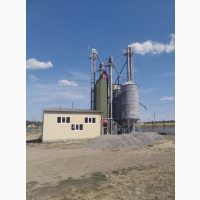
Drying of grain on waste - 20 UAH per ton, Kirovohrad region.
Price2 000 000 UAH.
Region:all of Ukraine,
Kirovohradskaya region.
(Kropyvnytskyi)
Updated:
The principle of operation of grain dryers "Agro Star".
Wet grain is fed by auxiliary equipment (e.g. noria, conveyor) into the upper part of the dryer, where it is evenly distributed along its entire length with the help of an auger. After filling with grain, the auger is automatically turned off and on at the command of the filling sensor. The air heated by the solid fuel heat generator in the upper chamber under the pressure of the fan passes through a uniform layer of grain, heats it and removes moisture to the outside through the perforated walls of the sections. To cool the grain to the storage temperature, the fan of the lower chamber of the dryer is used. The productivity of thegrain dryer depends on the initial moisture content of the grain and the selected drying mode and is regulated by the speed of rotation of the metering rollers, which are located below the grain sections along the entire length of the dryer on both sides. After the rollers, the dried grain enters the lower auger of the dryer and is transported further by auxiliary equipment for cleaning or storage. In the case of grain cooling in external ventilated bunkers, the dryer completely heats the grain inside itself with two burners, thereby doubling its productivity.
The modern control panel allows you to remotely enter and monitor operating parameters such as: air temperature in the dryer chamber, grain temperature, operation of loading and unloading systems, security system messages.
The design of the grain dryer allows you to easily increase its productivity by increasing both the length and the height, and the compact overall dimensions and the absence of the need for a capital monolithic foundation make it possible to easily supplement the existing technological line of any grain cleaning complex.
The solid-fuel heat generator works on solid fuel - firewood, wood chips, agricultural waste, fuel pellets, etc. An important condition for this fuel is its price, availability and calorific value.
The design of the heat generator is based on the principle of quick maintenance and maximum combustion of both the fuel itself and the flue gases released during the combustion process.(//tractor-service.com)
Heat generators actually incorporate all the advantages of the pyrolysis method of combustion and the advantages of a conventional solid fuel boiler. A heat exchanger made of heat-resistant stainless steel and a combustion chamber are combined in one unit, which makes direct heat transfer without loss of efficiency. Below the firebox there is an ash collector, which allows you to quickly and conveniently clean the firebox.
Thanks to the built-in heat exchanger, the following advantages are achieved:
• Compactness and small dimensions.
• Combustion products that have entered the heat exchanger settle in the ash accumulators, which facilitates maintenance.
• A large usable area of heat exchange significantly reduces fuel consumption and allows you to easily reach an outlet air temperature of 120 C.
• Thanks to the design of the installation, the time of preparatory and installation work is significantly reduced.
• Insignificant fuel consumption to remove one ton-percent of moisture (the example of dryingcorn showed that to remove one ton-percent of moisture, depending on the ambient temperature, 2.5 kg of fuel pellets or 3 kg ofwaste is needed sunflower).
Wet grain is fed by auxiliary equipment (e.g. noria, conveyor) into the upper part of the dryer, where it is evenly distributed along its entire length with the help of an auger. After filling with grain, the auger is automatically turned off and on at the command of the filling sensor. The air heated by the solid fuel heat generator in the upper chamber under the pressure of the fan passes through a uniform layer of grain, heats it and removes moisture to the outside through the perforated walls of the sections. To cool the grain to the storage temperature, the fan of the lower chamber of the dryer is used. The productivity of thegrain dryer depends on the initial moisture content of the grain and the selected drying mode and is regulated by the speed of rotation of the metering rollers, which are located below the grain sections along the entire length of the dryer on both sides. After the rollers, the dried grain enters the lower auger of the dryer and is transported further by auxiliary equipment for cleaning or storage. In the case of grain cooling in external ventilated bunkers, the dryer completely heats the grain inside itself with two burners, thereby doubling its productivity.
The modern control panel allows you to remotely enter and monitor operating parameters such as: air temperature in the dryer chamber, grain temperature, operation of loading and unloading systems, security system messages.
The design of the grain dryer allows you to easily increase its productivity by increasing both the length and the height, and the compact overall dimensions and the absence of the need for a capital monolithic foundation make it possible to easily supplement the existing technological line of any grain cleaning complex.
The solid-fuel heat generator works on solid fuel - firewood, wood chips, agricultural waste, fuel pellets, etc. An important condition for this fuel is its price, availability and calorific value.
The design of the heat generator is based on the principle of quick maintenance and maximum combustion of both the fuel itself and the flue gases released during the combustion process.(//tractor-service.com)
Heat generators actually incorporate all the advantages of the pyrolysis method of combustion and the advantages of a conventional solid fuel boiler. A heat exchanger made of heat-resistant stainless steel and a combustion chamber are combined in one unit, which makes direct heat transfer without loss of efficiency. Below the firebox there is an ash collector, which allows you to quickly and conveniently clean the firebox.
Thanks to the built-in heat exchanger, the following advantages are achieved:
• Compactness and small dimensions.
• Combustion products that have entered the heat exchanger settle in the ash accumulators, which facilitates maintenance.
• A large usable area of heat exchange significantly reduces fuel consumption and allows you to easily reach an outlet air temperature of 120 C.
• Thanks to the design of the installation, the time of preparatory and installation work is significantly reduced.
• Insignificant fuel consumption to remove one ton-percent of moisture (the example of dryingcorn showed that to remove one ton-percent of moisture, depending on the ambient temperature, 2.5 kg of fuel pellets or 3 kg ofwaste is needed sunflower).
|
Author, contacts | |
Elevator Machine Plant LLC/ otzyvy, info. | |
|
Phone:
+380xxxxxx
show
| |
| Telegram: graindryerua | |
| Viber: 380955826571 | |
| Whatsapp: 380955826571 | |
| http://elevator-m achines.com.ua | |
| facebook.com/100090539675430 | |
| instagram.com/zemagrostar | |
| youtube.com/channel/UCGvMukpYc1wzmpjYoocmSCA | |
All user ads ~47 | |
Ad ID: #1249359
(added by registered user)
Added/Updated: 09-14-2026 16:50 (relevant, until: 09-14-2027)
Permanent ad address:
Showed / watched for today: ?, total: ?
Similar ads




All Ukraine: Selkhoztehnika, oborudovanie, inventory 45618 / Post-harvest processing, storage (equipment) 1198 / Grain dryers 216
Kirovohrad region: Agricultural equipment, equipment, inventory 1794 / Post-harvest processing, storage (equipment) 78 / Grain dryers 52