/ Fertilizers and plant protection products / Herbicides / Selefit - herbicide for crop protection potatoes...

Sell / buy
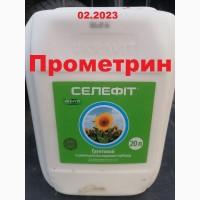
Selefit - herbicide for protecting crops of potatoes, soybeans, sunflower and vegetable crops, Kyiv region.
Price4000 UAH.
Region:all of Ukraine,
Kyiv region.
(Vyshhorodok)
Updated:
Selephyt is a broad-spectrum selective herbicide against annual dicotyledonous and some grassy weed species.
The main agronomic characteristics of the drug:
Active substance: Promethrin 500 g/l
Drug form: Suspension concentrate
Crops:Sunflower,Potato, Soybean, Pea, Carrot, Bean, Garlic
Spectrum of action: Annual dicots, Annual cereal weeds
Type of action: Pre-emergence, Post-emergence, Soil.
Packaging 20 l plastic canisters, the price is per canister.
Advantages of using Selefit herbicide:
Shows a long period of protective action (depending on weather conditions);
Effectively controls a wide range of annual dicotyledonous and some grass weeds in crops of many agricultural crops;
An ideal partner in tank mixtures with other soil preparations based on propisochlor, acetochlor and metolachlor to expand the spectrum of controlled weed species.
How does Selefit herbicide work?
⇒ A herbicide of selective action, which is absorbed by both seedlings and roots of weeds when the drug is applied to seedlings. The active substance, Promethrin, blocks the transport of electrons involved in the process of photosynthesis (photosystem I), and leads to the death of weeds.
What weeds does Selefit affect?
Dicotyledonous weeds: small-flowered gorse, mustard (species) and wild radish (best destroyed in the seedling phase), common sorrel, common starwort, garden purslane, field romance, field violet, cinquefoil (species), field hen's eyes, quinoa (species), small linden, sown cornflower, common dahlia, geranium rossichna, European heliotrope, bitter gorse, black solanum, common spergel, garden and pink thistle (from seeds), stinging nettle, Persian veronica, common and prickly nettle, annual heather, medicinal burdock, chamomile (species), Sofia's curlew.
Cereal weeds: Indian eleusina, annual and common sedge.
Instructions for use of the drug Selefit:
Optimal temperature conditions for processing - 10-25 °C.
Spraying is carried out on well-prepared and optimally moistened soil.
In case of lack of moisture, shallow digging is recommended.
High-quality pre-sowing preparation of the soil, presence of moisture in the soil, high-quality introduction and application of the drug (if necessary) increase the effectiveness of its action.
It is not recommended to carry out inter-row cultivation after applying the herbicide - this will reduce its herbicidal activity.
The rate of SELEFIT application depends on: the content of humus, the mechanical composition of the soil (light, medium, heavy), as well as on the forecasted current weediness and suitable weather conditions.
When mixing with a preparation based on acetochlor or propisochlor, the ratio should be 1:1, and for acetochlor, it should not exceed 2.0 l/ha.
If the norm is exceeded, phytotoxicity may appear on cultivated plants, which disappears within a short period of time.
Some dicotyledonous weeds (crucifers) are better controlled in the seedling phase.
Rate of consumption of Selefit working solution:(//tractor-service.com)
200-300 l/ha.
Regulation of application and rate of consumption Selefit:
Culture / object being processed Object against which it is processed Rate of consumption of the drug l/ha Method, period of processing, restrictions
Soy
Annual dicots and some grass weeds
3 — 4 l/ha
Spraying the soil before the emergence of crop seedlings
Sunflower
2 — 4 l/ha
Spraying the soil before sowing, during sowing, after sowing, but before the appearance of crop seedlings
Potatoes
3 — 4 l/ha
Spraying the soil before the appearance of crop seedlings
Peas
3 — 5 l/ha
Carrot
2 — 3 l/ha
Spraying the soil before sowing, before the emergence of seedlings or in the phase of 1-2 true leaves of the crop
Coriander
3 — 4 l/ha
Spraying the soil before the emergence of seedlings or in the phase of 2-3 true leaves of the culture.
Compatibility with other drugs:
Selefit is compatible with other soil herbicides that are allowed on the respective crops.
Before preparing working mixtures, it is advisable to check the drugs for compatibility (absence of sediment, foam, delamination, lumping, incomplete dissolution of one of the drugs, etc.).
The main agronomic characteristics of the drug:
Active substance: Promethrin 500 g/l
Drug form: Suspension concentrate
Crops:Sunflower,Potato, Soybean, Pea, Carrot, Bean, Garlic
Spectrum of action: Annual dicots, Annual cereal weeds
Type of action: Pre-emergence, Post-emergence, Soil.
Packaging 20 l plastic canisters, the price is per canister.
Advantages of using Selefit herbicide:
Shows a long period of protective action (depending on weather conditions);
Effectively controls a wide range of annual dicotyledonous and some grass weeds in crops of many agricultural crops;
An ideal partner in tank mixtures with other soil preparations based on propisochlor, acetochlor and metolachlor to expand the spectrum of controlled weed species.
How does Selefit herbicide work?
⇒ A herbicide of selective action, which is absorbed by both seedlings and roots of weeds when the drug is applied to seedlings. The active substance, Promethrin, blocks the transport of electrons involved in the process of photosynthesis (photosystem I), and leads to the death of weeds.
What weeds does Selefit affect?
Dicotyledonous weeds: small-flowered gorse, mustard (species) and wild radish (best destroyed in the seedling phase), common sorrel, common starwort, garden purslane, field romance, field violet, cinquefoil (species), field hen's eyes, quinoa (species), small linden, sown cornflower, common dahlia, geranium rossichna, European heliotrope, bitter gorse, black solanum, common spergel, garden and pink thistle (from seeds), stinging nettle, Persian veronica, common and prickly nettle, annual heather, medicinal burdock, chamomile (species), Sofia's curlew.
Cereal weeds: Indian eleusina, annual and common sedge.
Instructions for use of the drug Selefit:
Optimal temperature conditions for processing - 10-25 °C.
Spraying is carried out on well-prepared and optimally moistened soil.
In case of lack of moisture, shallow digging is recommended.
High-quality pre-sowing preparation of the soil, presence of moisture in the soil, high-quality introduction and application of the drug (if necessary) increase the effectiveness of its action.
It is not recommended to carry out inter-row cultivation after applying the herbicide - this will reduce its herbicidal activity.
The rate of SELEFIT application depends on: the content of humus, the mechanical composition of the soil (light, medium, heavy), as well as on the forecasted current weediness and suitable weather conditions.
When mixing with a preparation based on acetochlor or propisochlor, the ratio should be 1:1, and for acetochlor, it should not exceed 2.0 l/ha.
If the norm is exceeded, phytotoxicity may appear on cultivated plants, which disappears within a short period of time.
Some dicotyledonous weeds (crucifers) are better controlled in the seedling phase.
Rate of consumption of Selefit working solution:(//tractor-service.com)
200-300 l/ha.
Regulation of application and rate of consumption Selefit:
Culture / object being processed Object against which it is processed Rate of consumption of the drug l/ha Method, period of processing, restrictions
Soy
Annual dicots and some grass weeds
3 — 4 l/ha
Spraying the soil before the emergence of crop seedlings
Sunflower
2 — 4 l/ha
Spraying the soil before sowing, during sowing, after sowing, but before the appearance of crop seedlings
Potatoes
3 — 4 l/ha
Spraying the soil before the appearance of crop seedlings
Peas
3 — 5 l/ha
Carrot
2 — 3 l/ha
Spraying the soil before sowing, before the emergence of seedlings or in the phase of 1-2 true leaves of the crop
Coriander
3 — 4 l/ha
Spraying the soil before the emergence of seedlings or in the phase of 2-3 true leaves of the culture.
Compatibility with other drugs:
Selefit is compatible with other soil herbicides that are allowed on the respective crops.
Before preparing working mixtures, it is advisable to check the drugs for compatibility (absence of sediment, foam, delamination, lumping, incomplete dissolution of one of the drugs, etc.).
|
Shop, contacts | |
Yuriy / отзывы, инфо. / Estimation of activity | |
|
Phone:
+38(xxxxxx
show it
| |
All ads user ~1000 | |
Ad ID: #1221461
(added by a registered user, registration date: 08-10-2016)
Added / Updated: 01-07-2026 09:07 (current, until: 07-01-2027)
Permanent ad address:
Showed / watched for today: ?, total: ?
Similar ads
Among them there are many interesting ones...