/ Fertilizers and plant protection products / Various fertilizers and plant protection products + in assortment / MONO-Bor liquid fertilizer from the manufacturer
Sell / buy
MONO-Bor liquid fertilizer from the manufacturer, Cherkassy region.
Price350 UAH.
Region:all Ukraine,
Cherkasskaya oblast.
(Bul. Shevchenko 266/1)
Updated:
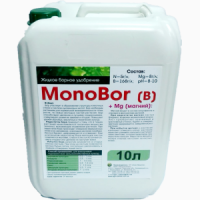
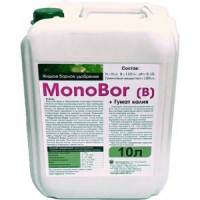
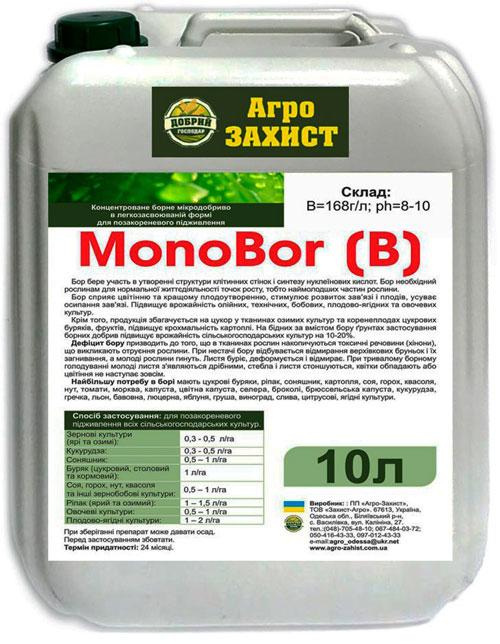
MonoBor (В)
Concentrated boron microfertilizer in an easily digestible form for foliar feeding
Composition: Boron (B) = 168 g / l, pH = 8-10
Boron is involved in the formation of the structure of cell walls and the synthesis of nucleic acids. Boron is necessary for plants for the normal life activity of growth points, that is, young parts of the plant.
Boron promotes flowering and better fruit formation, stimulates the development of ovaries and fruits, eliminates ovarian shedding. Increases the yield of oil, technical, leguminous, fruit and vegetable crops.
In addition, the production is enriched with sugar in the tissues of winter crops and root crops of sugar beets, fruits, and increases the starchiness of potatoes. On soils poor in boron content, the use of boronfertilized increases the yield of agricultural crops by 10-20%.
Boron deficiency leads to the accumulation of toxic substances (quinones) in plant tissues, causing plant poisoning. With a lack of boron, apical buds die off and rot, and young plants die. The leaves turn brown, deform and die. With long-term boron starvation, young leaves appear small, stems and leaves thin out, flowers fall or flowers do not appear at all.
Sugar beets, rapeseed,sunflower, potatoes, soybeans, peas, beans, chickpeas, tomatoes, carrots, cabbage, cauliflower, celery, broccoli, Brussels sprouts, corn, buckwheat, flax, cotton, alfalfa, apple, pear, grapes, plum, citrus, berry crops have the greatest need for boron.(//tractor-service.com)
Method of application: for foliar feeding of all agricultural crops.
Cereal crops (spring and winter): 0.3 - 0.5 l / ha
Corn: 0.3 - 0.5 l / ha
Sunflower: 0.5 - 1 l / ha
Beetroot (sugar, table and fodder): 1 l / ha
Soy, peas, chickpeas, beans andother legumes cultures: 0.5 - 1 l / ha
Rapeseed (spring and winter): 1 - 1.5 l / ha
Vegetable crops: 0.5 - 1 l / ha
Fruit and berry crops: 1 - 2 l / hectare. activities
Concentrated boron microfertilizer in an easily digestible form for foliar feeding
Composition: Boron (B) = 168 g / l, pH = 8-10
Boron is involved in the formation of the structure of cell walls and the synthesis of nucleic acids. Boron is necessary for plants for the normal life activity of growth points, that is, young parts of the plant.
Boron promotes flowering and better fruit formation, stimulates the development of ovaries and fruits, eliminates ovarian shedding. Increases the yield of oil, technical, leguminous, fruit and vegetable crops.
In addition, the production is enriched with sugar in the tissues of winter crops and root crops of sugar beets, fruits, and increases the starchiness of potatoes. On soils poor in boron content, the use of boronfertilized increases the yield of agricultural crops by 10-20%.
Boron deficiency leads to the accumulation of toxic substances (quinones) in plant tissues, causing plant poisoning. With a lack of boron, apical buds die off and rot, and young plants die. The leaves turn brown, deform and die. With long-term boron starvation, young leaves appear small, stems and leaves thin out, flowers fall or flowers do not appear at all.
Sugar beets, rapeseed,sunflower, potatoes, soybeans, peas, beans, chickpeas, tomatoes, carrots, cabbage, cauliflower, celery, broccoli, Brussels sprouts, corn, buckwheat, flax, cotton, alfalfa, apple, pear, grapes, plum, citrus, berry crops have the greatest need for boron.(//tractor-service.com)
Method of application: for foliar feeding of all agricultural crops.
Cereal crops (spring and winter): 0.3 - 0.5 l / ha
Corn: 0.3 - 0.5 l / ha
Sunflower: 0.5 - 1 l / ha
Beetroot (sugar, table and fodder): 1 l / ha
Soy, peas, chickpeas, beans andother legumes cultures: 0.5 - 1 l / ha
Rapeseed (spring and winter): 1 - 1.5 l / ha
Vegetable crops: 0.5 - 1 l / ha
Fruit and berry crops: 1 - 2 l / hectare. activities
|
Магазин, контакты | |
Гриднев К.К / отзывы, инфо. / оценка активности | |
|
Telephone:
(067xxxxxx
показать
| |
| http://www.planeta2012.com.ua/ | |

Ad ID: #121859
(added by registered user, registration date: 07-09-2012)
Added/Updated: 09-17-2026 14:26 (current, until: 09-17-2027)
Permanent ad address:
Showed / watched for today: ?, total: ?
Similar ads
Among them there are many interesting ones...