/ Fertilizers and plant protection products / Herbicides / Prystar - Post-emergence herbicide of systemic action for...
Продам / купить
Пристар -Післясходовий гербіцид системної дії для знищення бур’янів в посівах зернових к-р, Киевская обл.
Price20$
Region:
Kiev region.
(Vyshhorodok)
Updated:
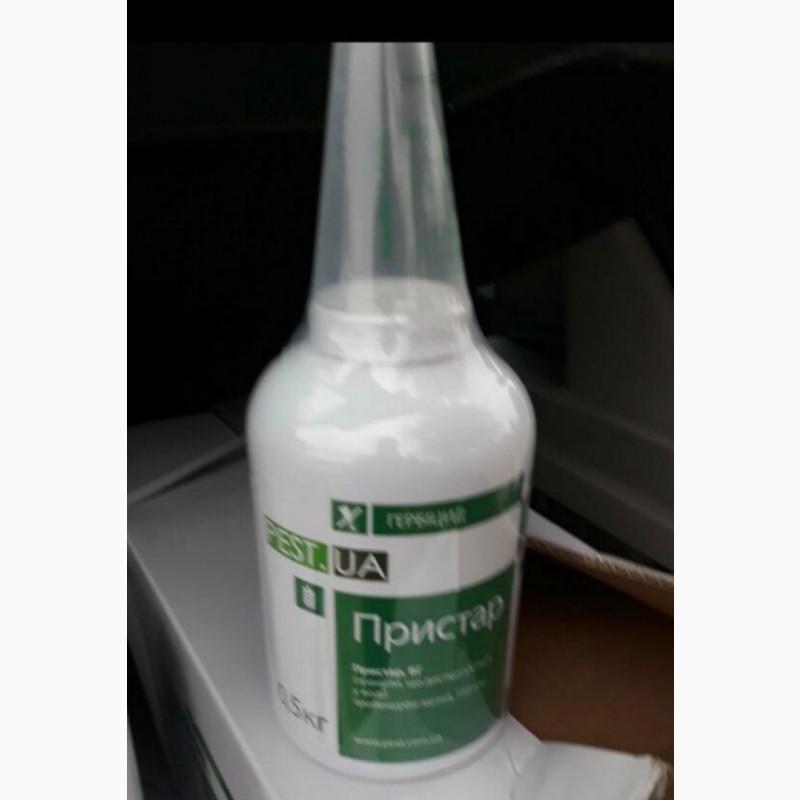
Prystar (similar to Granstar) - Post-emergence herbicide of systemic action for destruction annual and perennial dicotyledonous weeds
Active ingredient: Tribenuron-methyl, 750 g/kg
Formulation: Water-dispersible granules
Cultures: Oz. wheat, Yar. barley, Wheat, Rye, Barley
Container: 0.5 kg
Advantages
• A wide range of controlled weeds, especially such as thistle, ragwort, etc.
• Low application rate – 15-25 g/ha – ensures convenience and ease of use.
• Extended terms of application: from the appearance of 2 leaves to the appearance of a flag leaf.
• Start of action on weeds 2-3 hours after application.
• Compatible with most pesticides.
• Has no restrictions on crop rotation.
• Effectively works starting from an air temperature of +5 °C.
• The active substance is purified from impurities and undergoes repeated control before formulation.
General recommendations(//tractor-service.com)
The drug cannot be used if the plants are wet from dew or rain, as well as if rain is expected within 3 hours after treatment. In the case of a thick stand of culture or very strong clogging, the maximum volume of the working liquid should be used. To expand the range of controlled dicotyledonous weeds, it is possible to use tank mixtures: Prystar (10-15 g/ha) + Julian (0.15-0.2 l/ha) + Kite surfactant (0.1 l/100 l of water). When using with other drugs or surface-active substances, Prystar is first poured into the tanksprayer, and then all other products are added. The working solution must be used within 24 hours. Apply in dry weather. Rain within 3 hours after spraying can reduce the effectiveness of the drug. Avoid spilling the working solution on neighboring crops that are sensitive to the herbicide.
Mechanism of action
Tribenuron-methyl stops the cell division of sensitive weeds, resulting in their growth stopping within a few hours of treatment. Visible symptoms appear after 5-8 days, and weed death occurs after 10-25 days. Less sensitive weeds and those at a later stage of growth may not be killed, but their growth stops and they no longer compete with the crop for nutrients and water. Warm weather increases the rate of herbicide action, while cool and dry weather slows it down.
Properties
Prystar provides effective control of most annual and perennial dicotyledonous weeds, including those resistant to drugs of the 2,4-D group. For maximum effectiveness, the herbicide should be applied during the period of active growth of weeds in the phase of 2-4 leaves of annuals and rosettes (10-15 cm) of perennials. The systemic action of the drug makes it possible to penetrate through the leaves to the roots, destroying the entire plant. The best period of control of the pink thistle is in the rosette phase, and the tenacious nightshade is up to the 4th whorl. Due to the rapid disintegration of the drug in the soil, there are no restrictions for the following crops in the crop rotation.
Rate of consumption of working fluid: 200-300 l/ha.
Method of application and cost norms
Culture - Objects - Drug consumption rate, g/ha - Treatment method - Maximum number of treatments
*Winter wheat Annual and perennial dicots, incl. resistant to 2,4-D, weeds 20-25 + PARA Kite (0.1 l/100 l of water) Spraying of crops starting from the phase of 2-3 leaves until the appearance of the flag leaf of the culture 1
* Winter rye and barley Annual and perennial dicots, incl. resistant to 2,4-D, weeds 20-25 + PARA Kite (0.1 l/100 l of water) Spraying crops starting from the phase of 2-3 leaves until the appearance of the flag leaf of the crop 1
* Spring wheat and barley 15-20 + Kite surfactant (0.1 l/100 l of water) Spraying of crops starting from the phase of 2-3 leaves to the emergence of the culture tube.
Active ingredient: Tribenuron-methyl, 750 g/kg
Formulation: Water-dispersible granules
Cultures: Oz. wheat, Yar. barley, Wheat, Rye, Barley
Container: 0.5 kg
Advantages
• A wide range of controlled weeds, especially such as thistle, ragwort, etc.
• Low application rate – 15-25 g/ha – ensures convenience and ease of use.
• Extended terms of application: from the appearance of 2 leaves to the appearance of a flag leaf.
• Start of action on weeds 2-3 hours after application.
• Compatible with most pesticides.
• Has no restrictions on crop rotation.
• Effectively works starting from an air temperature of +5 °C.
• The active substance is purified from impurities and undergoes repeated control before formulation.
General recommendations(//tractor-service.com)
The drug cannot be used if the plants are wet from dew or rain, as well as if rain is expected within 3 hours after treatment. In the case of a thick stand of culture or very strong clogging, the maximum volume of the working liquid should be used. To expand the range of controlled dicotyledonous weeds, it is possible to use tank mixtures: Prystar (10-15 g/ha) + Julian (0.15-0.2 l/ha) + Kite surfactant (0.1 l/100 l of water). When using with other drugs or surface-active substances, Prystar is first poured into the tanksprayer, and then all other products are added. The working solution must be used within 24 hours. Apply in dry weather. Rain within 3 hours after spraying can reduce the effectiveness of the drug. Avoid spilling the working solution on neighboring crops that are sensitive to the herbicide.
Mechanism of action
Tribenuron-methyl stops the cell division of sensitive weeds, resulting in their growth stopping within a few hours of treatment. Visible symptoms appear after 5-8 days, and weed death occurs after 10-25 days. Less sensitive weeds and those at a later stage of growth may not be killed, but their growth stops and they no longer compete with the crop for nutrients and water. Warm weather increases the rate of herbicide action, while cool and dry weather slows it down.
Properties
Prystar provides effective control of most annual and perennial dicotyledonous weeds, including those resistant to drugs of the 2,4-D group. For maximum effectiveness, the herbicide should be applied during the period of active growth of weeds in the phase of 2-4 leaves of annuals and rosettes (10-15 cm) of perennials. The systemic action of the drug makes it possible to penetrate through the leaves to the roots, destroying the entire plant. The best period of control of the pink thistle is in the rosette phase, and the tenacious nightshade is up to the 4th whorl. Due to the rapid disintegration of the drug in the soil, there are no restrictions for the following crops in the crop rotation.
Rate of consumption of working fluid: 200-300 l/ha.
Method of application and cost norms
Culture - Objects - Drug consumption rate, g/ha - Treatment method - Maximum number of treatments
*Winter wheat Annual and perennial dicots, incl. resistant to 2,4-D, weeds 20-25 + PARA Kite (0.1 l/100 l of water) Spraying of crops starting from the phase of 2-3 leaves until the appearance of the flag leaf of the culture 1
* Winter rye and barley Annual and perennial dicots, incl. resistant to 2,4-D, weeds 20-25 + PARA Kite (0.1 l/100 l of water) Spraying crops starting from the phase of 2-3 leaves until the appearance of the flag leaf of the crop 1
* Spring wheat and barley 15-20 + Kite surfactant (0.1 l/100 l of water) Spraying of crops starting from the phase of 2-3 leaves to the emergence of the culture tube.
|
Магазин, контакты | |
Юрій / отзывы, инфо. / activity evaluation | |
|
Phone:
+38(xxxxxx
show
| |
All ads user ~1000 | |
Ad ID: #1080904
(added by a registered user, registration date: 08-10-2016)
Added / Updated: 09-23-2026 09:11 (current, until: 09-23-2027)
Permanent ad address:
Showed / watched for today: ?, total: ?
Similar ads
Among them there are many interesting ones...