For sale / buy
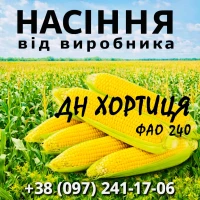
Corn Khortytsa FAO 200-299, Kharkiv region.
Price1200 UAH. / packaging
Region:all of Ukraine,
Kharkiv region.
Updated:
Grain purpose: Posevnoy material
Quantity: 100 tons
DN KHORTYTSYA
High cold resistance
Highly profitable seed production
Grain intensively loses moisture during ripening
Simple modified mid-early hybrid (FAO 240).
Listed in the Register of Varieties since 2016.
Grain direction of use.
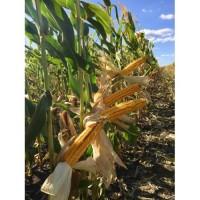
The plant is tall 230-240 cm, does not bush.
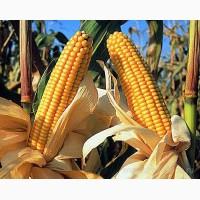
The height of the attachment of the lower cob is 100-110 cm. The cob is cylindrical in shape, 21-23 cm long, the number of rows of grains on the cob is 14-16, the stem is red.
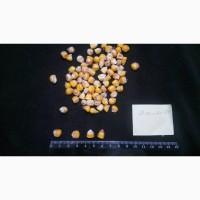
Grain light-yellow-orange, tooth-shaped.
Weight of 1000 grains 260-270 g.
(//tractor-service.com)
Grain yield is 83-84%.
The hybrid is resistant to lodging and exposure to major diseases and pests, but does not tolerate long periods of rest and therefore is not suitable for winter harvesting.
It is characterized by a very intense moisture releasegrain and responds well to improving growing conditions.
The cold resistance of the hybrid is good, but the drought resistance and heat resistance are average, high air temperatures in the final stages of vegetation are especially dangerous.
Cultivation zone – Steppe, Forest Steppe, Polissia.
The density of plants in the Steppe zone is 55-60, Forest-steppe - 80, Polissia - 90-100 thousand units/ha.
The average yield in the environmental test of the National Academy of Sciences of Ukraine in 12 locations in Ukraine in 2013 was 8.51 t/ha, and in 2014 – 7.33 t/ha with grain moisture of 20.2 and 16.6, respectively, by year.
In 2013, the maximum yield was recorded at the Institute of Agriculture of the National Academy of Sciences of Ukraine - 11.77 t/ha.
The potential for yield and grain yield is 13.0-13.5 t/ha.
Peculiarities of seed production.
The seeds of the first generation at the hybridization sites are grown on a sterile basis according to the fertility restoration scheme. Recommended seeding patterns of parent components are 4:2 or 6:2. Sowing of the parental components is simultaneous, but the male component has a short period of panicle flowering, so it is important to place the hybridization plots in favorable conditions or under irrigation, to improve the synchronization of flowering and increase the pollen background.
According to the results of tests in 2013-2014, the average yield of the parent component was 4.48 t/ha, and the moisture content of the grain was 16.6%.
High cold resistance
Highly profitable seed production
Grain intensively loses moisture during ripening
Simple modified mid-early hybrid (FAO 240).
Listed in the Register of Varieties since 2016.
Grain direction of use.
The plant is tall 230-240 cm, does not bush.
The height of the attachment of the lower cob is 100-110 cm. The cob is cylindrical in shape, 21-23 cm long, the number of rows of grains on the cob is 14-16, the stem is red.
Grain light-yellow-orange, tooth-shaped.
Weight of 1000 grains 260-270 g.
(//tractor-service.com)
Grain yield is 83-84%.
The hybrid is resistant to lodging and exposure to major diseases and pests, but does not tolerate long periods of rest and therefore is not suitable for winter harvesting.
It is characterized by a very intense moisture releasegrain and responds well to improving growing conditions.
The cold resistance of the hybrid is good, but the drought resistance and heat resistance are average, high air temperatures in the final stages of vegetation are especially dangerous.
Cultivation zone – Steppe, Forest Steppe, Polissia.
The density of plants in the Steppe zone is 55-60, Forest-steppe - 80, Polissia - 90-100 thousand units/ha.
The average yield in the environmental test of the National Academy of Sciences of Ukraine in 12 locations in Ukraine in 2013 was 8.51 t/ha, and in 2014 – 7.33 t/ha with grain moisture of 20.2 and 16.6, respectively, by year.
In 2013, the maximum yield was recorded at the Institute of Agriculture of the National Academy of Sciences of Ukraine - 11.77 t/ha.
The potential for yield and grain yield is 13.0-13.5 t/ha.
Peculiarities of seed production.
The seeds of the first generation at the hybridization sites are grown on a sterile basis according to the fertility restoration scheme. Recommended seeding patterns of parent components are 4:2 or 6:2. Sowing of the parental components is simultaneous, but the male component has a short period of panicle flowering, so it is important to place the hybridization plots in favorable conditions or under irrigation, to improve the synchronization of flowering and increase the pollen background.
According to the results of tests in 2013-2014, the average yield of the parent component was 4.48 t/ha, and the moisture content of the grain was 16.6%.
|
Author, contacts | |
Haskom Trade LLC/ отзывы, инфо./ Estimation of activity | |
|
Phone:
+38(xxxxxx
показать
| |
| http://www.khaskom.com.ua | |
All ads user ~599 | |
Ad ID: #1078041
(added by a registered user, registration date: 12-28-2016)
Added / Updated: 07-16-2026 11:41 (relevant, until: 16-07-2027)
Permanent ad address:
Showed / watched for today: ?, total: ?
Similar ads
Among them there are many interesting...