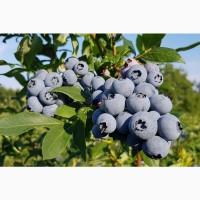
/ Seeds, seedlings and sowing materials / Seedlings of fruit and berry bushes / Blueberry seedlings / I am selling blueberry seedlings 5 years old in 50 liters


Sell / buy
I am selling blueberry seedlings 5 years old in 50 liters, Dnipropetrovsk region.
Price650 UAH.
Region:
Dnipropetrovsk region.
(Dnipropetrovsk region. city of Dnipro w/m Poplar-2)
Updated:
Seedlings blueberries Bluecrop, 3-year-old in a pot of 2 liters 150g.
Elizabeth blueberry seedlings 3 years old in a pot 150 g.
Blueberry seedlings Patriot, 3-year-old in a pot 150 g.
Blueberry seedlings TORO 3-year-old in a pot 2 l.-150 gr. and many other varieties
in 3 liters--220g
Bluecrop blueberry - the best industrial variety(//tractor-service.com)
The bush is tall, requires periodic cutting, reaches a height of 1.7-2.0 m, the shoots are directed upwards. Berries of large size, up to 18 mm in diameter, flattened shape, collected in small cysts. The color of the berries is blue, with a pronounced light blue coating, the skin is dense, transportability is high. The pulp is sweet, pleasant to the taste, there is a slight acidity. The yield is 6-10 kg per bush. The blueberry variety is frost-resistant (withstands up to -34°C), not susceptible to the main diseases. They are grown in acidified soil.
Blueberry Patriot - an early variety.
It is approximately one and a half meters tall withberries gray light blue shade. Our bushes begin to bear fruit already in mid-July. Does the variety have amazing fertility? each bush during the season brings about 5-9 kilograms of large juicy berries, which is why I fell in love with these blueberry seedlings Ukraine. The fruits of the bush are universal, the "Patriot" blueberry, the cultivation of which can be organized in an ordinary garden plot, is the only condition? Blueberries are very sensitive to soil pH. The ideal option is to plant it in acidic peat or acidic soil. Also, seedlings grow well in peat bogs, sandy soil, and in a mixed soil made of bark, peat, leaves, and sand. Blueberries are suitable for making juices and jams, can they be frozen, canned and, of course, eaten fresh? in any form, it is tasty and useful for health. What is important for the "Patriot" blueberry variety is that it can be planted even in harsh climates - the bushes easily withstand both light frosts and severe cold with a temperature of -29 degrees.
Toro ripens in the first decade of August, in line with Bluecrop, but the season ends much earlier due to compressed harvests, friendly simultaneous ripening.
Fertilization is regular, starting from the 4th year, the productivity increases, the declared productivity is 6-10 kg from an adult bush, comparable to the above-mentioned standard of industrial plots. It is suitable for mechanized harvesting, while the first harvest is recommended to be carried out manually. It is used in commodity production - for the fresh market, for processing, it is good fresh. Its compact bush resembles Bluecrop. Tall shoots grow up to 1.8-2 m, the powerful bush has an elevated habit, closer to compressed.
Blueberry quite recently said goodbye to the status of an exotic plant. The plant has gained popularity among gardeners in regions with short cool summers and harsh winters due to its exceptional frost resistance. The late-ripening Elizabeth variety is included in the list of popular varieties.
The first berries ripen at the beginning of August, fruiting stretches for several weeks. From one bush, on average, you can get up to 5 kg of harvest. The berries are round (slightly flattened at the poles), large, about 22 mm in diameter, dense, collected in a loose brush. The skin of the fruit is beautiful blue with a bluish tint, there is a small scar on the surface. When harvesting, they are easily separated from the peduncles. According to gardeners, it stands out as one of the best varieties for its taste. Pluses: relatively fast fruiting — the claimed volume of berries (5–7 kg) is most often reached in 5–6 hours, possible in 4 hours with competent agricultural technology. In the first 2–3 years, the plant is not allowed to bear fruit, trying to direct all its forces to the formation of a strong bush and the growth of wood; dessert taste, which has clear blueberry and grape notes; ripening and coloring is harmonious and uniform, without intermediate shades; resistance to transportation; frost resistance of the variety (up to -32°С); resistance to sudden significant temperature changes; flower buds do not freeze in winter, but suffer slightly from repeated frosts; the variety is resistant to fungal diseases (phytophthora, root rot and stem cancer); berries do not fall off when ripening.
Elizabeth blueberry seedlings 3 years old in a pot 150 g.
Blueberry seedlings Patriot, 3-year-old in a pot 150 g.
Blueberry seedlings TORO 3-year-old in a pot 2 l.-150 gr. and many other varieties
in 3 liters--220g
Bluecrop blueberry - the best industrial variety(//tractor-service.com)
The bush is tall, requires periodic cutting, reaches a height of 1.7-2.0 m, the shoots are directed upwards. Berries of large size, up to 18 mm in diameter, flattened shape, collected in small cysts. The color of the berries is blue, with a pronounced light blue coating, the skin is dense, transportability is high. The pulp is sweet, pleasant to the taste, there is a slight acidity. The yield is 6-10 kg per bush. The blueberry variety is frost-resistant (withstands up to -34°C), not susceptible to the main diseases. They are grown in acidified soil.
Blueberry Patriot - an early variety.
It is approximately one and a half meters tall withberries gray light blue shade. Our bushes begin to bear fruit already in mid-July. Does the variety have amazing fertility? each bush during the season brings about 5-9 kilograms of large juicy berries, which is why I fell in love with these blueberry seedlings Ukraine. The fruits of the bush are universal, the "Patriot" blueberry, the cultivation of which can be organized in an ordinary garden plot, is the only condition? Blueberries are very sensitive to soil pH. The ideal option is to plant it in acidic peat or acidic soil. Also, seedlings grow well in peat bogs, sandy soil, and in a mixed soil made of bark, peat, leaves, and sand. Blueberries are suitable for making juices and jams, can they be frozen, canned and, of course, eaten fresh? in any form, it is tasty and useful for health. What is important for the "Patriot" blueberry variety is that it can be planted even in harsh climates - the bushes easily withstand both light frosts and severe cold with a temperature of -29 degrees.
Toro ripens in the first decade of August, in line with Bluecrop, but the season ends much earlier due to compressed harvests, friendly simultaneous ripening.
Fertilization is regular, starting from the 4th year, the productivity increases, the declared productivity is 6-10 kg from an adult bush, comparable to the above-mentioned standard of industrial plots. It is suitable for mechanized harvesting, while the first harvest is recommended to be carried out manually. It is used in commodity production - for the fresh market, for processing, it is good fresh. Its compact bush resembles Bluecrop. Tall shoots grow up to 1.8-2 m, the powerful bush has an elevated habit, closer to compressed.
Blueberry quite recently said goodbye to the status of an exotic plant. The plant has gained popularity among gardeners in regions with short cool summers and harsh winters due to its exceptional frost resistance. The late-ripening Elizabeth variety is included in the list of popular varieties.
The first berries ripen at the beginning of August, fruiting stretches for several weeks. From one bush, on average, you can get up to 5 kg of harvest. The berries are round (slightly flattened at the poles), large, about 22 mm in diameter, dense, collected in a loose brush. The skin of the fruit is beautiful blue with a bluish tint, there is a small scar on the surface. When harvesting, they are easily separated from the peduncles. According to gardeners, it stands out as one of the best varieties for its taste. Pluses: relatively fast fruiting — the claimed volume of berries (5–7 kg) is most often reached in 5–6 hours, possible in 4 hours with competent agricultural technology. In the first 2–3 years, the plant is not allowed to bear fruit, trying to direct all its forces to the formation of a strong bush and the growth of wood; dessert taste, which has clear blueberry and grape notes; ripening and coloring is harmonious and uniform, without intermediate shades; resistance to transportation; frost resistance of the variety (up to -32°С); resistance to sudden significant temperature changes; flower buds do not freeze in winter, but suffer slightly from repeated frosts; the variety is resistant to fungal diseases (phytophthora, root rot and stem cancer); berries do not fall off when ripening.
|
Shop, contacts | |
Svetlana Nikolaevna / отзывы, инфо. / activity evaluation | |
|
Telephone:
0962xxxxxx
show
| |
All user ads ~32 | |
Ad ID: #1015676
(added by a registered user, registration date: 03-07-2019)
Added / Updated: 10-20-2025 13:11 (relevant, until: 10-20-2026)
Permanent ad address:
Showed / watched for today: ?, total: ?
Similar ads
Among them there are many interesting ones...


All Ukraine: Seeds, seedlings and seeds materials 1220 / Seedlings of fruit and berry bushes 191 / Seedlings blueberries 12
Dnepropetrovsk region: Seeds, seedlings and sowing materials 138 / Seedlings of fruit and berries кустарников 25 / Blueberry seedlings 3